CM Himanta orders scrutiny of YouTubers' Assam flood fundraising
Synopsis
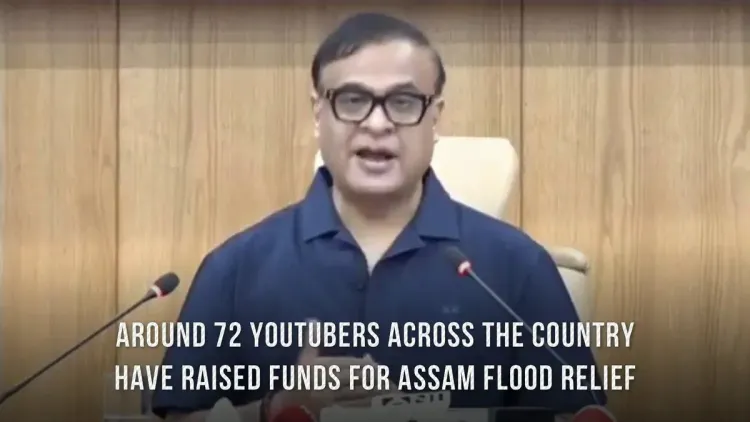
Assam Chief Minister Himanta Biswa Sarma has announced the state will verify whether YouTubers who raised public funds citing the Assam floods actually delivered the money to intended beneficiaries, pledging recognition for those who did and implying scrutiny for those who did not.
Key Takeaways
CM Himanta Biswa Sarma declared on 12 August 2026 that the Assam government will audit flood-relief funds raised by YouTubers from the public.
The state called verification of whether contributions reached intended beneficiaries a 'duty,' signalling formal intent rather than a casual remark.
Sarma promised appreciation and recognition for creators who used every rupee for its stated purpose.
Assam faces recurrent annual flooding driven by the Brahmaputra and its tributaries, making it a perennial target for both legitimate and questionable relief fundraising.
The move aligns with a broader national pattern of state administrations moving to monitor unregulated disaster crowdfunding on digital platforms.
A state-level verification committee or formal utilisation-report release could follow as next steps.
Assam's annual monsoon flooding has long drawn not just state machinery but a wave of online fundraisers — and now Chief Minister Himanta Biswa Sarma is putting those campaigns under the government's lens. On Wednesday, 12 August 2026, Sarma publicly declared that the state is duty-bound to verify whether contributions collected by YouTubers in the name of Assam floods actually reached those who needed them.
The accountability demand, in Sarma's own words
Sarma's post was pointed and deliberate: 'Several YouTubers raised funds from the public in the name of Assam floods. The State is duty bound to ascertain whether these contributions reached their intended beneficiaries.' He balanced the warning with a clear promise — those who used every rupee for its stated purpose 'deserve our appreciation and recognition.' The message drew a sharp line between genuine relief work and potential misuse of public goodwill.
Why Assam's flood donations are a recurring accountability gap
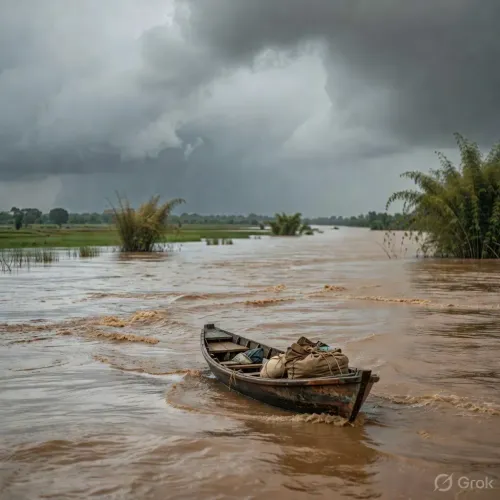
Assam battles catastrophic flooding every monsoon, with the Brahmaputra and its tributaries regularly displacing lakhs of people and triggering massive relief operations. That scale of human suffering has consistently attracted both official aid and private crowdfunding — and with crowdfunding has come documented concern about end-use. State administrations across India have moved to monitor disaster crowdfunding following cases of unutilised or diverted donations, and Assam itself has periodically stressed verification of relief funds after major flood seasons, including following the devastating deluges of 2012 and 2020.
The rise of YouTube and social media as fundraising platforms has added a new, largely unregulated layer to this ecosystem. Creators with large followings can mobilise significant public money in hours — money that flows outside the formal channels of the Prime Minister's National Relief Fund or the Assam State Disaster Management Authority, and therefore outside routine audit mechanisms.
What the state could do next
Sarma's statement stops short of naming specific creators or citing exact figures — those remain unverified — but it signals intent. Observers will now watch for the possible constitution of a state-level verification committee or the release of formal utilisation reports on flood-related online collections. Creators who can demonstrate transparent, complete disbursal stand to receive official recognition; those who cannot face the prospect of state scrutiny.
The move fits a broader pattern in Sarma's governance style: public accountability messaging that puts potential wrongdoers on notice before formal action, while leaving room to reward genuine contributors. For the thousands of flood-affected families across Assam who donated relatives trusted online platforms to help, the answer to one question matters most — did the money arrive?
Point of View
A pressure tactic that avoids the legal complexity of immediate action. If Assam follows through with formal audits, it could set a precedent that other flood-prone states — Bihar, Odisha, Himachal — may be compelled to replicate, effectively creating a new layer of informal regulation for disaster crowdfunding that Parliament has not yet legislated.
NationPress
27 Sept 2026
Frequently Asked Questions
Why is the Assam government scrutinising YouTubers who raised flood funds?
Chief Minister Himanta Biswa Sarma stated that the state is duty-bound to verify whether funds collected from the public in the name of Assam floods actually reached flood victims, citing public accountability as the reason.
Which YouTubers are being investigated for Assam flood fundraising?
No specific YouTubers have been named by CM Sarma or the Assam government in the announcement; the statement is a broad declaration of intent to scrutinise all such campaigns.
What will happen to YouTubers who misused Assam flood donations?
CM Sarma's statement implies state-level scrutiny for those who cannot account for the funds, though no specific legal action has been announced yet. Those who used every rupee for its intended purpose will receive appreciation and recognition.
How bad are the Assam floods and why do people donate online?
Assam's annual monsoon floods, driven by the Brahmaputra river and its tributaries, regularly displace lakhs of people, prompting large-scale public sympathy and significant online fundraising through platforms like YouTube.
Is crowdfunding for disaster relief regulated in India?
Online crowdfunding for disasters in India largely falls outside formal audit mechanisms like the Prime Minister's National Relief Fund, which is why state governments are increasingly moving to monitor and verify such collections independently.