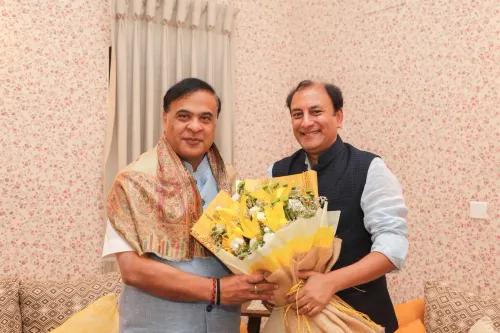
CM Himanta breaks ground on JK Lakshmi's ₹1,800 Cr Assam cement project
Synopsis
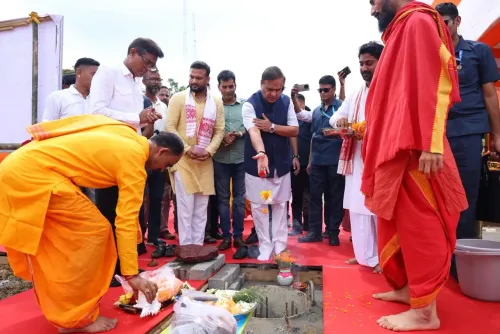
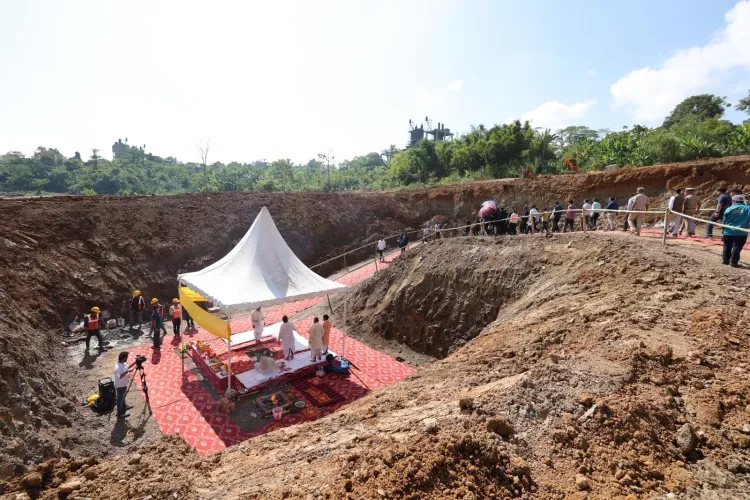
Chief Minister Himanta Biswa Sarma performed the Bhumi Pujan for JK Lakshmi Cement's 'Project Kamakhya' at Umrangso, Dima Hasao — a ₹1,800 crore first-phase investment under Advantage Assam 2 that will include limestone mines, an integrated cement plant, and a grinding unit at Lanka, Hojai.
Key Takeaways
₹1,800 crore committed in the first phase of JK Lakshmi Cement's 'Project Kamakhya' in Assam.
Three limestone mines will be developed at Umrangso, Dima Hasao to anchor raw-material supply.
An integrated cement plant at 19 Kilo, New Umrangso will produce approximately 1 million tonnes each of clinker and cement annually.
A dedicated cement grinding unit at Lanka, Hojai will serve as the downstream distribution link.
The project is anchored under Advantage Assam 2 , the state's investment promotion platform.
Multi-phase investment structure signals sustained industrial commitment to Dima Hasao 's mineral economy.
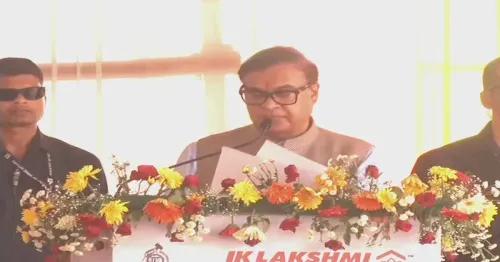
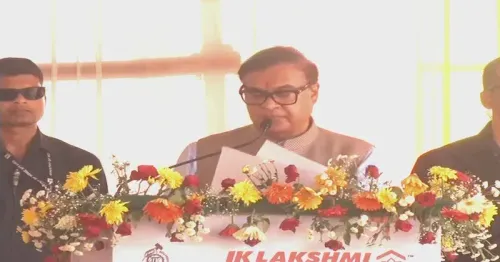
A limestone-rich corner of Assam just got its biggest industrial bet in years. Chief Minister Himanta Biswa Sarma on Friday, 30 October 2026, performed the Bhumi Pujan and laid the foundation stone of JK Lakshmi Cement's 'Project Kamakhya' at Umrangso, Dima Hasao — an ₹1,800 crore first-phase investment that puts one of India's most mineral-rich but industrially underserved hill districts squarely on the manufacturing map.
What 'Project Kamakhya' actually builds — and where
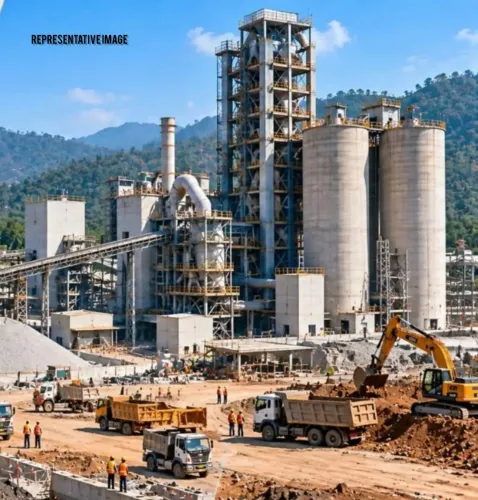
The first phase is a vertically integrated operation spread across three locations. At Umrangso, three limestone mines will supply raw material at the source. The extracted stone feeds an integrated cement plant at 19 Kilo, New Umrangso, designed to produce approximately 1 million tonnes each of clinker and cement annually. A dedicated cement grinding unit at Lanka, Hojai, completes the chain — positioning the finished product closer to distribution corridors in the Brahmaputra valley. The announcement came under the Advantage Assam 2 investment platform, the state government's flagship industrial outreach initiative.
Why Dima Hasao — and why now
Dima Hasao sits on some of Assam's most significant limestone reserves, a geological fact that successive state governments noted but struggled to translate into factories and jobs. The district sits in Assam's southern hill belt, historically reliant on central transfers and agriculture, with limited large-scale private manufacturing. JK Lakshmi Cement, one of India's established cement producers, is making a resource-linked bet — anchoring extraction and processing at the deposit itself rather than importing raw material from outside the region.
The Assam government has systematically used the Advantage Assam summits to pull exactly this kind of investment: capital that pairs local mineral wealth with processing infrastructure, generating downstream employment outside traditional sectors. Multi-phase project structures like this one also signal sustained investor commitment rather than a one-time headline announcement.
Employment, environment, and the phases ahead
The state government's announcement flags employment generation and acceleration of industrial development as key outcomes. The project's full investment quantum across multiple phases has not been disclosed, with the ₹1,800 crore figure representing only phase one. What to watch closely: the pace of environmental and mining clearances — limestone extraction in hill districts involves multi-agency regulatory steps — and the reported job numbers as each phase moves from groundbreaking to operation. Lanka in Hojai district, the grinding unit's location, sits in the Brahmaputra plains, making it a natural last-mile link in the supply chain.
For a state that has long framed its hill districts as growth frontiers waiting for catalysts, a ₹1,800 crore cement complex with its own mine-to-grinder value chain is exactly the kind of anchor investment the playbook calls for. The foundation stone is in the ground — now the harder work of execution begins.
Point of View
Stretching from mine to grinding unit across two districts, reflects a deliberate effort to maximise in-state value addition rather than simply export raw limestone. For Chief Minister Himanta Biswa Sarma, the announcement reinforces the Advantage Assam 2 platform's credibility as a deal-delivery mechanism, not merely an investor-relations event. The real test, as with all multi-phase greenfield projects in ecologically sensitive hill terrain, will be the speed and transparency of environmental and mining clearances.
NationPress
30 Oct 2026
Frequently Asked Questions
What is JK Lakshmi Cement's Project Kamakhya in Assam?
'Project Kamakhya' is a multi-phase industrial investment by JK Lakshmi Cement in Assam. The first phase, worth ₹1,800 crore , includes three limestone mines at Umrangso, an integrated cement plant at 19 Kilo New Umrangso with roughly 1 million tonnes annual capacity, and a grinding unit at Lanka, Hojai.
Where exactly is the JK Lakshmi Cement plant being built in Assam?
The integrated cement plant will come up at 19 Kilo, New Umrangso in Dima Hasao district , Assam, with a separate cement grinding unit at Lanka in Hojai district . Limestone mines will operate at Umrangso itself.
What is Advantage Assam 2?
Advantage Assam 2 is the Assam government's investment promotion summit and platform designed to attract large-scale manufacturing and infrastructure projects to the state by leveraging its natural resources and strategic Northeast location.
How much will the JK Lakshmi Cement project invest in Assam?
The announced first phase involves an investment of ₹1,800 crore . The project has a multi-phase structure, meaning total investment across all phases is expected to be higher, though that figure has not been disclosed yet.
What employment will the Assam cement project generate?
The Assam government has stated that 'Project Kamakhya' will generate employment in Dima Hasao and Hojai districts. Specific job numbers have not been officially announced and will depend on the progress of each investment phase.