CM Himanta flags Brahmaputra erosion, vows modern bank fixes
Synopsis
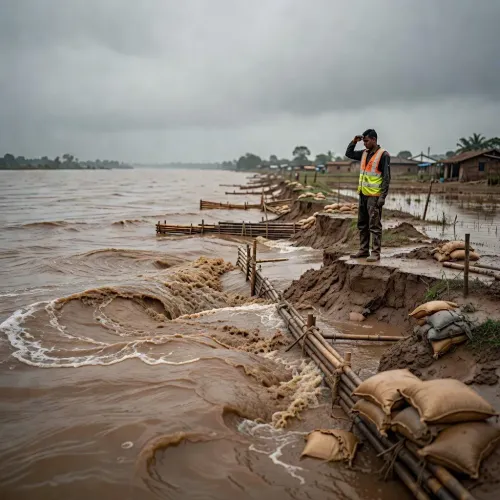
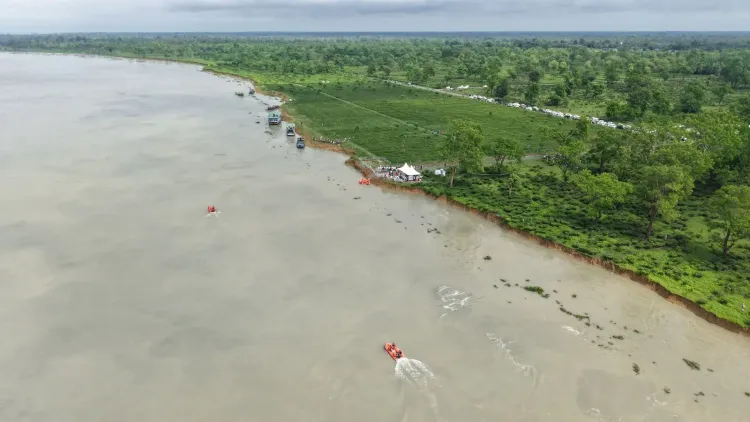
Assam Chief Minister Himanta Biswa Sarma on 2 August 2026 shared stark imagery of Brahmaputra riverbank erosion, describing it as the state's greatest geographical challenge and reaffirming his government's push to deploy modern technology in bank-protection works.
Key Takeaways
Himanta Biswa Sarma posted on 2 August 2026 highlighting the scale of Brahmaputra riverbank erosion in Assam .
The Brahmaputra is one of the world's most sediment-heavy rivers, with a braided channel that shifts course each monsoon, causing chronic land loss.
The Brahmaputra Board has been mandated to address flood and erosion control in the valley since 1980 .
State responses have evolved from earthen embankments to engineered solutions including geotextiles and bio-engineering techniques.
Riverine communities and agricultural landowners in Assam's floodplains bear the direct economic and social cost of the annual erosion.
Sarma's post signals potential follow-up announcements on specific anti-erosion projects or central funding under Assam's water resources department.
Land that families have farmed for generations is quietly vanishing into the Brahmaputra — and Assam Chief Minister Himanta Biswa Sarma wants the country to see exactly what that looks like. On Sunday, 2 August 2026, Sarma shared a striking image on X capturing the raw scale of riverbank erosion eating into the state's terrain, calling it 'one of our State's greatest geographical challenges.'
What the Brahmaputra takes, year after year
The Brahmaputra is not a gentle river. One of the world's most powerful and sediment-heavy waterways, it carves through Assam's floodplains in a wide, braided channel that shifts course unpredictably with every monsoon. The result is chronic, compounding land loss — farmland, homesteads, and village commons swallowed by the current, displacing riverine communities season after season with little prospect of recovery.
Assam has grappled with this erosion for decades. The Brahmaputra Board, constituted in 1980, was specifically mandated to plan and execute flood and erosion-control measures across the valley — a recognition, even then, that the problem demanded a permanent institutional response. Yet embankments have breached, spurs have shifted, and the land loss has continued.
From earthen embankments to engineered solutions
What has changed is the toolkit. Successive administrations have gradually moved from purely earthen embankments toward engineered bank-protection works using geotextiles, bio-engineering, and reinforced revetments — materials and methods better suited to the Brahmaputra's extraordinary hydraulic force. Sarma's post signals that this technological shift remains a live priority under his government.
'With modern technology we are working to fortify our river banks,' he wrote — framing the state's response not as a crisis reaction but as a sustained, forward-looking programme. The specific technologies currently being deployed and the precise scale of erosion visible in the shared image could not be independently verified from public record.
Why Assam's riverine communities are watching closely
For the agricultural landowners and displaced families of the Brahmaputra floodplains, the stakes are immediate and existential. Each hectare lost to erosion is a livelihood gone, often without compensation or resettlement. The broader pattern of land loss has compounded economic strain across the state's most vulnerable districts, making river management not just an engineering question but a social and political one.
The Chief Minister's decision to surface this issue publicly — with visual evidence — points toward an expectation of further announcements: possibly on central funding, specific anti-erosion projects under Assam's water resources department, or new embankment works in the most affected stretches of the river.
The Brahmaputra will flood again. The question Sarma is raising is whether the banks will hold this time.
Point of View
Keeping a chronic but under-covered crisis in the national conversation. It fits a broader pattern of his government framing Assam's geographical vulnerabilities as governance challenges requiring both central attention and modern engineering investment. The reference to 'modern technology' without specifics leaves room for future project announcements, suggesting this post may be the opening move in a larger communication around water-resources spending. For the BJP in the Northeast, demonstrating infrastructure seriousness on an issue that directly affects millions of floodplain voters carries real electoral weight.
NationPress
17 Sept 2026
Frequently Asked Questions
How much land does Assam lose to Brahmaputra erosion every year?
Assam loses thousands of hectares of land annually to Brahmaputra erosion, though the precise figure varies by season and stretch of the river. The erosion is among the most severe in the country and has displaced communities across the state's floodplains for decades.
What is the Brahmaputra Board and what does it do?
The Brahmaputra Board was constituted in 1980 as a statutory body to plan and implement flood control, erosion management, and drainage works across the Brahmaputra and Barak river valleys in Northeast India.
What technologies are being used to stop Brahmaputra bank erosion?
Assam has progressively moved toward engineered bank-protection methods including geotextiles, bio-engineering, and reinforced revetments, supplementing older earthen embankments and spurs. Chief Minister Sarma has indicated that modern technology is being deployed, though specific projects were not detailed in his post.
Why is the Brahmaputra so erosion-prone compared to other rivers?
The Brahmaputra carries an exceptionally high sediment load and flows in a wide, braided channel that shifts course unpredictably, especially during the monsoon. This combination of hydraulic force and dynamic channel movement makes its banks far more vulnerable to erosion than most other major rivers.
What is Himanta Biswa Sarma doing about Assam's flood and erosion problem?
Since becoming Chief Minister in 2021 , Sarma has prioritised infrastructure responses to Assam's flood and erosion challenges, including pushing for modern bank-protection works. His 2 August 2026 post reaffirmed this commitment, with potential further announcements expected on specific projects and funding.