CM Himanta visits Dibrugarh, lays out erosion roadmap
Synopsis
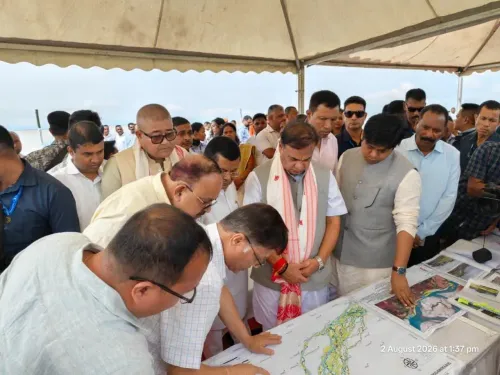
Chief Minister Himanta Biswa Sarma visited erosion-affected areas in Dibrugarh on 2 August 2026, addressing the media on a long-term government roadmap to protect communities from chronic Brahmaputra riverbank erosion — one of Assam's most persistent crises.
Key Takeaways
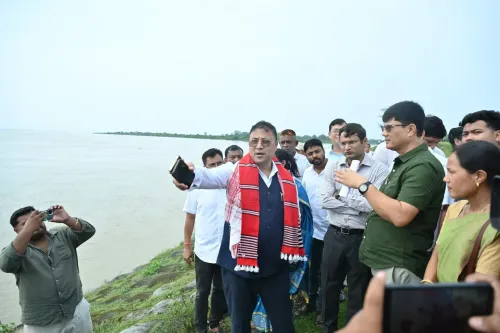
Himanta Biswa Sarma conducted a ground visit to erosion-hit areas in Dibrugarh on 2 August 2026 .
The Chief Minister's Office confirmed he addressed the media on a government 'future roadmap' to mitigate river erosion.
Sarma reaffirmed the government's commitment to long-term protective measures for vulnerable areas.
Dibrugarh sits on the Brahmaputra's southern bank and has faced chronic annual land loss and displacement for decades.
Key next steps include release of detailed project reports, budget allocations, and potential coordination with the Brahmaputra Board and central water ministry.
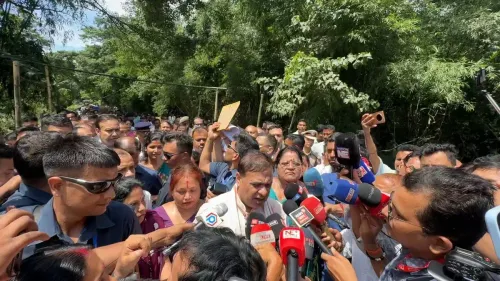
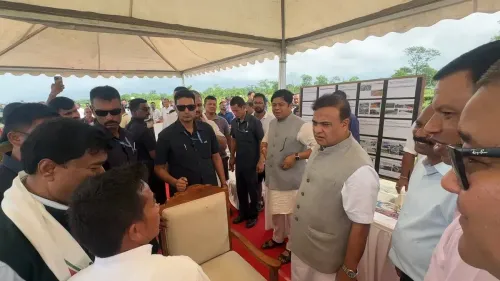
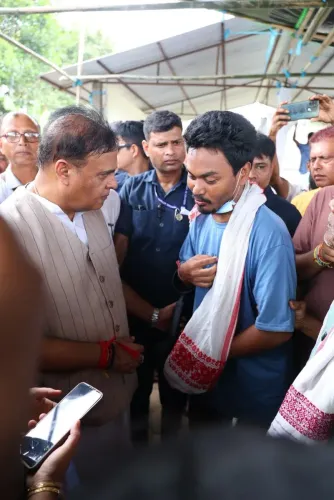
The ground beneath Dibrugarh is literally disappearing — and on Sunday, 2 August 2026, Chief Minister Dr. Himanta Biswa Sarma stood on that eroding riverbank to tell residents the government is not looking away. The Chief Minister's Office of Assam confirmed that Sarma visited erosion-hit areas in Dibrugarh and addressed the media on the government's future roadmap to mitigate river erosion, reaffirming commitment to long-term protective measures for vulnerable communities.
What the CM saw on the ground in Dibrugarh
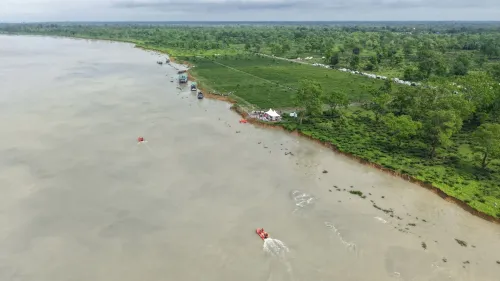
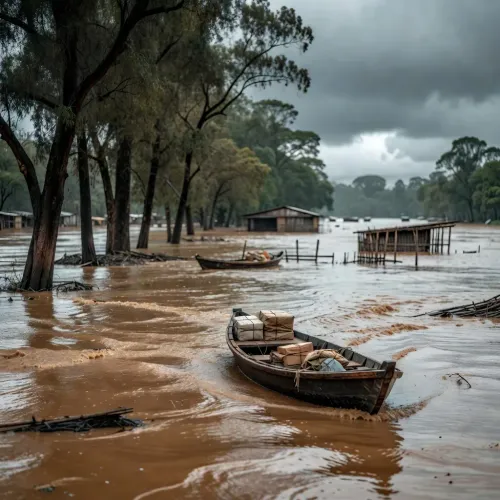
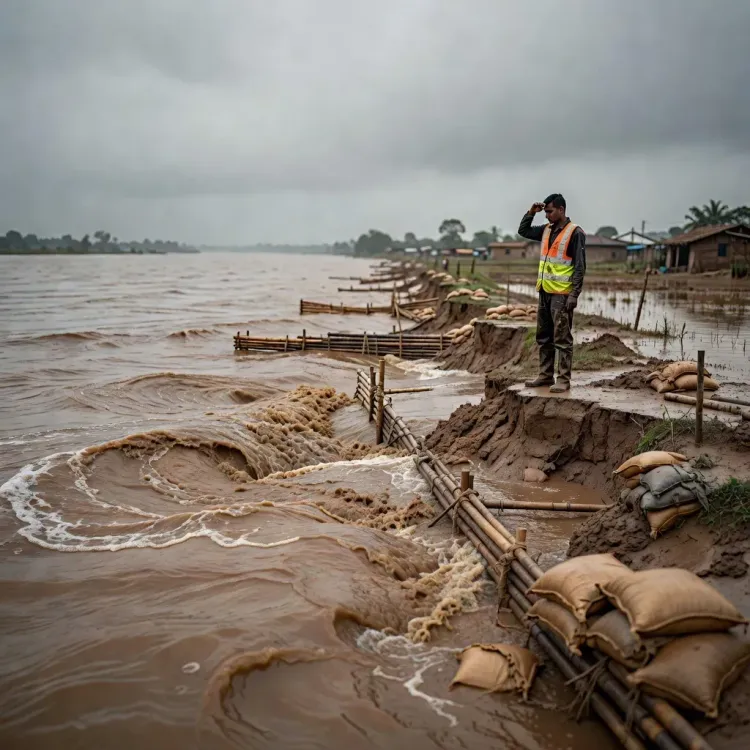
Dibrugarh, in Upper Assam, sits on the southern bank of the Brahmaputra — one of the world's most erosion-prone river systems. The district has watched land vanish into the river for generations, with embankments breached, homes lost, and livelihoods swept away in cycles that repeat every monsoon. Sarma's ground visit signals that the administration is treating this not merely as a seasonal relief operation but as a structural problem demanding a durable answer.
The Chief Minister addressed the media directly from the site, outlining what the government describes as a 'future roadmap' for erosion mitigation. The specifics of that roadmap — timelines, project costs, and engineering interventions — are expected to be detailed in subsequent official disclosures.
Assam's decades-long battle with the Brahmaputra
Assam's erosion crisis is not new, and that is precisely what makes it so urgent. The Brahmaputra and its tributaries have caused chronic annual land loss across the state for decades, displacing riverbank communities and straining embankment infrastructure that was often built for a different hydrological era. State and central agencies have cycled through emergency protection works, river training proposals, dredging plans, and geo-engineering studies — with results that have rarely matched the scale of the problem.
The Brahmaputra Board, a central statutory body, and the Union Ministry of Jal Shakti are the key institutional partners for any large-scale intervention. Whether Sarma's announced roadmap involves fresh coordination with these bodies — or new budget allocations and detailed project reports — will determine how far this visit translates into action on the ground.
Why this visit matters for vulnerable communities
For the riverbank communities of Dibrugarh, a Chief Minister's visit carries symbolic and practical weight. It puts the district's erosion crisis back at the top of the state's political agenda at a moment when monsoon pressure on embankments is at its peak. Dr. Himanta Biswa Sarma, who has led the BJP-led Assam government since May 2021, has consistently framed flood and erosion management as a governance priority — but translating that framing into durable infrastructure remains the test.
The next indicators to watch: the release of detailed project reports, any fresh budget line for erosion protection in Dibrugarh, and whether the state formally engages the Brahmaputra Board on a coordinated long-term plan.
Dibrugarh's riverbank communities have waited a long time for a roadmap that sticks. The clock, like the river, does not pause.
Point of View
Given that riverbank displacement directly shapes voter sentiment in Upper Assam constituencies. The announcement of a 'roadmap' without yet-public specifics keeps political momentum alive while deferring the harder accountability questions around timelines and funding. The real test will be whether this visit generates a formal project pipeline through the Brahmaputra Board or remains a monsoon-season gesture. For a state that has seen erosion management promises cycle through administrations, the burden of proof lies firmly with the details that follow.
NationPress
17 Sept 2026
Frequently Asked Questions
Why did CM Himanta Biswa Sarma visit Dibrugarh on 2 August 2026?
CM Himanta Biswa Sarma visited Dibrugarh to inspect erosion-hit areas along the Brahmaputra riverbank and address the media on the state government's roadmap for long-term erosion mitigation measures.
What is the Assam government's plan to address Brahmaputra erosion?
The Chief Minister's Office stated that the government is committed to implementing long-term measures to protect vulnerable areas, though specific project details and timelines are yet to be officially disclosed.
How serious is river erosion in Dibrugarh, Assam?
Dibrugarh is one of Assam's most erosion-prone districts, sitting on the Brahmaputra's southern bank. The river has caused decades of chronic annual land loss, displacement of communities, and repeated breaching of embankments.
Which central body oversees Brahmaputra erosion and flood management?
The Brahmaputra Board, a statutory body under the Union Ministry of Jal Shakti, is the key central institution responsible for flood and erosion management in the Brahmaputra valley.
Who is Himanta Biswa Sarma?
Dr. Himanta Biswa Sarma is the Chief Minister of Assam, in office since May 2021. He leads the BJP-led state government and has made flood and erosion management a stated governance priority.