CM Himanta greets Baksa, Chirang, Udalguri on District Days
Synopsis
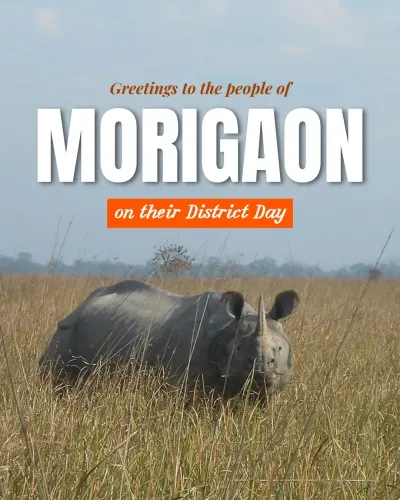
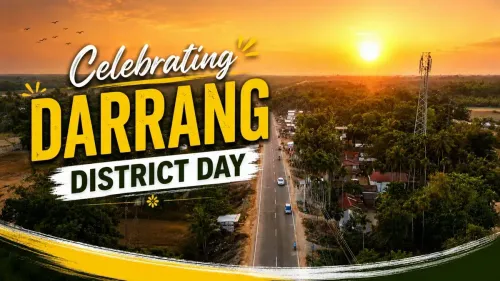
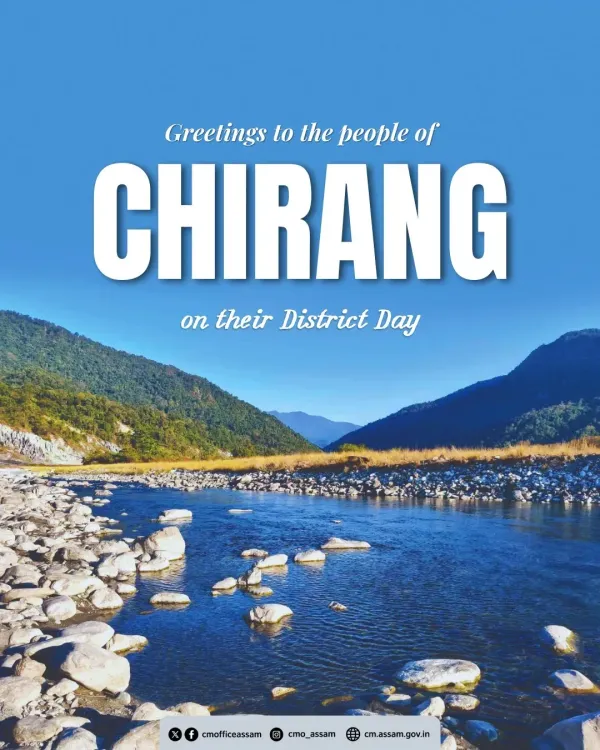
Chief Minister Himanta Biswa Sarma greeted the people of Baksa, Chirang, and Udalguri on their District Days on 30 October 2026, celebrating the Bodoland Territorial Region districts' heritage and reaffirming the Assam government's commitment to their development.
Key Takeaways
CM Himanta Biswa Sarma extended greetings to Baksa , Chirang , and Udalguri on their respective District Days on 30 October 2026 .
All three districts are part of the Bodoland Territorial Region , constituted under the Bodoland Territorial Council Act following the 2003 Bodo Accord .
The message acknowledged the districts' 'rich heritage, diversity and proud traditions' and wished residents peace, prosperity and good health.
The state government reaffirmed its 'commitment to continued growth and all-round development' of the three districts.
The three districts — formed in 2003 — are home primarily to the Bodo community and other ethnic groups in western Assam.
Three districts at the heart of Assam's Bodoland Territorial Region marked their District Days on Friday, 30 October 2026, as Chief Minister Dr Himanta Biswa Sarma — through the Chief Minister's Office of Assam — extended warm greetings to the people of Baksa, Chirang, and Udalguri, saluting their heritage and reaffirming the state's pledge of continued development.
Three districts, one region, a shared recognition
Baksa, Chirang, and Udalguri were carved out of existing Assam districts in 2003 as part of a broader administrative reorganisation tied to the Bodo Accord of the same year. All three fall under the Bodoland Territorial Region (BTR), an autonomous administrative zone constituted under the Bodoland Territorial Council Act to address the aspirations of the Bodo community and other ethnic groups in western Assam.
The Chief Minister's message recognised the districts' 'rich heritage, diversity and proud traditions' while wishing residents 'peace, prosperity and good health.' The phrasing is deliberate — BTR districts carry a complex history of ethnic assertion and post-accord reconciliation, making cultural acknowledgement from the state government a politically meaningful gesture, not mere ceremony.
Bodoland's long road from accord to administration
The creation of the Bodoland Territorial Council in 2003 was a landmark in Assam's turbulent ethnic politics, translating years of Bodo movement demands into an autonomous governance structure. Udalguri, with its significant Bodo population and sensitive border areas, Chirang with its mixed demographics and dense forest cover, and Baksa as a bridge between the plains and the hills — each district carries a distinct identity within the BTR framework.
Assam governments since 2003 have maintained a steady practice of pairing ceremonial outreach to BTR districts with pledges of infrastructure and welfare delivery — a pattern CM Sarma, who took office in May 2021, has continued through targeted scheme rollouts in the region.
Development commitments in focus
Beyond the greetings, the message carried an explicit reaffirmation of 'the Government's commitment to their continued growth and all-round development.' That language signals the state's ongoing responsibility toward districts where administrative autonomy under the BTR coexists with the need for state-level infrastructure, health, and education investment. Watch for district-level review meetings or scheme announcements targeting these three areas in the weeks ahead — the District Day message often precedes ground-level follow-through in Assam's BTR outreach calendar.
Point of View
Sustaining the post-2003 Bodo Accord compact through symbolic recognition is as important as scheme delivery — in BTR districts, the two are inseparable. The explicit development pledge embedded in a ceremonial message reflects a broader Assam BJP strategy of pairing identity acknowledgement with governance delivery as the state eyes continued stability in its ethnic frontier. Whether those pledges translate into measurable ground-level action in Baksa, Chirang, and Udalguri will be the real test of this outreach.
NationPress
30 Oct 2026
Frequently Asked Questions
What is District Day in Assam?
District Day marks the anniversary of a district's formation and is observed with official events, cultural programmes, and messages from government leaders recognising the district's history and achievements.
When were Baksa, Chirang, and Udalguri districts created?
All three districts were created in 2003 as part of the administrative reorganisation that accompanied the Bodo Accord and the constitution of the Bodoland Territorial Council.
What is the Bodoland Territorial Region?
The Bodoland Territorial Region (BTR) is an autonomous administrative area in western Assam comprising four districts — including Baksa, Chirang, and Udalguri — governed by the Bodoland Territorial Council under the 2003 Bodo Accord.
Who is the Chief Minister of Assam in 2026?
Dr Himanta Biswa Sarma is the Chief Minister of Assam, having assumed office in May 2021 . He previously held senior ministerial portfolios in health, education, and finance in the state government.
What development commitments has Assam made to BTR districts?
The Assam government has consistently pledged infrastructure, health, and education investments in the BTR districts since 2003, with successive administrations pairing cultural recognition with state-level welfare scheme rollouts.