Giriraj Singh Talks Organic Farming with Kaimur Farmer
Synopsis
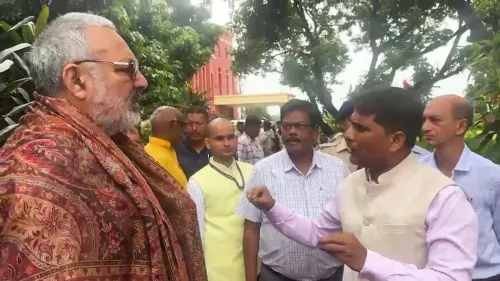
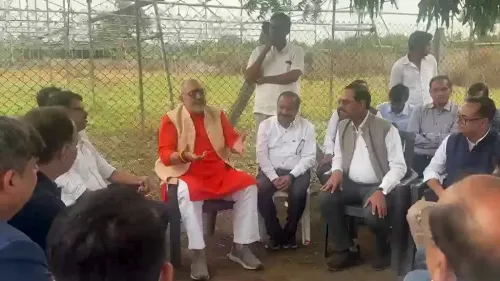
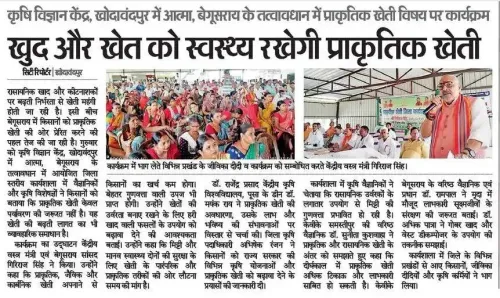
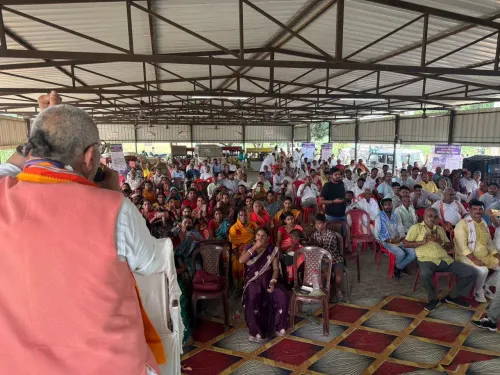
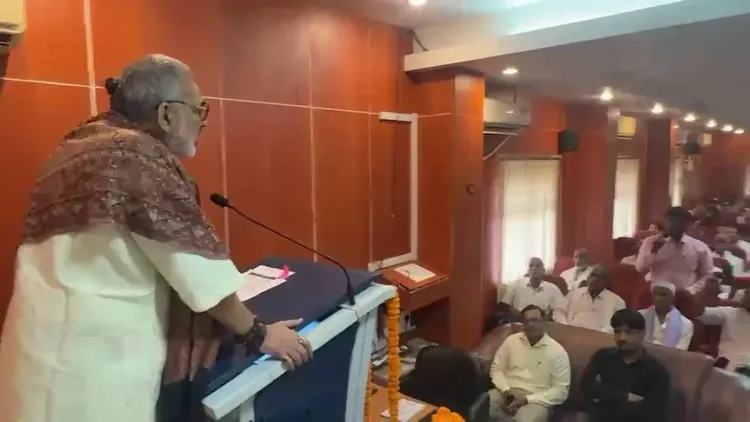
Union Textiles Minister Giriraj Singh held a direct conversation with organic farmer Shashi Prasad of Kaimur district, Bihar on October 30, gathering firsthand insights on organic farming practices and ground-level agricultural experiences as part of a broader grassroots outreach.
Key Takeaways
Union Textiles Minister Giriraj Singh interacted with Shashi Prasad , an organic farmer from Kaimur district, Bihar , on October 30, 2026 .
The conversation focused on organic farming experiences and agricultural practices at the grassroots level.
Singh described such dialogues as opportunities to understand 'efforts, new experiments, and ground-level experiences' across sectors.
Kaimur's organic farming activity connects to the Paramparagat Krishi Vikas Yojana , India's flagship organic farming promotion scheme launched in 2015 .
No specific policy announcement or scheme commitment was made; the interaction was framed as a listening exercise.
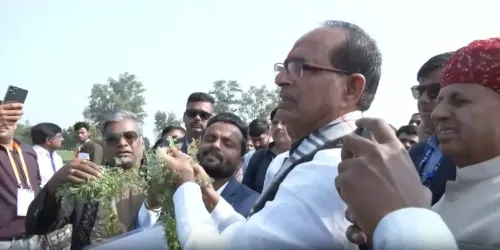
From the fields of Kaimur district, Bihar, a conversation is quietly making the case that ground-level dialogue can be as powerful as any policy memo. Union Textiles Minister Giriraj Singh held a direct interaction on Friday, October 30, 2026, with Shashi Prasad, a farmer practising organic agriculture in Kaimur, drawing out firsthand experiences on farming methods and the realities of organic cultivation at the grassroots.
Singh shared on X that the conversation gave him a close look at the 'efforts, new experiments, and ground-level experiences' emerging across sectors — विभिन्न क्षेत्रों में हो रहे प्रयासों, नए प्रयोगों और जमीनी स्तर पर सामने आ रहे अनुभवों (efforts being made in various fields, new experiments, and experiences emerging at the ground level). The framing was deliberate: not a policy announcement, but a listening exercise.
Why Kaimur's organic shift matters
Kaimur is a predominantly agrarian district in western Bihar, where a growing number of farmers have been moving away from chemical-intensive cultivation. Organic farming in the region sits within the broader arc of India's Paramparagat Krishi Vikas Yojana (PKVY), launched in 2015, which promotes cluster-based organic farming through direct farmer support and certification assistance. Shashi Prasad's experience — whatever its specific scale — represents exactly the kind of bottom-up data point that schemes like PKVY are designed to generate and eventually scale.
Ministers periodically conduct such field-level dialogues in their home states, using them to bridge the gap between scheme design in Delhi and actual implementation on the ground. Bihar, with its large smallholder farming population, has historically been a test case for whether central agricultural programmes translate into real change at the village level.
The value of direct farmer dialogue
What stands out in Singh's post is the explicit acknowledgement that these interactions surface 'new experiments' — a quiet recognition that innovation is not always flowing top-down from policy. Farmers adapting organic techniques to local soil conditions, water availability, and market access are generating knowledge that no government report captures in full. Singh's engagement with Prasad suggests an intent to listen before legislating — or at least to be seen doing so.
Any follow-up in the form of state-level organic cluster support or enhanced central funding for Bihar's organic farming belt will be the real measure of whether this conversation travels beyond social media.
Point of View
Part policy intelligence-gathering. The deliberate framing around 'new experiments and ground-level experiences' signals an awareness that organic farming's success in Bihar depends on farmer-driven adaptation, not just scheme rollout. Whether this interaction feeds into enhanced support for organic clusters in the state, or remains a social media moment, will determine its actual policy weight. For now, it reinforces the BJP's ongoing effort to project its senior Bihar leaders as accessible, on-the-ground administrators rather than purely legislative figures.
NationPress
30 Oct 2026
Frequently Asked Questions
Why did Giriraj Singh visit Kaimur district?
Giriraj Singh interacted with Kaimur farmer Shashi Prasad to learn about organic farming experiences and ground-level agricultural practices in Bihar as part of a grassroots outreach initiative.
Who is Shashi Prasad from Kaimur?
Shashi Prasad is a farmer from Kaimur district in Bihar who practises organic farming and shared his agricultural experiences with Union Minister Giriraj Singh on October 30, 2026.
What is the Paramparagat Krishi Vikas Yojana?
Paramparagat Krishi Vikas Yojana (PKVY) is a central government scheme launched in 2015 to promote organic farming in India through cluster-based approaches, farmer training, and certification support.
Is Giriraj Singh involved in agriculture policy?
Giriraj Singh is the Union Minister of Textiles, but as a senior BJP leader and Lok Sabha MP from Bihar, he engages with agricultural issues in his home state as part of constituency and grassroots outreach.
What is the state of organic farming in Kaimur, Bihar?
Kaimur is an agrarian district in Bihar where a growing number of farmers are shifting towards organic practices, supported in part by central schemes like the Paramparagat Krishi Vikas Yojana.