Giriraj Singh backs science-led push for natural farming
Synopsis
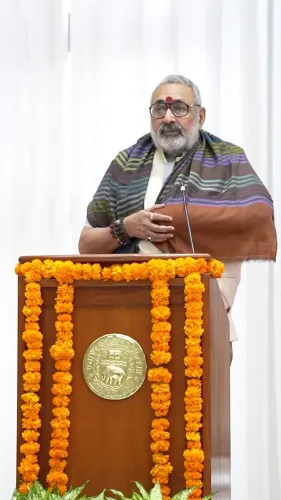
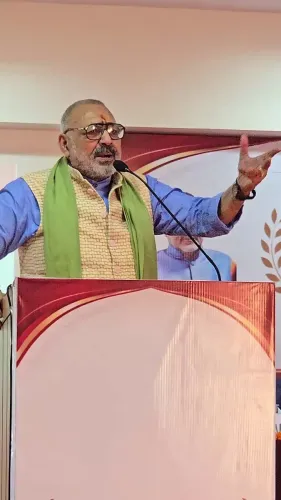
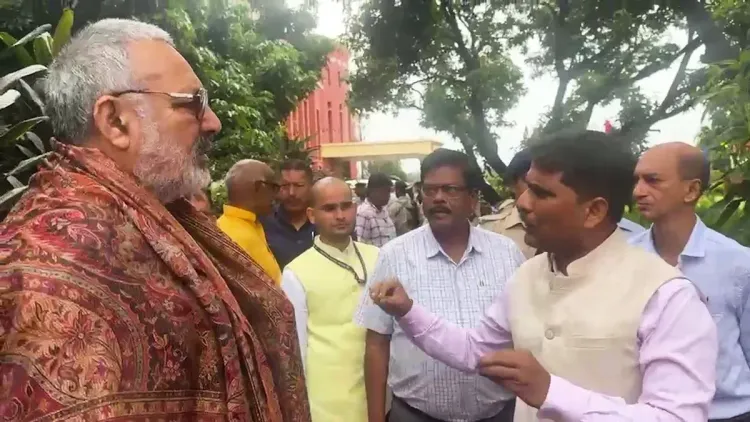
Union Textiles Minister Giriraj Singh on 30 October 2026 called for scientific research, practical solutions, and effective farmer outreach to advance natural farming in India, signalling cross-portfolio interest in sustainable agriculture.
Key Takeaways
Union Textiles Minister Giriraj Singh posted on 30 October 2026 about the need to promote natural farming through science and outreach.
He identified three pillars: scientific research , solutions to practical challenges, and effective information delivery to farmers.
Singh noted he had gathered information on various farming methods, their productivity , and their utility for cultivators.
The Paramparagat Krishi Vikas Yojana (PKVY) , launched in 2015 , provides the existing policy framework for organic and natural farming promotion in India.
Cross-ministerial engagement on natural farming reflects a broader central government push to validate and scale chemical-free cultivation.
As Textiles Minister, Singh's interest connects to natural fibre crops such as cotton and jute, which sit at the agriculture-textiles intersection.
Soil health, lower input costs, and a farming future free of chemical dependency — Union Textiles Minister Giriraj Singh signalled his engagement with India's natural farming agenda on Friday, 30 October 2026, sharing that he had gathered information on various cultivation methods, their productivity, and their practical utility for farmers.
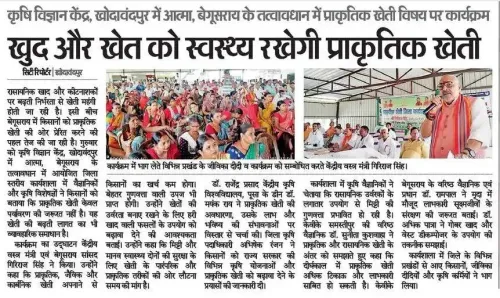
In his post, Singh wrote: 'प्राकृतिक खेती को बढ़ावा देने के लिए वैज्ञानिक अनुसंधान, व्यावहारिक चुनौतियों के समाधान और किसानों तक प्रभावी जानकारी पहुंचाना आवश्यक है' — 'To promote natural farming, scientific research, solutions to practical challenges, and effective outreach to farmers are essential.' He added that he had acquainted himself with different farming practices, their productivity, and their relevance for cultivators on the ground.
Why a Textiles Minister is talking about soil
The interest is not incidental. Natural fibre crops — cotton, jute, hemp — sit at the direct intersection of agriculture and textiles policy. A shift toward chemical-free cultivation methods for these crops would directly affect raw material quality, farmer incomes, and the sustainability credentials of India's textile supply chain, a sector Singh oversees. Cross-portfolio engagement on sustainable farming has become a recurring pattern across central ministries.
The broader policy architecture already exists. The Paramparagat Krishi Vikas Yojana (PKVY), launched in 2015, was designed precisely to promote organic farming and reduce chemical inputs across states — providing cluster-based support to farmers willing to transition. Natural farming, which relies on farm-derived inputs and local biodiversity rather than purchased organics, has since emerged as a complementary, lower-cost model being championed at the national level.
The three pillars Singh identified
Singh's framing is worth noting for its specificity. He named three distinct requirements: scientific research to validate methods, practical problem-solving to address on-ground barriers, and effective knowledge dissemination to ensure farmers can actually act on what researchers learn. This three-part structure mirrors what agronomists and extension workers have long argued is missing in India's alternative farming push — the last-mile link between laboratory findings and field adoption remains the weakest link.
Central government messaging has consistently stressed that natural farming must be scientifically validated before mass promotion, to avoid yield shocks for smallholders who cannot absorb transition losses. Any follow-up statements from Singh on research funding or state-level pilot programmes would signal whether this engagement moves beyond awareness into institutional action.
Point of View
And any credible sustainability claim in Indian textiles eventually runs back to field-level chemistry. Singh's three-part framing — research, practical solutions, last-mile outreach — reflects the standard critique of India's alternative farming programmes: they generate knowledge that rarely reaches the smallholder in actionable form. The post also illustrates how the BJP's rural messaging is increasingly framed around scientific legitimacy rather than tradition alone, a deliberate attempt to inoculate natural farming advocacy against the charge of romanticising pre-Green Revolution poverty. Whether this engagement produces institutional follow-through — funding, pilots, inter-ministerial coordination — is the only question that matters now.
NationPress
30 Oct 2026
Frequently Asked Questions
What did Giriraj Singh say about natural farming?
On 30 October 2026, Union Textiles Minister Giriraj Singh stated that promoting natural farming requires scientific research, solutions to practical challenges, and effective information outreach to farmers. He also said he had gathered information on various farming methods and their productivity.
What is the Paramparagat Krishi Vikas Yojana?
The Paramparagat Krishi Vikas Yojana (PKVY) is a central government scheme launched in 2015 to promote organic farming and reduce chemical inputs in Indian agriculture, providing cluster-based support to farmers transitioning to chemical-free methods.
Why is a Textiles Minister involved in natural farming discussions?
Natural fibre crops such as cotton and jute sit at the intersection of agriculture and textiles policy. Chemical-free cultivation of these crops directly affects raw material quality and the sustainability of India's textile supply chain, which falls under the Textiles Ministry.
What are the main challenges to natural farming in India?
The central government and agronomists have identified the biggest gaps as the lack of scientific validation of specific methods, practical barriers at the farm level, and weak last-mile extension services that fail to translate research into actionable guidance for smallholder farmers.
What should we watch for after Giriraj Singh's natural farming post?
Any follow-up announcements on research funding, inter-ministerial coordination, or state-level pilot programmes for natural farming methods would indicate whether this engagement moves beyond awareness into concrete policy action.