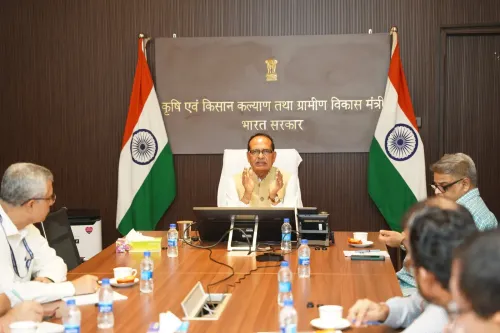
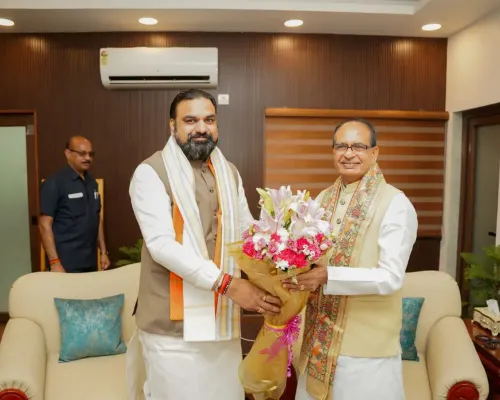
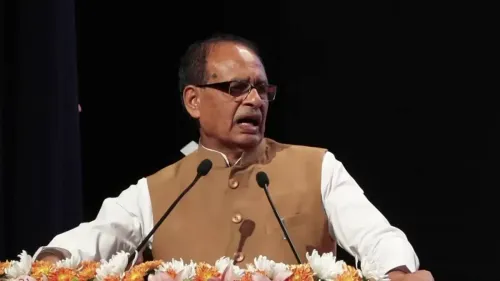
Shivraj Singh Chouhan Meets Natural Farming Pioneers
Synopsis
Union Agriculture Minister Shivraj Singh Chouhan on 25 June 2026 met farmers practising natural farming and shared their on-ground experiences showing reduced input costs and fertiliser savings, reinforcing the central government's push for chemical-free cultivation under schemes like BPKP.
Key Takeaways
Shivraj Singh Chouhan held a direct conversation with natural farming practitioners on 25 June 2026 and shared their findings publicly on X.
Farmers' experiments cited by the Minister indicate that natural farming reduces overall input costs and cuts fertiliser expenditure .
The Bhartiya Prakritik Krishi Padhati (BPKP) is the central scheme under the Ministry of Agriculture actively promoting chemical-free farming across India.
The Paramparagat Krishi Vikas Yojana (PKVY) , launched in 2015 , laid the earlier groundwork for organic farming clusters that feed into this broader effort.
The 2020 Union Budget formally directed promotion of natural farming to reduce dependence on chemical fertilisers and ease subsidy burdens.
Expanded training modules and financial incentives under revised natural farming guidelines are expected in the coming agricultural year.
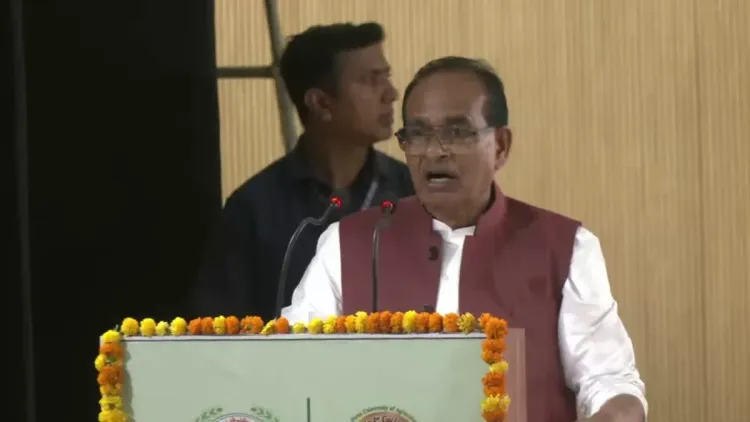
Union Agriculture Minister Shivraj Singh Chouhan on Thursday, 25 June 2026, shared that he held a direct conversation with farmers practising natural farming, highlighting their on-ground experiments as evidence that the method can meaningfully cut cultivation costs and reduce expenditure on fertilisers.
Posting on X, the Minister wrote: 'आज मुझे खुशी है कि प्राकृतिक खेती करने वाले किसानों से मेरी चर्चा हुई।' ('Today I am happy to have had a discussion with farmers who practise natural farming.') He added that the experiments they shared demonstrate how input costs fall and fertiliser spending is saved — and urged followers to take note of those experiences.
Context
Natural farming refers to chemical-free cultivation methods that rely on locally available biological inputs — cow dung, cow urine, plant-based preparations — instead of synthetic fertilisers and pesticides. For small and marginal farmers, the cost of purchased inputs is one of the most persistent drains on net income, making any credible reduction in that burden a significant proposition.
Chouhan's engagement with practising farmers signals a ground-level outreach approach, seeking testimony from those already running these methods rather than relying solely on institutional data.
Policy Backdrop
The central government has been building a policy architecture around natural and organic farming for over a decade. The Paramparagat Krishi Vikas Yojana (PKVY), launched in 2015, created organic farming clusters across states and provided financial support to farmer groups transitioning away from chemical inputs.
More directly, the Bhartiya Prakritik Krishi Padhati (BPKP) — a dedicated central scheme under the Ministry of Agriculture and Farmers Welfare — promotes chemical-free natural farming with the twin objectives of cutting input costs and improving long-term soil health. The 2020 Union Budget explicitly directed greater promotion of natural farming to reduce farmers' dependence on chemical fertilisers, a concern that also carries fiscal weight given the size of India's annual fertiliser subsidy bill.
These schemes form the institutional backdrop against which Chouhan's field conversations take on policy relevance: the minister is, in effect, collecting ground-truth validation for a programme his ministry is actively scaling.
Stakeholders and Impact
Small and marginal farmers stand to gain most directly if natural farming methods demonstrably lower input costs, since they lack the acreage to absorb high per-unit expenditure on fertilisers and pesticides. Soil degradation — a consequence of decades of intensive chemical use — is another concern that natural farming proponents argue the method addresses over successive crop cycles.
From a fiscal standpoint, a meaningful shift toward low-external-input agriculture would also ease pressure on the government's fertiliser subsidy outlay, which runs into tens of thousands of crore rupees annually. The alignment between farmer welfare and subsidy rationalisation gives the natural farming push a dual motivation within the current policy framework.
What's Next
Revised guidelines and expanded training modules under the natural farming programme are expected in the coming agricultural year, according to the policy trajectory the ministry has signalled. Chouhan's public engagement with farmer-practitioners suggests the ministry may look to amplify such testimonies as part of awareness and adoption drives.
The broader question is whether outreach and scheme incentives can accelerate the transition at scale — particularly in states where chemical-input dependency is deeply entrenched — and whether the cost savings farmers report in practice match the projections built into the scheme's design.
Point of View
The ministry lends ground credibility to a policy it is actively trying to scale. The move fits a pattern in which the Agriculture Ministry has increasingly used the minister's personal social media presence as an outreach instrument for scheme adoption. With fertiliser subsidy rationalisation remaining a fiscal priority, the natural farming push serves a dual purpose — farmer welfare optics and long-term input-cost restructuring. Whether farmer uptake accelerates will depend on how quickly the ministry translates this outreach into concrete incentive disbursals and training reach.
NationPress
24 Sept 2026
Frequently Asked Questions
What is natural farming and how does it reduce costs for Indian farmers?
Natural farming is a chemical-free cultivation method that uses locally available biological inputs such as cow dung and plant-based preparations instead of synthetic fertilisers and pesticides, directly cutting the expenditure farmers incur on purchased inputs each season.
What is the Bhartiya Prakritik Krishi Padhati scheme?
The Bhartiya Prakritik Krishi Padhati (BPKP) is a central government scheme under the Ministry of Agriculture and Farmers Welfare that promotes chemical-free natural farming with the goals of reducing input costs and improving soil health across India.
What did Shivraj Singh Chouhan say about natural farming on 25 June 2026?
Shivraj Singh Chouhan said he was happy to have spoken with farmers practising natural farming and that the experiments they shared show how cultivation costs fall and fertiliser spending is saved, urging people to take note of these experiences.
What government schemes support natural farming in India?
The two key central schemes are the Paramparagat Krishi Vikas Yojana (PKVY) , launched in 2015 to support organic farming clusters, and the Bhartiya Prakritik Krishi Padhati (BPKP) , which specifically promotes chemical-free natural farming and is administered by the Union Agriculture Ministry.
Why is the government promoting natural farming — is it only about farmers or also about subsidies?
The push serves both objectives: for farmers, it lowers input costs and addresses soil degradation; for the government, a shift to low-external-input agriculture eases pressure on India's large annual fertiliser subsidy bill, giving the policy a dual economic rationale.