Shivraj Singh Chouhan: National Agriculture Conference Fulfils PM Modi's Resolve
Synopsis
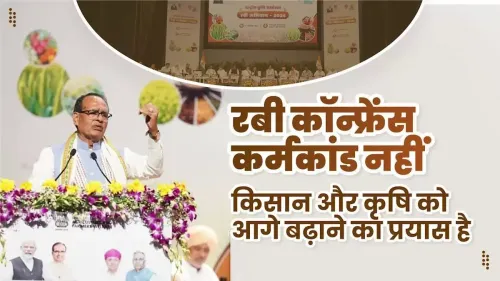
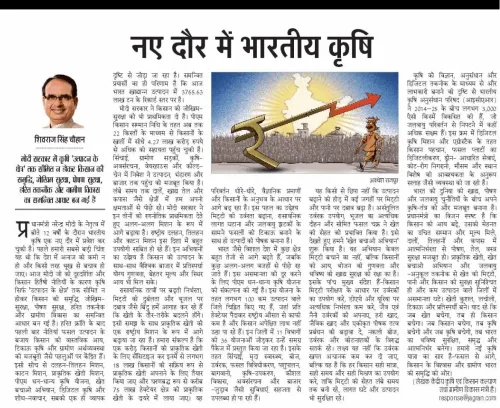
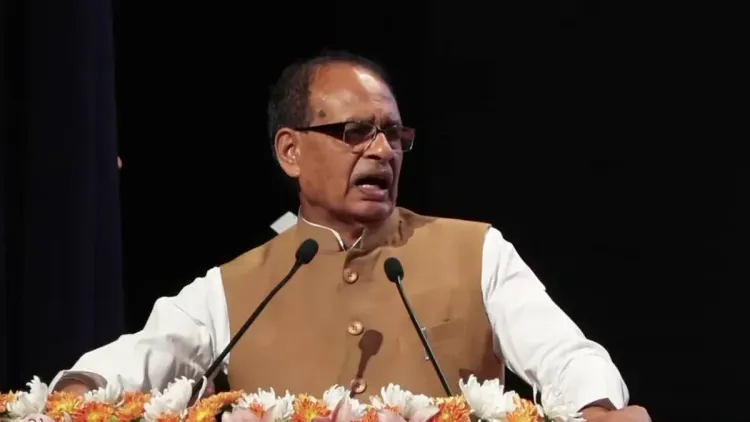
Union Agriculture Minister Shivraj Singh Chouhan on 28 May 2026 declared the National Agriculture Conference is not a ritual but the most effective instrument to fulfil PM Modi's resolve and the aspirations of India's farmers, reaffirming the government's policy-first approach to rural development.
Key Takeaways
Shivraj Singh Chouhan posted on 28 May 2026 framing the National Agriculture Conference as a substantive policy mechanism, not a ceremonial event.
He directly used the Hindi word karmakand (ritual/formality) to reject any perception that the conference is symbolic.
The National Agriculture Conference is a periodic Union-state coordination platform covering crop productivity, irrigation and market reforms.
The conference format gained prominence after the 2016 goal of doubling farmers' incomes, with PM-KISAN (launched 2019 ) being a key scheme tracked through such meetings.
The minister linked the conference explicitly to PM Modi 's resolve and the dreams of India's people, signalling accountability for outcomes.
Follow-up announcements on scheme allocations and budget-level decisions on agriculture spending are expected in the coming months.
Union Agriculture Minister Shivraj Singh Chouhan on Thursday, 28 May 2026, declared that the National Agriculture Conference is not a mere ritual but the most effective instrument for realising Prime Minister Narendra Modi's commitments and the aspirations of the people of India. The minister made the statement in a post on X, framing the periodic high-level meeting as a purposeful policy mechanism rather than a ceremonial exercise.
Context
Chouhan wrote in Hindi: 'Rashtriya Krishi Sammelan keval karmakand nahin, balki Pradhanmantri ji ke sankalp aur desh ki janta ke sapnon ko poora karne ka sabse prabhavi madhyam hai' — 'The National Agriculture Conference is not merely a ritual, but the most effective medium for fulfilling the Prime Minister's resolve and the dreams of the people of the country.' The choice of the word karmakand (ritual or formality) is pointed: it explicitly pushes back against any perception that such gatherings are symbolic rather than substantive.
The National Agriculture Conference is a periodic high-level meeting convened by the central government to review agricultural strategies, state-level implementation and policy priorities. It serves as a key coordination platform between the Union Ministry of Agriculture and Farmers Welfare and state governments under the cooperative federalism model.
Policy Backdrop
The conference format gained renewed prominence after the government announced in 2016 the goal of doubling farmers' incomes by 2022, triggering annual national-level agriculture reviews to track progress across states. The PM-KISAN direct benefit transfer scheme, launched in 2019, became one of the flagship instruments discussed and monitored through such platforms, providing income support to landholding farmer families across India.
Successive governments have used these conferences to align central schemes with state-level execution — covering crop productivity, irrigation expansion and agricultural market reforms. Chouhan's framing situates the current edition squarely within that long-term policy arc, linking it directly to PM Modi's stated resolve on farmer welfare and rural development.
Stakeholders and Impact
The primary stakeholders are India's farmer communities, whose welfare outcomes depend on how effectively central policy translates into state-level action. The conference mechanism is designed precisely to bridge that gap — identifying implementation bottlenecks and accelerating scheme delivery to beneficiaries at the ground level.
State agriculture ministers and senior officials who participate in these conferences carry back revised targets, updated guidelines and fresh allocations, making the meeting a direct lever on rural livelihoods. By publicly asserting the conference's non-ceremonial character, Chouhan signals that the Union Agriculture Ministry intends to hold participants — including states — to concrete outcomes rather than procedural compliance.
What's Next
Attention will now turn to any formal announcements or action points emerging from the conference, including potential scheme allocations or policy directives. With the Union Budget cycle approaching, any commitments made at the conference could feed into budget-level decisions on agriculture spending and farmer welfare programmes. The minister's emphasis on delivering on PM Modi's resolve suggests the government will use the conference's outcomes as a benchmark for its rural development narrative in the months ahead.
Point of View
And places accountability squarely on the conference mechanism itself. By anchoring the event to PM Modi's personal resolve, the minister also reinforces the BJP's long-standing political messaging that farmer welfare is a top-down commitment from the Prime Minister's office, not merely a departmental exercise. This framing is consistent with the government's pattern of using national conferences as visible proof points for its rural development narrative, especially as budget discussions near. The statement signals that the Agriculture Ministry intends to use conference outcomes as a public accountability benchmark, raising the stakes for both central and state-level follow-through.
NationPress
11 Oct 2026
Frequently Asked Questions
What is the National Agriculture Conference in India?
The National Agriculture Conference is a periodic high-level meeting convened by the central government to review agricultural strategies, state-level implementation and policy priorities, serving as a key coordination platform between the Union Agriculture Ministry and state governments.
What did Shivraj Singh Chouhan say about the National Agriculture Conference?
On 28 May 2026, Chouhan stated that the National Agriculture Conference is not merely a ritual but the most effective medium for fulfilling PM Modi's resolve and the aspirations of the people of India.
What is PM-KISAN and how does it relate to the Agriculture Conference?
PM-KISAN is a direct benefit transfer scheme launched in 2019 to provide income support to landholding farmer families; it is one of the flagship programmes reviewed and monitored through national-level agriculture conferences.
What was India's goal for doubling farmers' incomes?
The Indian government announced in 2016 the goal of doubling farmers' incomes by 2022, which led to annual national-level agriculture reviews to track progress across states.
What is Shivraj Singh Chouhan's current role?
Shivraj Singh Chouhan is the Union Minister of Agriculture and Farmers Welfare and Rural Development, a senior BJP leader and former four-term Chief Minister of Madhya Pradesh.