Giriraj Singh Urges Farmers to Adopt Natural Farming
Synopsis
Union Textiles Minister Giriraj Singh on June 19, 2026, publicly urged Indian farmers to switch from chemical fertilisers to green manure under natural farming, citing lower costs, soil conservation, and environmental sustainability as pillars of farmers' long-term prosperity.
Key Takeaways
Union Textiles Minister Giriraj Singh posted on June 19, 2026 urging farmers to adopt natural farming and green manure over chemical fertilisers.
He argued the shift would reduce cultivation costs and increase profits for farmers.
The appeal aligns with existing central schemes including the Paramparagat Krishi Vikas Yojana launched in 2015 and the National Mission for Sustainable Agriculture from 2011 .
Green manure replenishes soil nutrients naturally, reducing dependence on synthetic inputs and lowering environmental impact.
The Textiles Ministry has a direct upstream interest in farming practices given the sector's reliance on smallholder-grown cotton .
Observers will watch for new budget provisions and state-level rollout of natural farming sub-missions in the next agricultural year.
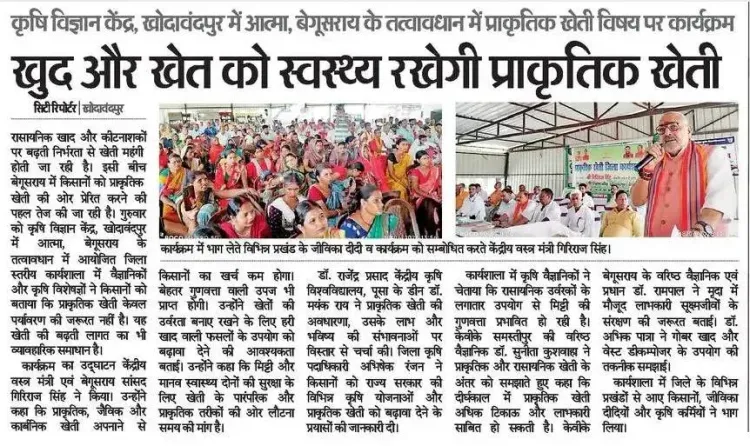
Union Textiles Minister Giriraj Singh on Friday, June 19, 2026, called on farmers across India to embrace natural farming and replace chemical fertilisers with green manure, arguing the shift would reduce cultivation costs and boost profits while protecting soil health and the environment.
Context
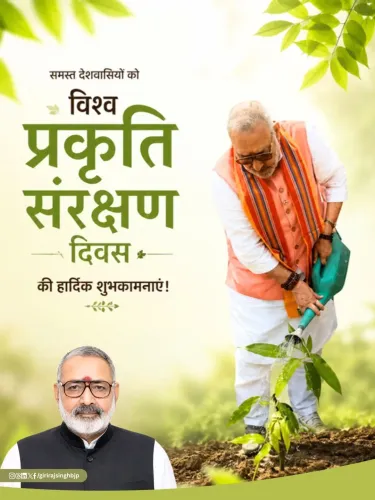
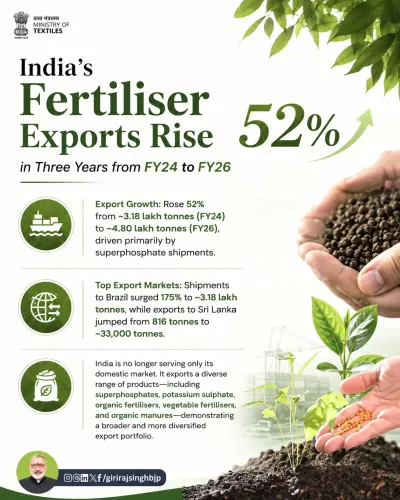
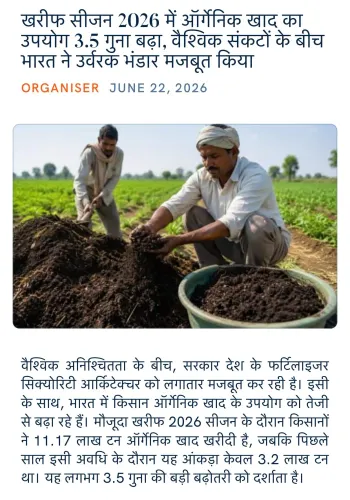
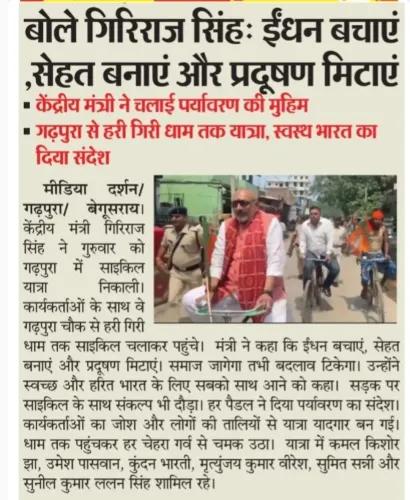
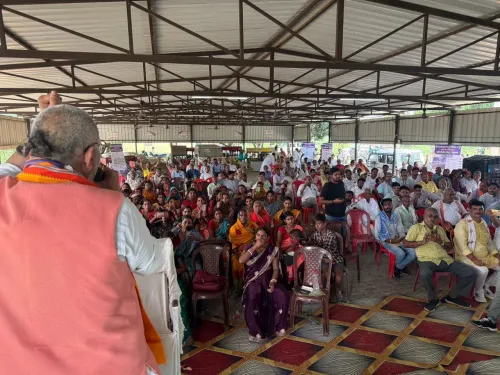
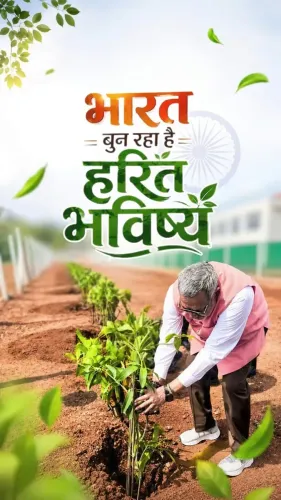
Posting in Hindi on X, Singh wrote: 'किसान भाई प्राकृतिक खेती को अपनाएं और रासायनिक खाद की जगह हरी खाद से खेतों की उर्वरता बढ़ाएं' — urging farmer brothers to adopt natural farming and improve soil fertility through green manure instead of chemical fertilisers. He added that 'low cost, soil conservation and environment-friendly farming is the foundation of a bright future for the country's food providers.' The post was accompanied by two images and tagged #NaturalFarming and #OrganicFarming.
The appeal underscores a broader cross-ministerial push to align India's agricultural base with sustainability goals, even as Singh's primary portfolio covers the textiles sector, which depends heavily on raw materials such as cotton grown by smallholder farmers.
Policy Backdrop
India has maintained a sustained policy thrust toward natural and organic farming for over a decade. The National Mission for Sustainable Agriculture, launched in 2011, set the early framework for climate-resilient practices that reduced dependence on chemical inputs. This was followed by the Paramparagat Krishi Vikas Yojana (PKVY), introduced in 2015, which promotes organic farming through a cluster-based approach, providing financial support and certification assistance to participating farmers.
Green manure — the practice of ploughing nitrogen-fixing crops back into the soil — is a central technique under these programmes. It replenishes soil nutrients naturally, reducing the need for costly synthetic fertilisers and lowering the environmental burden of runoff into water bodies.
Stakeholders and Impact
The primary beneficiaries of such a transition are small and marginal farmers, who bear a disproportionate share of input costs and are most vulnerable to price volatility in the chemical fertiliser market. Reduced dependence on synthetic inputs can meaningfully improve net farm income at the household level.
The textiles sector has a direct stake as well: cotton, a major fibre crop, is grown predominantly by smallholders, and a shift to natural farming methods could influence both the cost and quality of raw cotton supplied to mills and weavers. Messaging from the Textiles Ministry on farming practices signals awareness of this upstream dependency.
Soil degradation caused by decades of heavy chemical use remains a documented challenge across several major agricultural states. Advocates of natural farming argue that green manure and biological inputs can help reverse declining soil organic carbon levels over time.
What's Next
Attention will now turn to state-level implementation under natural farming sub-missions and whether upcoming agricultural budget provisions include enhanced subsidies for organic inputs and green manure seed kits. Any formal convergence between the Textiles Ministry's cotton development programmes and the Agriculture Ministry's natural farming push could give this advocacy concrete policy weight.
With soil health and farm profitability remaining central to rural political discourse ahead of state election cycles, Singh's public messaging on natural farming is likely to be echoed by other senior leaders in the months ahead.
Point of View
Signalling that the government is deliberately broadening the messenger base to amplify its sustainability agenda across ministries. The post fits a well-established pattern of BJP leaders using social media to reinforce flagship rural schemes, keeping the party's farmer-welfare narrative active between formal policy announcements. Green manure advocacy also dovetails with the government's broader effort to reduce India's import bill for chemical fertilisers, a fiscal pressure point that has grown with global commodity volatility. The convergence of soil health, cost reduction, and environmental messaging in a single post reflects the kind of multi-objective framing that tends to precede larger programmatic announcements.
NationPress
19 Sept 2026
Frequently Asked Questions
What is natural farming and why is Giriraj Singh promoting it?
Natural farming is an approach that avoids synthetic chemicals, relying instead on biological inputs such as green manure to maintain soil fertility. Giriraj Singh promoted it on June 19, 2026, arguing it lowers cultivation costs and improves long-term farm profitability while protecting the environment.
What is green manure and how does it help farmers?
Green manure involves growing nitrogen-fixing plants and turning them into the soil to restore nutrients naturally. It reduces farmers' dependence on costly chemical fertilisers, lowers input expenditure, and helps reverse soil degradation over time.
What government schemes support natural and organic farming in India?
The Paramparagat Krishi Vikas Yojana, launched in 2015, is a key central scheme that promotes organic farming through a cluster-based model with financial and certification support. The National Mission for Sustainable Agriculture, launched in 2011, also provides a policy framework for reduced chemical input use.
Why is a Textiles Minister commenting on farming practices?
The textiles sector depends heavily on raw cotton grown by smallholder farmers, giving the Textiles Ministry a direct interest in the health and economics of farming. Messaging on natural farming from the ministry reflects awareness of this upstream supply-chain dependency.
How does natural farming reduce costs for small farmers?
By replacing purchased chemical fertilisers with green manure and other biological inputs that farmers can produce on-farm, natural farming significantly cuts recurring input costs. This is especially beneficial for small and marginal farmers who are most exposed to fertiliser price fluctuations.