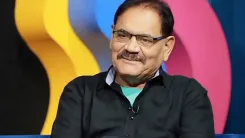
Giriraj Singh Pitches 'Farms to Digital India' Growth Story
Synopsis
Union Textiles Minister Giriraj Singh on 3 June 2026 highlighted India's journey from agriculture to Digital India as the story of inclusive growth under a 'New India' framework, amplifying the central government's decade-long pitch linking rural modernisation with digital public infrastructure such as e-NAM, PM-KISAN and BharatNet.
Key Takeaways
Union Textiles Minister Giriraj Singh posted on 3 June 2026 at 12:47 pm IST via the NaMo App.
The Hindi caption translates to 'From agriculture to Digital India: the story of inclusive growth of a new India'.
The framing links flagship schemes including Digital India (2015), e-NAM (2016) and PM-KISAN.
BharatNet and Direct Benefit Transfer form the underlying digital plumbing cited by the government.
The post signals continued BJP focus on rural-digital messaging ahead of upcoming state polls and the next Union Budget.
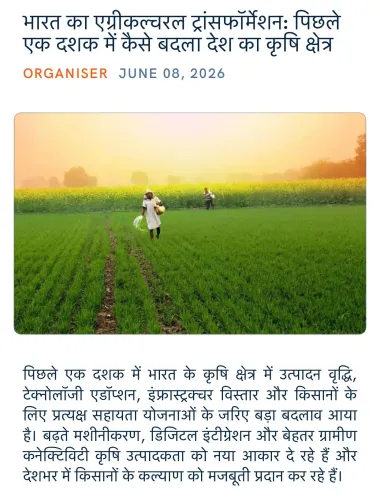
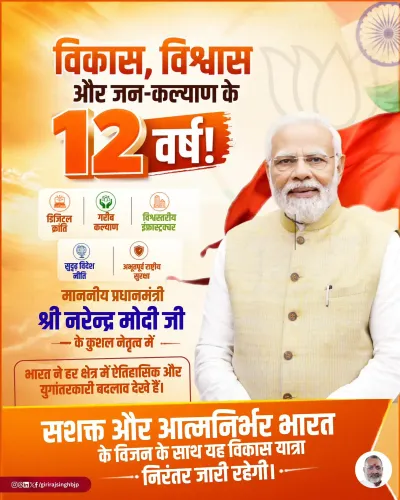
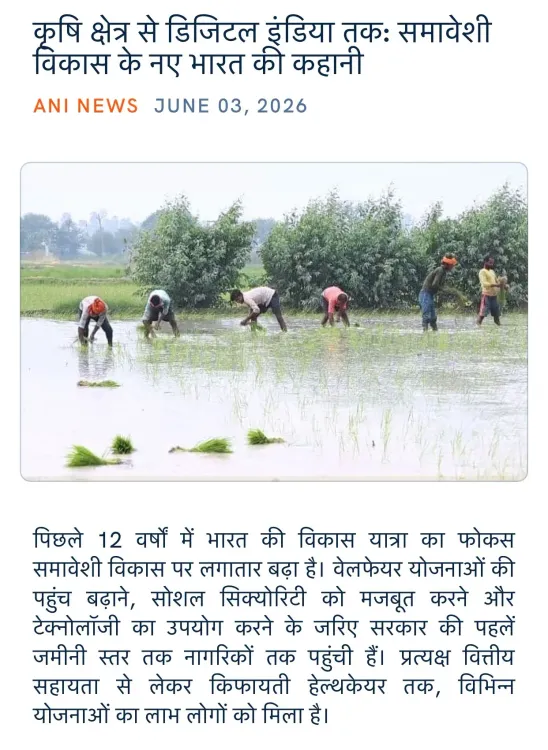
Union Textiles Minister Giriraj Singh on Wednesday, 3 June 2026, used his social-media platform to amplify the central government's narrative of inclusive development, framing India's journey from agrarian roots to a digitally enabled economy as the defining story of a 'New India'. Posting via the NaMo App with an accompanying image, the senior BJP leader and Begusarai Lok Sabha MP captioned his message in Hindi as 'Krishi kshetra se Digital India tak: samaveshi vikas ke naye Bharat ki kahani' (From the agriculture sector to Digital India: the story of inclusive growth of a new India).
Context
The post stitches together two pillars that the Narendra Modi government has consistently projected as evidence of broad-based progress: modernisation of agriculture and the rollout of digital public infrastructure. By pairing the phrase 'samaveshi vikas' (inclusive growth) with the Digital India brand, the minister positions rural India as a direct beneficiary rather than a bystander of the technology transition.
Singh, a frontline communicator for the ruling party, regularly uses his X handle to push government messaging to a national audience. His Wednesday afternoon post linked to a syndicated wire write-up carrying the same headline and was shared at 12:47 pm IST.
Policy backdrop
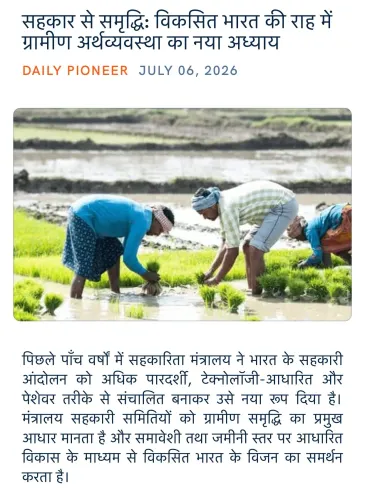
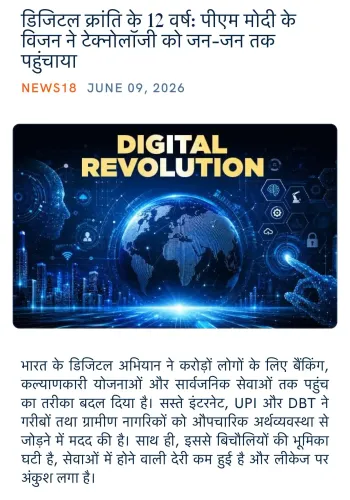
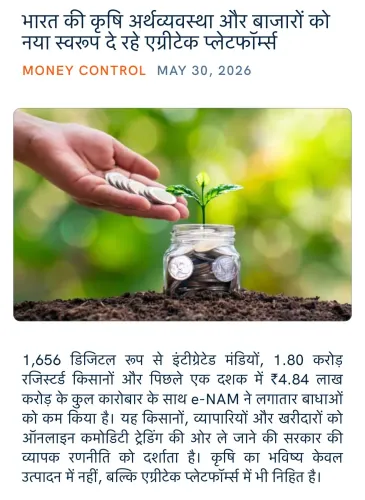
The 'farms to Digital India' framing draws on a decade-long policy arc. Digital India was formally launched in July 2015 to expand digital infrastructure, e-governance and digital literacy across rural and urban areas. The National Agriculture Market (e-NAM) followed in 2016, creating a unified online trading platform for agricultural commodities.
Parallel rails have reinforced the narrative. The Direct Benefit Transfer system, scaled up from 2014, routes subsidies and pensions straight into Aadhaar-linked bank accounts. The PM-KISAN scheme delivers income support to landholding farmers through the same plumbing, while BharatNet, approved in 2011 and accelerated thereafter, has been pushing broadband to gram panchayats.
Taken together, these initiatives form the policy spine that ministers cite when describing rural India's exposure to fintech, mobile-based advisory services and e-marketplaces.
Stakeholders and impact
The primary audience for the minister's framing is rural: small and marginal farmers, rural women using banking correspondents, and first-time smartphone users in tier-3 and tier-4 towns. For these groups, the tangible touchpoints have been subsidy credits in their bank passbooks, UPI transactions at local kirana stores, and digital land-record portals at the state level.
The political stakeholder set is equally important. With state polls and a packed legislative calendar ahead, the BJP's messaging machine has been consolidating the argument that legacy sectors such as agriculture and textiles are not left behind by India's technology push but are in fact powered by it. Singh, who holds the Textiles portfolio after earlier handling Rural Development and Animal Husbandry, sits at the intersection of that pitch.
Critics of the inclusive-growth claim typically point to uneven last-mile connectivity, the digital literacy gap among older farmers, and continuing distress in rainfed regions. The minister's post does not engage with those counterpoints directly, instead leaning on the cumulative weight of flagship schemes.
What's next
Attention now shifts to the next phase of Digital India rollouts in agriculture, including digital crop surveys, agri-stack pilots and expanded rural broadband under BharatNet. Any fresh announcements in the forthcoming Union Budget on rural fintech, kisan credit digitisation or e-NAM integration will be read against the template Singh has reiterated.
For the government's communicators, the immediate task is to keep stacking specific delivery numbers behind the 'farms to Digital India' slogan. For the opposition, the challenge is to puncture the framing with on-ground indicators on farm incomes and rural employment. Singh's Wednesday post is a reminder that the contest over the rural-digital narrative will remain central to India's political conversation through the rest of the year.
Point of View
Continuous growth story. By collapsing a decade of schemes into one slogan, the BJP is preparing a portable talking point for state campaigns and the next budget cycle. The real test, as always, will be whether on-ground indicators on farm incomes, rural broadband uptime and DBT leakage support the narrative or strain it.
NationPress
25 Sept 2026
Frequently Asked Questions
What did Giriraj Singh post about on 3 June 2026?
He shared a message titled 'From agriculture to Digital India: the story of inclusive growth of a new India', amplifying the central government's framing that links rural modernisation with the Digital India programme.
Which schemes underpin the 'farms to Digital India' narrative?
The narrative leans on Digital India (launched 2015), e-NAM (2016), PM-KISAN, Direct Benefit Transfer and BharatNet, which together provide the digital and financial rails for rural delivery.
Who is Giriraj Singh?
Giriraj Singh is the Union Minister of Textiles and a senior BJP leader representing Begusarai in Bihar in the Lok Sabha.
What is the NaMo App that he posted from?
The NaMo App is the official mobile application associated with Prime Minister Narendra Modi, used to share government updates, speeches and party communications with supporters.
Why does the BJP repeatedly link agriculture with Digital India?
The pairing is part of the party's 'New India' framing, which presents legacy sectors like agriculture as direct beneficiaries of digital public infrastructure rather than being left behind by the technology push.