Giriraj Singh Highlights Agritech Reshaping India's Farm Economy
Synopsis
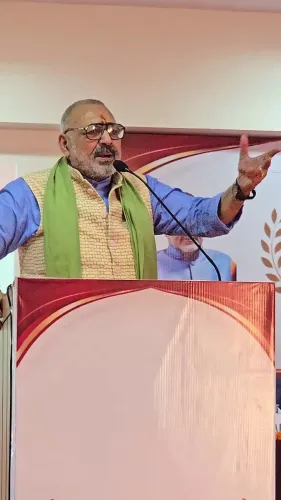
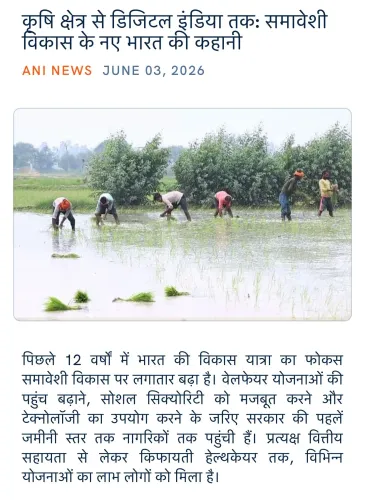
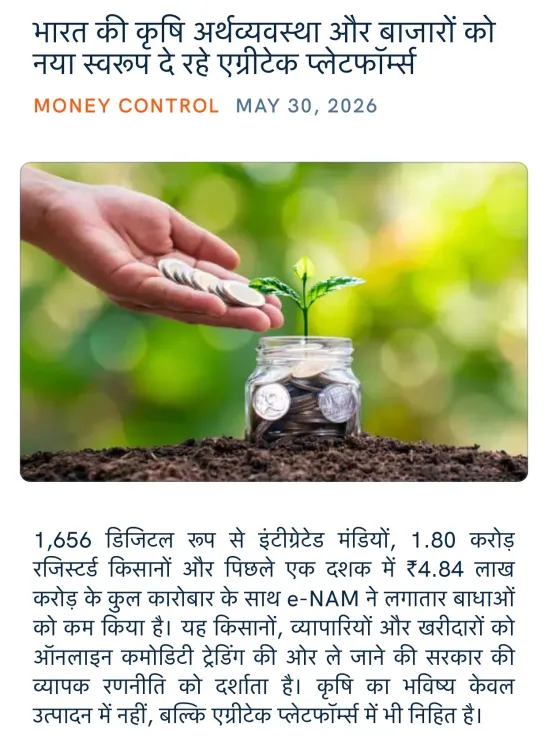
Union Textiles Minister Giriraj Singh amplified a piece on agritech platforms reshaping India's agricultural economy and markets, sharing it via the NaMo App on 31 May 2026. The post highlights the BJP government's focus on digital tools for farm modernisation, with direct relevance to cotton supply chains underpinning India's textile sector.
Key Takeaways
Union Textiles Minister Giriraj Singh shared content on agritech platforms on 31 May 2026 via the NaMo App.
The Hindi-language post translates to: 'Agritech platforms are reshaping India's agricultural economy and markets.' India's e-NAM (Electronic National Agriculture Market) , launched in 2016 , was a foundational public step toward digitising agricultural trade across mandis.
Agritech's impact on cotton farming makes it directly relevant to the textiles ministry's raw-material supply concerns.
Private agritech startups have expanded alongside public infrastructure, targeting supply-chain efficiency and direct market access for farmers .
Senior BJP leaders sharing such content signals the party's intent to build a narrative around technology-led rural transformation.
Union Textiles Minister Giriraj Singh on Sunday, 31 May 2026, shared an article on agritech platforms and their transformative role in India's agricultural economy and markets, amplifying the conversation around digital tools reshaping how farmers produce, price, and sell their goods. The post, shared via the NaMo App, underscores the minister's engagement with agricultural modernisation — a domain that intersects directly with his textiles portfolio through raw-material crops such as cotton.
Context
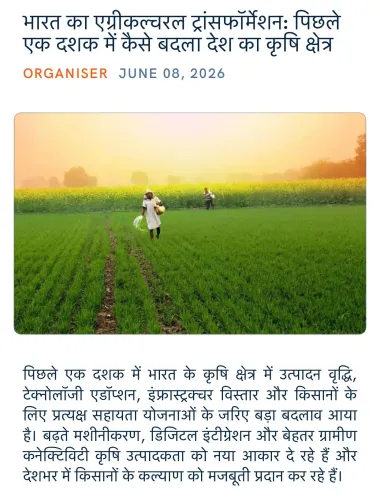
The post, written in Hindi, reads: 'Bharat ki krishi arthvyavastha aur baazaron ko naya swaroop de rahe agritech platforms' ['Agritech platforms are reshaping India's agricultural economy and markets']. By sharing this on the NaMo App — the BJP's official digital outreach platform — Giriraj Singh signals the ruling party's intent to highlight the convergence of technology and agriculture as a policy success narrative. The minister represents Begusarai in Bihar, a state with a significant agrarian base, giving him a constituency-level stake in farm-sector reforms.
Policy Backdrop
The push for agritech in India has deep policy roots. The central government launched e-NAM (Electronic National Agriculture Market) in 2016 to link physical agricultural mandis across states into a single online trading platform, improving price discovery and reducing the information gap between farmers and buyers. Private agritech startups have since expanded alongside this public infrastructure, focusing on supply-chain efficiencies, precision farming data, and direct-to-market access for producers.
Successive governments have promoted digital tools as a means to modernise agricultural marketing, cut out intermediaries, and ensure farmers receive a fairer share of the final price. The broader Digital India framework has provided the connectivity backbone that many of these platforms depend on, from rural broadband to smartphone penetration in farming communities.
Stakeholders and Impact
Farmers are the primary intended beneficiaries of agritech platforms, which promise better price realisation, access to credit, and real-time market information. Agritech startups operating in the space range from commodity trading platforms and warehouse receipt financing firms to drone-based crop monitoring services. The sector's growth has attracted significant venture capital interest, reflecting investor confidence in India's large and underserved agricultural market.
For the textiles sector specifically, agritech's influence on cotton farming — covering yield prediction, pest management, and market linkage for cotton growers — has direct downstream consequences for mills, spinners, and garment exporters. Minister Giriraj Singh's attention to this space therefore reflects a cross-ministerial concern: stronger agritech adoption among cotton farmers can stabilise raw-material supply and pricing for the entire textile value chain.
What's Next
Observers will watch whether agritech integration features prominently in the next Union Budget or in forthcoming updates from the agriculture ministry on digital initiatives. Any policy announcement linking agritech platforms with existing schemes such as e-NAM or the PM-KISAN framework would represent a significant escalation of the government's digital agriculture agenda. The minister's post, while a share rather than a policy announcement, adds to a pattern of senior BJP leaders using social media to build a narrative around technology-led rural transformation ahead of future electoral cycles.
Point of View
And supply-side instability in cotton farming reverberates through mills, exporters, and ultimately trade balances. By sharing this via the NaMo App rather than a ministerial statement, Giriraj Singh is contributing to a soft-power narrative that frames the BJP as the architect of rural digital transformation without committing to a specific policy position. This pattern — senior ministers endorsing agritech discourse ahead of budget cycles — often precedes formal scheme announcements or budget allocations for digital agriculture. The move also reflects a broader government strategy of using cross-ministerial voices to build consensus around technology adoption in sectors that straddle agriculture and industry.
NationPress
15 Oct 2026
Frequently Asked Questions
What did Giriraj Singh post about agritech?
Union Textiles Minister Giriraj Singh shared content on agritech platforms reshaping India's agricultural economy and markets on 31 May 2026 via the NaMo App, highlighting the role of digital tools in modernising farm trade.
What is e-NAM and how does it relate to agritech in India?
e-NAM, the Electronic National Agriculture Market, was launched in 2016 to link agricultural mandis across India into a single online trading platform, enabling better price discovery for farmers. It forms the public backbone alongside which private agritech startups have grown.
Why is a textiles minister commenting on agritech?
Cotton, a key raw material for India's textile industry, is an agricultural crop. Agritech platforms that improve cotton farming yields, pest management, and market access directly affect raw-material supply and pricing for mills and garment exporters.
How do agritech platforms help Indian farmers?
Agritech platforms help Indian farmers by providing real-time market price information, access to credit through warehouse receipt financing, precision farming data, and direct linkages to buyers, reducing dependence on intermediaries.
What is the NaMo App used for?
The NaMo App is the BJP's official digital outreach platform used by party leaders and ministers to share news, policy updates, and party messaging directly with supporters and the public.