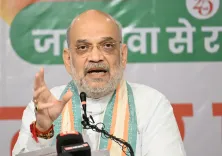
Giriraj Singh pitches startups, skills, self-reliance as new India engine
Synopsis
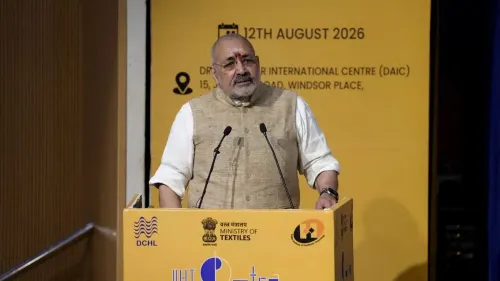
Union Textiles Minister Giriraj Singh on 3 June 2026 said startups, skills and self-reliance are shaping a new India, in a post on X routed through the NaMo App. The one-line Hindi message stitches together Startup India, Skill India and Atmanirbhar Bharat as a single growth narrative ahead of the next Union Budget.
Key Takeaways
Union Textiles Minister Giriraj Singh posted on X on 3 June 2026 via the NaMo App.
The Hindi message frames startups, skills and self-reliance as drivers of a 'new India'.
It links three flagship programmes: Startup India (2016), Skill India (2015) and Atmanirbhar Bharat (2020).
The post reinforces existing policy messaging rather than announcing a new scheme.
Key audiences include startup founders, MSME exporters and skilled youth.
Focus now shifts to the next Union Budget for startup and skilling allocations.
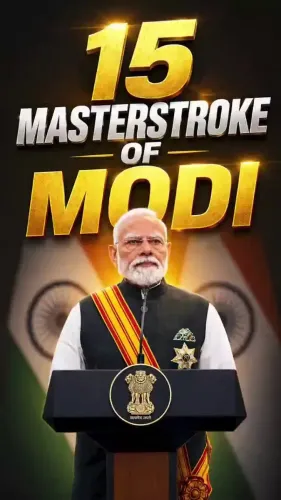
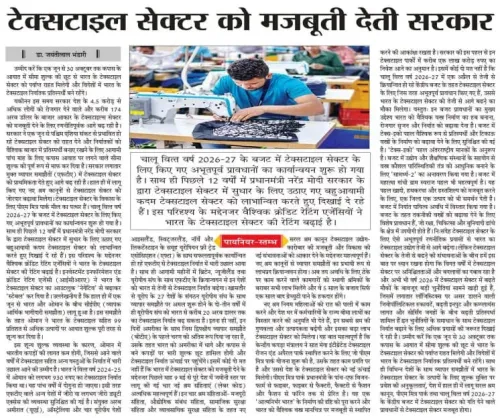
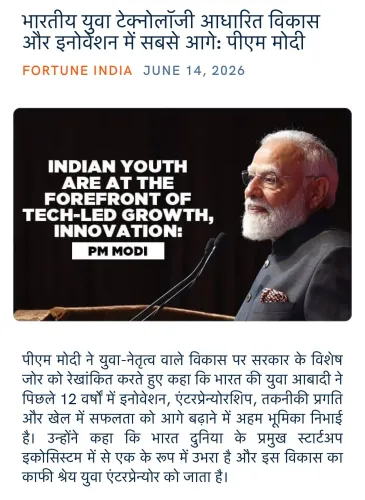
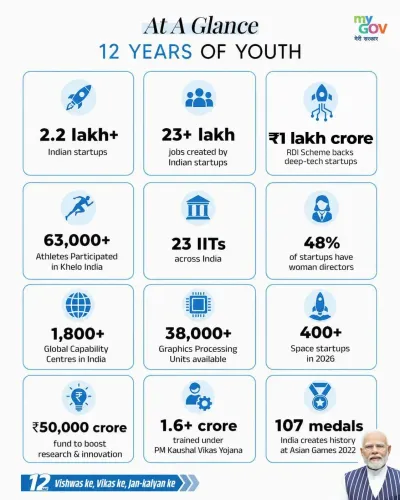
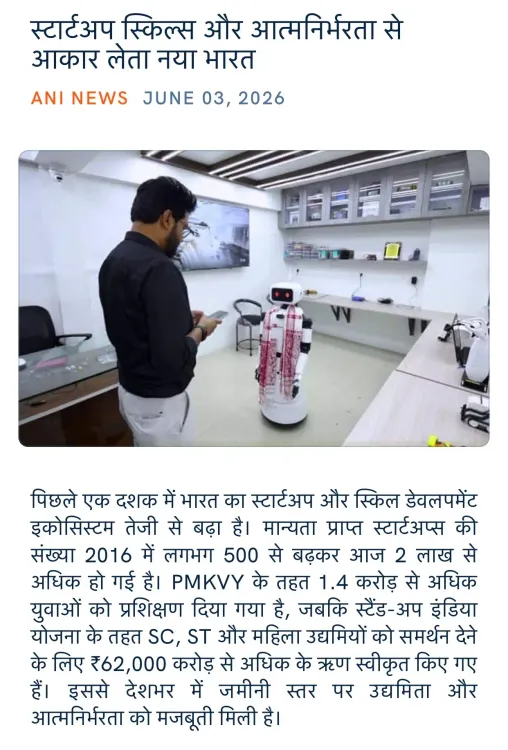
Union Textiles Minister Giriraj Singh on Wednesday, 3 June 2026, amplified the central government's economic messaging in a post on X, framing startups, skill development and self-reliance as the building blocks of a 'new India'. The post, shared via the NaMo App, links to a national news write-up on the same theme and is accompanied by a graphic carrying the campaign-style line.
Writing in Hindi, the minister said 'स्टार्टअप स्किल्स और आत्मनिर्भरता से आकार लेता नया भारत' ('A new India is being shaped by startups, skills and self-reliance'). The single-line message stitches together three flagship strands of the Narendra Modi government's economic agenda and positions them as a continuum rather than separate programmes.
Context
Giriraj Singh, a senior Bharatiya Janata Party leader and Lok Sabha MP from Begusarai, Bihar, has held the textiles portfolio in the current Union cabinet and frequently uses social media to spotlight government economic initiatives. His post on Wednesday did not announce a new policy; instead, it reinforced an existing narrative that has been a fixture of ministerial communication for several years.
The post's routing through the NaMo App — Prime Minister Narendra Modi's outreach platform — signals that the message is part of a coordinated push rather than a standalone observation. Such app-routed posts typically carry curated content that ministers and BJP functionaries amplify in parallel.
Policy backdrop
The three pillars invoked in the post each map to a distinct flagship programme. Startup India, launched in January 2016, set up tax incentives, simpler compliance and funding routes to seed an entrepreneurial ecosystem. The Skill India Mission, rolled out in 2015, focuses on vocational training and employability for the country's young workforce.
The third strand, Atmanirbhar Bharat Abhiyan, was announced in May 2020 to deepen domestic manufacturing, cut import dependence and strengthen local value chains. Together with the Make in India campaign, started in September 2014, these initiatives form the architecture the minister is referring to when he speaks of a 'new India' taking shape.
The textiles ministry, which Singh heads, has been a frequent showcase for this framework — particularly in handloom clusters, apparel parks and the growing technical textiles segment, where startup-led innovation and skilling programmes have been pushed in tandem.
Stakeholders and impact
The constituency the post addresses is broad: startup founders looking for continued policy support, MSME exporters seeking domestic demand and global market access, and skilled youth entering the workforce. For each of these groups, ministerial signalling matters as a cue on the direction of forthcoming budgetary and regulatory decisions.
For the BJP politically, the messaging consolidates an economic identity built since 2014 around entrepreneurship and self-reliance. It also doubles as a counter-frame to opposition criticism on jobs and manufacturing output, by linking the three programmes into a single growth story.
For the textiles sector specifically, the framing is consistent with the ministry's recent emphasis on integrating startup models into traditional clusters — a pattern visible in handloom e-commerce tie-ups and apparel-tech accelerators.
What's next
Attention now turns to the next Union Budget, where startup incentives, skilling allocations and production-linked support are expected to be recalibrated. Any fresh textile policy updates that fold startup-style mechanisms into handloom or apparel value chains will be read as the operational follow-through to messaging of the kind Singh posted on Wednesday.
In the near term, expect parallel posts from other Union ministers reinforcing the same triad — a pattern that typically precedes a larger government communication cycle on the economy.
Point of View
Skill India and Atmanirbhar Bharat into one line, Giriraj Singh is reinforcing the government's preferred framing that entrepreneurship, employability and import substitution are a single arc rather than three distinct programmes. The NaMo App routing suggests coordinated amplification, typical before budget or policy cycles. Expect this triad to recur across ministerial handles as the next Union Budget approaches.
NationPress
14 Sept 2026
Frequently Asked Questions
What did Giriraj Singh post about startups and self-reliance?
Union Textiles Minister Giriraj Singh on 3 June 2026 posted on X that startups, skills and self-reliance are shaping a new India. The Hindi message was shared via the NaMo App along with a link to a national news article on the theme.
When was Startup India launched?
Startup India was launched in January 2016. It offers tax incentives, simpler compliance and funding support to encourage new ventures and innovation across sectors.
What is Atmanirbhar Bharat Abhiyan?
Atmanirbhar Bharat Abhiyan is a self-reliance campaign announced in May 2020. It aims to boost domestic manufacturing, reduce import dependence and strengthen local value chains.
Which constituency does Giriraj Singh represent?
Giriraj Singh is the Lok Sabha MP from Begusarai in Bihar. He is a senior BJP leader and currently serves as Union Minister of Textiles.
How are startups linked to the textiles sector?
The textiles ministry has been integrating startup models into handloom, apparel and technical textiles clusters. This includes e-commerce tie-ups for weavers and accelerators for apparel-tech ventures.