Giriraj Singh Opens Natural Farming Workshop in Begusarai
Synopsis
Union Textiles Minister Giriraj Singh on 18 June 2026 inaugurated a natural farming district workshop at the Krishi Vigyan Kendra in Khodawandpur, Begusarai, urging farmers to adopt chemical-free methods to cut costs, preserve soil fertility, and advance PM Modi's Viksit Bharat vision.
Key Takeaways
Union Textiles Minister Giriraj Singh inaugurated the Natural Farming District Workshop at Khodawandpur KVK, Begusarai on 18 June 2026 .
Singh cited PM Narendra Modi's Viksit Bharat vision as the guiding framework for promoting natural farming among Bihar's farmers.
Natural farming was presented as a method to simultaneously reduce production costs , preserve soil fertility , and protect the environment .
The event falls under the #12YearsOfKisanKalyan campaign, marking over a decade of central government farmer welfare programmes.
The workshop aligns with the Paramparagat Krishi Vikas Yojana (2015) and the broader Atmanirbhar Bharat agricultural self-reliance framework.
The KVK network under ICAR serves as the implementation backbone for such district-level natural farming outreach across India.
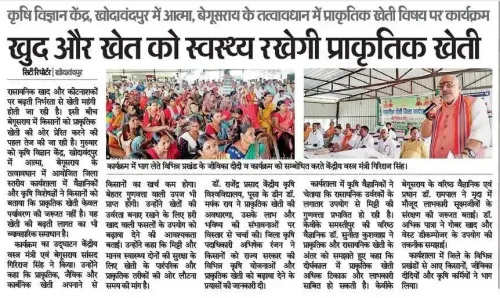
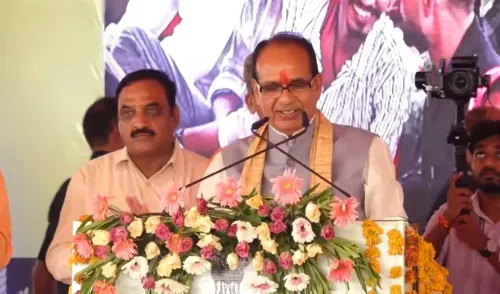
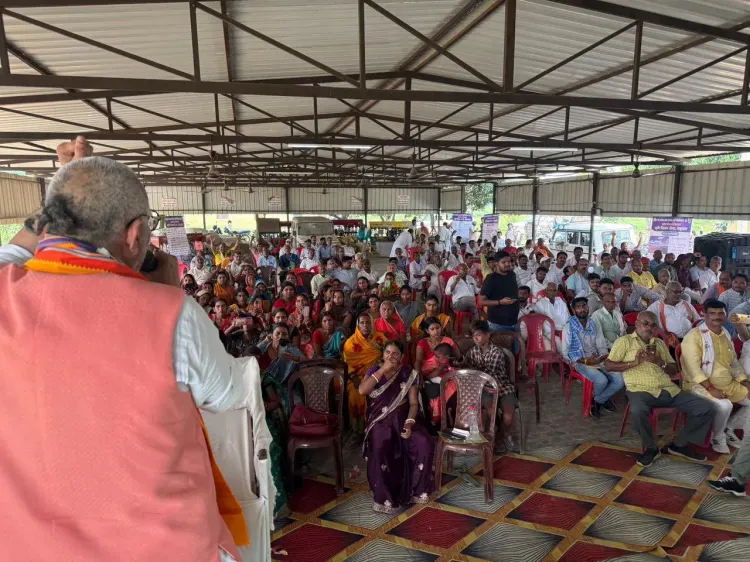
Union Textiles Minister Giriraj Singh on Thursday, 18 June 2026 inaugurated the 'Natural Farming District Workshop' (Prakritik Kheti Jila Karyashala) at the Krishi Vigyan Kendra (KVK) in Khodawandpur, Begusarai, Bihar, addressing farmers on the need to shift toward chemical-free cultivation methods.
Context
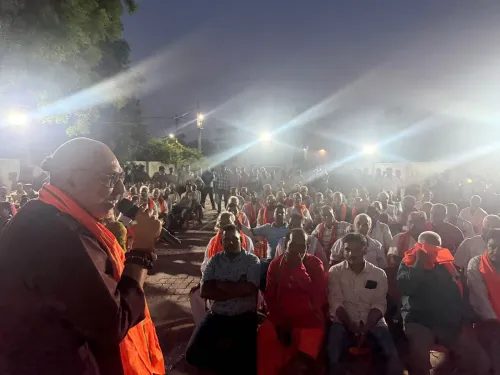
Addressing an audience of farmers — referred to as 'kisan bhai-behnon' (farmer brothers and sisters) — Singh invoked Prime Minister Narendra Modi's vision of a Viksit Bharat (Developed India), stating that promoting natural farming is 'the need of the hour.' He highlighted that the practice not only reduces farmers' production costs but also preserves soil fertility and strengthens environmental conservation. The event was held under the hashtag #12YearsOfKisanKalyan, marking over a decade of the BJP government's farmer welfare initiatives.
Policy Backdrop
Natural farming advocacy at the district level fits within a broader central government push for sustainable agriculture that has been building since 2015, when the Paramparagat Krishi Vikas Yojana (PKVY) was launched to promote organic and chemical-free farming clusters across Indian states. The National Mission for Sustainable Agriculture has similarly supported soil health management and eco-friendly practices for over a decade. KVKs, run under the Indian Council of Agricultural Research (ICAR), serve as the ground-level infrastructure for such training and demonstration programmes, making them the natural venue for district-level rollouts.
The workshop also aligns with the Atmanirbhar Bharat framework, which in the agricultural context targets reduced dependence on external chemical inputs, lower cost of cultivation, and greater farmer self-reliance. Central ministers inaugurating such events in their own constituencies has become a visible pattern in communicating these policy priorities directly to farming communities.
Stakeholders and Impact
Small and marginal farmers of Begusarai are the immediate audience, with the workshop designed to acquaint them with natural farming techniques that can lower their expenditure on fertilisers and pesticides. Bihar, with a predominantly agrarian economy, stands to benefit from scaling such practices, particularly as input costs have been a persistent burden on farm incomes in the state. The KVK network in the district is positioned to provide follow-up technical support to participating farmers.
Beyond the immediate participants, the event signals continued political attention to farmer welfare in Begusarai — Singh's own Lok Sabha constituency — ahead of any future policy or budgetary cycles that may channel additional resources toward sustainable agriculture in Bihar.
What's Next
The expansion of similar natural farming workshops to other Bihar districts will be a key indicator of whether this initiative scales beyond a single event. Integration with state agriculture budgets and alignment with central scheme allocations in the next financial cycle will determine the depth of adoption. Observers will also watch whether participation from this workshop translates into measurable uptake of natural farming practices at the village level in Begusarai.
Point of View
Particularly as the party marks over twelve years of farmer welfare programmes. The event connects the central government's Atmanirbhar Bharat framework to a tangible, local intervention — a pattern that serves both policy communication and constituency outreach simultaneously. The invocation of PM Modi's Viksit Bharat vision at a district-level KVK event reflects an effort to give grand developmental goals a concrete, visible form for rural audiences. Whether the workshop translates into sustained adoption of natural farming practices in Bihar will be the real test of the initiative's policy depth.
NationPress
20 Sept 2026
Frequently Asked Questions
What happened at the natural farming workshop in Begusarai on 18 June 2026?
Union Textiles Minister Giriraj Singh inaugurated the Natural Farming District Workshop at the Krishi Vigyan Kendra in Khodawandpur, Begusarai, where he addressed farmers on reducing input costs through chemical-free cultivation and linked the effort to PM Modi's Viksit Bharat vision.
What is the Krishi Vigyan Kendra in Begusarai?
The Krishi Vigyan Kendra (KVK) is a farm science centre under the Indian Council of Agricultural Research (ICAR) that conducts training, demonstrations, and workshops on modern and sustainable agricultural practices for local farmers.
What is natural farming and why is it being promoted in Bihar?
Natural farming is a chemical-free agricultural practice that reduces dependence on synthetic fertilisers and pesticides, lowering production costs and preserving soil fertility. It is being promoted in Bihar as part of the central government's sustainable agriculture push under schemes like Paramparagat Krishi Vikas Yojana.
What is the #12YearsOfKisanKalyan hashtag about?
The hashtag marks over twelve years of the BJP-led central government's farmer welfare initiatives since 2014, used to highlight ongoing programmes aimed at improving agricultural incomes and rural livelihoods.
How does natural farming relate to Atmanirbhar Bharat?
Atmanirbhar Bharat in agriculture aims to reduce farmers' dependence on imported or costly chemical inputs. Natural farming directly supports this by enabling farmers to use locally available resources, cutting costs and building self-reliance.