CM Himanta Hails Anahat Singh's World Junior Squash Title

Synopsis
Assam Chief Minister Himanta Biswa Sarma hailed Anahat Singh's historic victory at the World Junior Squash Championship on 26 July 2026, marking the first time an Indian has won the title. The milestone is seen as a landmark for Indian squash and a boost for youth sports development nationwide.
Key Takeaways
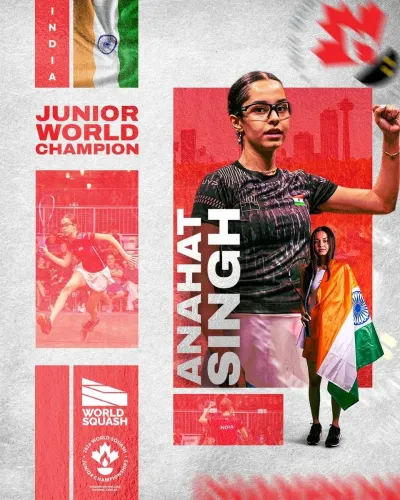
Anahat Singh became the first Indian to win the World Junior Squash Championship , a historic first for the country.
Assam Chief Minister Himanta Biswa Sarma publicly congratulated her on 26 July 2026 via X.
The World Junior Squash Championship is an annual tournament held under the World Squash Federation .
India's Khelo India scheme, launched in 2017 , has been a key policy driver for identifying and nurturing young talent in non-cricket disciplines.
The win is expected to boost grassroots squash participation and prompt calls for expanded infrastructure and coaching support across states.
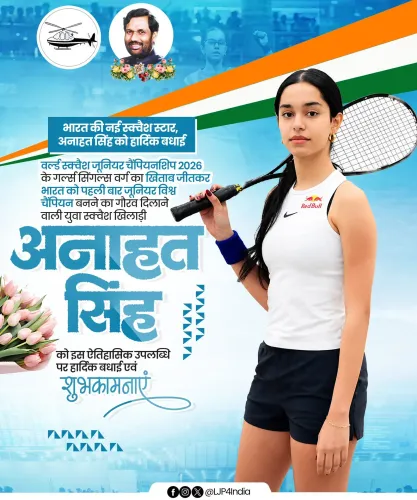
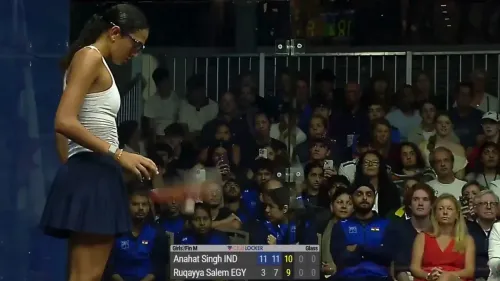
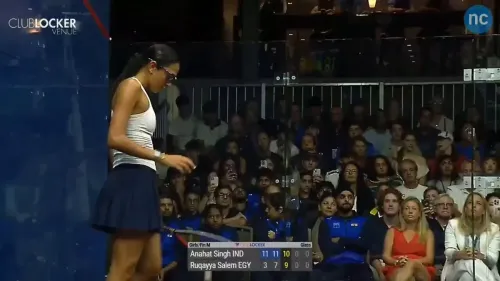
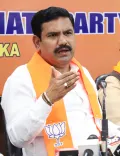
Assam Chief Minister Himanta Biswa Sarma on Sunday, 26 July 2026, congratulated Anahat Singh on becoming the first Indian to win the World Junior Squash Championship, calling it a historic moment for the country.
Context
Sarma posted on X: 'History created! Heartiest congratulations to Anahat Singh on becoming the first Indian to win the World Junior Squash Championship. Your determination and excellence have made the nation proud and inspired countless young athletes.' The Chief Minister's message underscored the landmark nature of the achievement, framing it as a milestone not just for squash but for Indian sport broadly.
Anahat Singh is among the most closely watched young talents in Indian squash. Her triumph at the World Junior Squash Championship — an annual tournament organised under the World Squash Federation — marks the first time India has claimed the title at the junior world level, a breakthrough that has drawn widespread attention from sporting circles across the country.
Policy Backdrop
India's push to develop non-cricket sporting talent has been anchored by the Khelo India scheme, launched in 2017, which identifies and funds promising young athletes across disciplines including racquet sports. The programme has channelled resources into grassroots infrastructure, coaching, and competitive exposure for juniors.
Indian squash has registered steady gains at both junior and senior levels over the past decade, driven by federation initiatives and government-backed sports schemes. Several states, including those in the northeast, have stepped up investment in non-cricket sports infrastructure, reflecting a broader policy shift away from a single-sport focus.
Stakeholders and Impact
The win is expected to energise the squash community and encourage uptake of the sport among young Indians who have historically gravitated toward cricket or badminton. Coaches, state sports academies, and the Squash Rackets Federation of India are likely to highlight the result as evidence that sustained junior development programmes can yield world-class results.
For Assam and the wider northeast region, where state governments have actively promoted diverse sporting disciplines, the moment carries symbolic weight. Chief Ministers and state leaders publicly amplifying individual sporting milestones has become an established pattern, using social media reach to broaden inspiration beyond traditional sporting strongholds.
What's Next
Attention will now turn to whether Anahat Singh's success translates into institutional support — including dedicated coaching camps, increased funding, and academy tie-ups — that can sustain India's momentum at the junior world level. The next cycle of the World Junior Squash Championship will be an early test of whether this breakthrough signals a structural shift or remains an exceptional individual achievement. State governments and the central sports ministry are expected to face calls to expand squash infrastructure in the months ahead.
Point of View
Arriving at a moment when government policy and federation investment in non-cricket disciplines are beginning to yield measurable results. Chief Minister Sarma's swift, high-profile congratulation reflects a calculated political pattern: state leaders leveraging individual sporting breakthroughs to project a progressive, youth-oriented image. The milestone will sharpen scrutiny on whether the central sports ministry and state governments convert the momentum into structural support — academies, funding, and competitive pathways — or allow it to remain a celebrated but isolated achievement. India's ability to repeat or build on this result in the next championship cycle will be the true measure of whether the system has genuinely matured.
NationPress
27 Jul 2026
Frequently Asked Questions
Who is Anahat Singh and what did she win?
Anahat Singh is a young Indian squash player who won the World Junior Squash Championship, becoming the first Indian ever to claim the title.
What is the World Junior Squash Championship?
The World Junior Squash Championship is an annual international junior tournament organised under the World Squash Federation, considered the top prize in junior squash globally.
Why did Assam CM Himanta Biswa Sarma congratulate Anahat Singh?
Chief Minister Himanta Biswa Sarma congratulated Anahat Singh on 26 July 2026 to mark her historic achievement as the first Indian to win the World Junior Squash Championship, calling it a moment of national pride.
What is the Khelo India scheme and how does it relate to squash?
Khelo India is a central government scheme launched in 2017 to identify and support talented young athletes across multiple disciplines, including racquet sports like squash, through funding, coaching, and competitive exposure.
What impact could Anahat Singh's win have on Indian squash?
Her victory is expected to inspire greater youth participation in squash, prompt demands for expanded infrastructure and coaching academies, and raise the sport's profile beyond traditional cricket-dominated sporting culture in India.