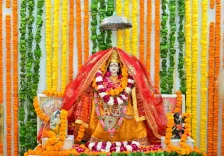
CM Himanta Hails Durga Puja as Assam's Sanatan Heritage
Synopsis
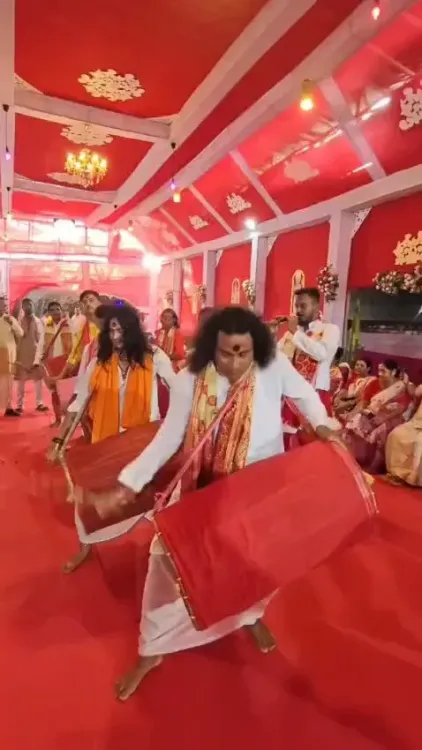
Assam CM Himanta Biswa Sarma marked Durga Puja 2026 by calling the festival an expression of the state's Sanatan heritage, sharing video of traditional processions and devotional celebrations held across Assam.
Key Takeaways
Assam CM Himanta Biswa Sarma posted on 19 October 2026 to mark Durga Puja celebrations across the state.
He described Assam's Sanatan culture as 'our heritage' ( हमारी धरोहर ) in a Hindi-language post accompanied by a video.
The post highlighted traditional rites and ceremonial music ( gaje-baje ) as hallmarks of Goddess Durga's arrival.
Durga Puja is one of Assam's most widely observed festivals, drawing participants across the state's diverse ethnic and linguistic communities.
The messaging continues a pattern of the BJP -led Assam government affirming Hindu festivals as pillars of state cultural identity.
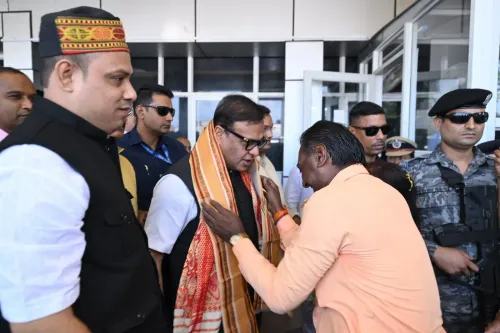
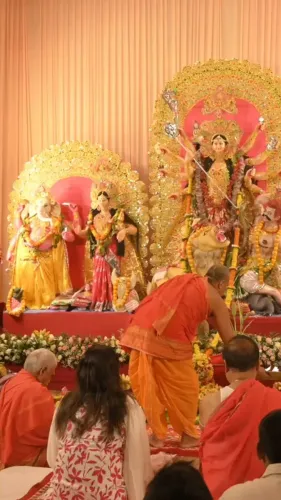
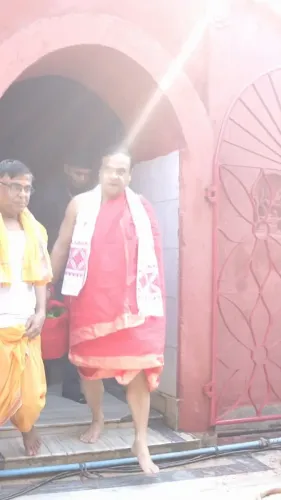
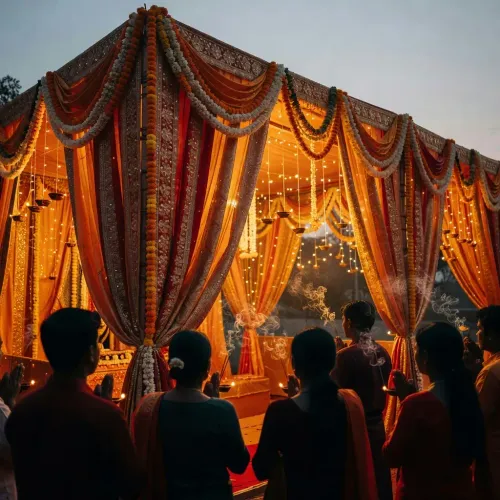
Drums, devotion, and the arrival of Goddess Durga — Assam Chief Minister Himanta Biswa Sarma marked Durga Puja 2026 by celebrating the festival as the living soul of the state's Sanatan culture, sharing a video of traditional processions unfolding across every corner of the northeastern state.
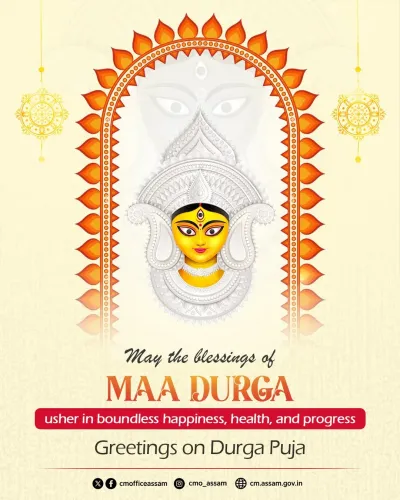
Writing in Hindi, the Chief Minister declared: 'असम की सनातन संस्कृति हमारी धरोहर है' — 'Assam's Sanatan culture is our heritage' — and noted that Maa Durga's arrival had been welcomed across the state with traditional rites, ceremonial music, and an atmosphere of reverence and joy.
Gaje-Baje: The Sound of Assam's Puja Tradition
Durga Puja in Assam is among the most widely observed Hindu festivals in the northeastern region, marked by elaborate community pandals, ritual processions, and the distinctive percussion and brass of local folk ensembles — the gaje-baje referenced by the Chief Minister. The celebration weaves together both the state's significant Bengali-origin population and its indigenous communities, making it a genuinely cross-cultural public event.
Sarma's framing of the festival as an expression of 'Sanatan heritage' fits within a pattern of the BJP-led Assam government periodically affirming Hindu festivals as pillars of the state's cultural identity, even as the administration also promotes recognition of indigenous tribal customs and traditions across the region's diverse communities.
Sarma's Role in the Northeast's Cultural Narrative
As convenor of the North-East Democratic Alliance (NEDA), Sarma has positioned Assam as a flagship state for the BJP's northeastern outreach. Cultural messaging around festivals like Durga Puja serves a dual purpose: reinforcing Hindu identity politics while also speaking to the vast community of devotees — across ethnic and linguistic lines — who participate in the celebrations as a lived tradition rather than a political statement.
The spectacle of Maa Durga's processions rolling through Assam's towns and villages — from Guwahati's grand pandals to small-town celebrations in the Brahmaputra valley — is, for millions of residents, simply the most joyful time of year. The Chief Minister's post, whatever its political register, lands in a moment of genuine public festivity.
As the dhak beats and the incense rises, Assam's Durga Puja is not merely a ritual — it is an annual assertion that this far-flung corner of India has always kept its own vivid, unyielding cultural heartbeat.
Point of View
Who also leads NEDA, such statements serve a dual purpose: consolidating Hindu voter sentiment in Assam while projecting a culturally inclusive image that appeals beyond strict ideological lines. The repeated invocation of 'heritage' around festivals like Durga Puja has become a signature register for BJP chief ministers across India, signalling continuity with a governing philosophy that treats Hindu culture as inseparable from national and regional identity. In Assam's multi-ethnic landscape, how this messaging is received by indigenous communities — who have their own distinct traditions — remains the quietly important subtext.
NationPress
19 Oct 2026
Frequently Asked Questions
What did Himanta Biswa Sarma say about Durga Puja 2026?
Assam CM Himanta Biswa Sarma declared that 'Assam's Sanatan culture is our heritage' and noted that Goddess Durga's arrival had been celebrated across every corner of the state with traditional rites and ceremonial music.
How is Durga Puja celebrated in Assam?
Durga Puja in Assam is marked by community pandals, ritual processions, and traditional folk music including percussion and brass ensembles. Both Bengali-origin and indigenous communities participate widely in the celebrations.
What is Sanatan culture and why does Himanta Sarma reference it?
Sanatan (meaning 'eternal') culture refers to the philosophical and ritual traditions of Hinduism. Sarma, a BJP leader, regularly frames Hindu festivals as expressions of this eternal heritage as part of the party's broader cultural identity messaging.
What is NEDA and what is Himanta Sarma's role in it?
The North-East Democratic Alliance (NEDA) is a BJP-led political alliance of parties in India's northeastern states. Himanta Biswa Sarma serves as its convenor, making him a key figure in the BJP's regional political strategy.
When is Durga Puja celebrated in 2026?
Durga Puja in 2026 falls in October, with CM Sarma's post dated 19 October 2026, coinciding with the peak days of the festival season.