CM Himanta pays tribute to Capt. Gautam Sarma on 19th martyrdom anniversary
Synopsis
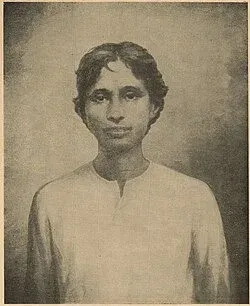
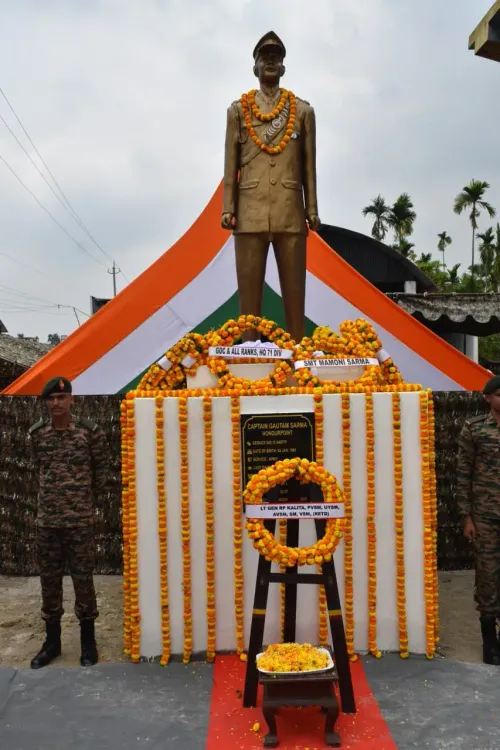
Assam Chief Minister Himanta Biswa Sarma marked the 19th martyrdom anniversary of Captain Gautam Sarma, a Siachen veteran and UN Peacekeeping Mission soldier martyred at 25 in 2007, as an 11-foot statue was installed at Maj Baghmara on land the officer bought with his first salary.
Key Takeaways
Captain Gautam Sarma was martyred on 3 June 2007 at the age of 25 , having served at Siachen and on a UN Peacekeeping Mission .
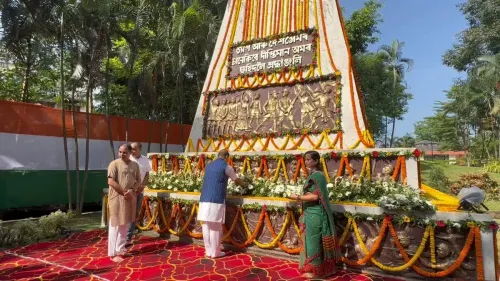
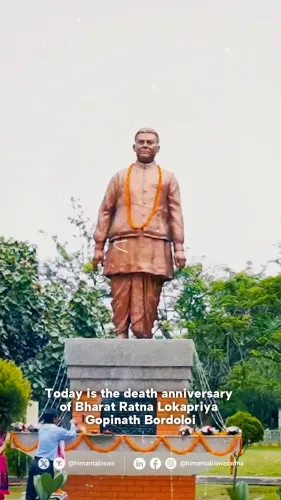
An 11-foot statue of Captain Sarma was installed at Maj Baghmara , Assam, on the 19th anniversary of his martyrdom.
The statue stands on land Captain Sarma purchased with his first salary from the Army.
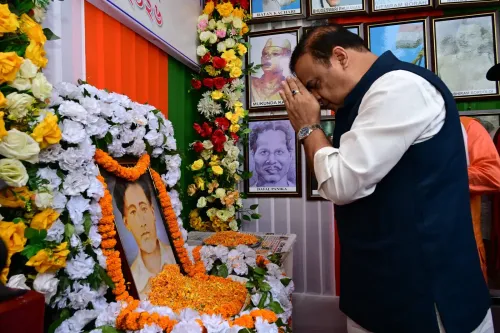
Assam Chief Minister Himanta Biswa Sarma paid public tribute via social media, describing the martyr as 'a soldier, a poet, a photographer.' The tribute invoked both national and regional pride through references to 'Maa Bharti' and 'Aai Asomi.'
Assam Chief Minister Himanta Biswa Sarma on Friday, 5 June 2026, paid tribute to Captain Gautam Sarma, an Assam-origin Army officer martyred at the age of 25, marking the soldier's 19th martyrdom anniversary. The Chief Minister noted that an 11-foot statue of the martyr has been installed at Maj Baghmara on the very plot of land Captain Sarma had purchased with his first salary.
Context
Captain Gautam Sarma laid down his life for the nation on 3 June 2007, having served in some of India's most demanding theatres of duty. He was part of the Indian Army's deployment at Siachen, the world's highest battlefield situated on the India-Pakistan border, where Indian troops have maintained a permanent presence since 1984. He also served as part of a United Nations Peacekeeping Mission, reflecting the breadth of his short but distinguished military career.
Chief Minister Sarma described him as 'a soldier, a poet, a photographer,' underlining that Captain Sarma's identity extended well beyond his uniform. The tribute post noted that his 'tales of bravery will inspire the young generation to dedicate themselves to the cause of Maa Bharti and Aai Asomi' — invoking both the nation and Assam.
Policy Backdrop
The installation of the statue at Maj Baghmara on land Captain Sarma personally acquired with his first Army pay carries strong symbolic weight. It connects the martyr's personal sacrifice to his home soil in a tangible, permanent way. The unveiling on the anniversary date follows a broader national practice of commemorating armed forces contributions from the Northeast through local memorials.
The Northeast has historically provided a significant number of recruits to the Indian Army, and state governments in the region have increasingly institutionalised the memory of local martyrs through statues, named public spaces, and annual state-level observances. Such gestures are seen as both a tribute to fallen soldiers and an encouragement to future generations from these states to serve in the armed forces.
Stakeholders and Impact
The primary beneficiaries of this commemoration are Captain Sarma's family and the wider community of Assam's martyr families, who receive public recognition of their kin's sacrifice. For the people of Maj Baghmara and surrounding areas, the statue provides a permanent local landmark honouring a son of the soil.
For Assam's youth, Chief Minister Sarma's tribute explicitly frames Captain Sarma's story as an inspiration. The invocation of 'Aai Asomi' — Aai Asomi (Mother Assam) — alongside 'Maa Bharti' signals an appeal to both regional pride and national duty, a recurring motif in the state government's outreach to young Assamese.
What's Next
The Assam government may follow this commemoration with further veterans' welfare measures or additional martyr memorials in the coming months, consistent with the state's recent pattern of honouring its armed forces personnel. The 11-foot statue at Maj Baghmara is expected to become a point of local pilgrimage and civic pride, particularly around future martyrdom anniversaries. Chief Minister Sarma's public post ensures the tribute reaches a national audience, potentially prompting similar recognitions from central defence and veterans' welfare bodies.
Point of View
Reinforcing a narrative that ties regional identity to national sacrifice. By highlighting the statue's placement on land bought with the soldier's first salary, the tribute personalises the sacrifice in a way that resonates far beyond formal state commemoration. The invocation of 'Aai Asomi' alongside 'Maa Bharti' reflects a deliberate political messaging strategy that frames Assamese identity as inseparable from Indian patriotism. This pattern of institutionalised remembrance also serves a forward-looking purpose: encouraging enlistment and civic pride among Assam's younger population.
NationPress
21 Oct 2026
Frequently Asked Questions
Who was Captain Gautam Sarma?
Captain Gautam Sarma was an Assam-origin Indian Army officer who served at Siachen and with a UN Peacekeeping Mission. He was martyred on 3 June 2007 at the age of 25.
Where is the statue of Captain Gautam Sarma installed?
An 11-foot statue of Captain Gautam Sarma was installed at Maj Baghmara in Assam, on a plot of land he had purchased with his first Army salary.
Why did Himanta Biswa Sarma pay tribute to Captain Gautam Sarma in June 2026?
Assam Chief Minister Himanta Biswa Sarma paid tribute to mark the 19th martyrdom anniversary of Captain Gautam Sarma, who was martyred on 3 June 2007.
What was Captain Gautam Sarma's connection to Siachen?
Captain Gautam Sarma served in the Indian Army's deployment at Siachen, the world's highest battlefield on the India-Pakistan border, as part of his military career.
What is Maj Baghmara?
Maj Baghmara is a location in Assam where the 11-foot statue of martyr Captain Gautam Sarma has been installed, on land the officer had personally bought with his first salary.