CM Himanta pays tribute to Tarun Ram Phookan on Deshbhakti Diwas
Synopsis
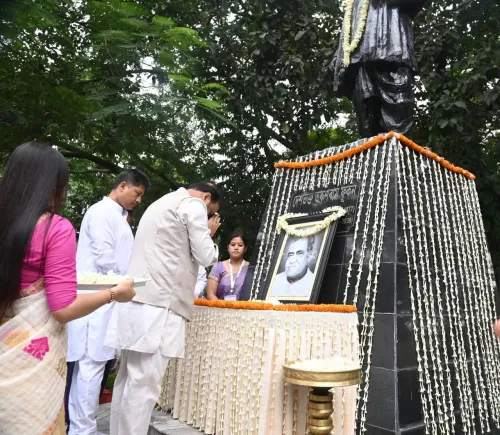
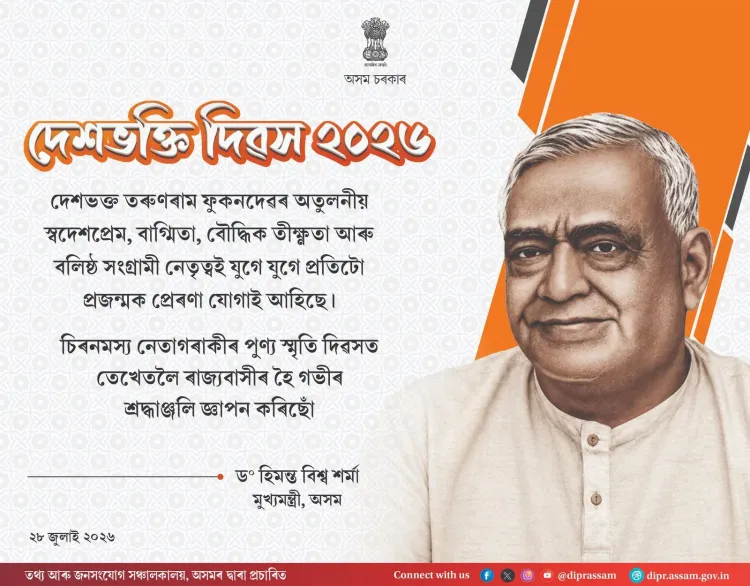
Chief Minister Himanta Biswa Sarma paid tributes to Assamese freedom fighter Tarun Ram Phookan on Deshbhakti Diwas, his death anniversary, on 28 July 2026, honouring his leadership in India's independence movement and his enduring ideals of selfless service.
Key Takeaways
CM Dr Himanta Biswa Sarma paid official tributes to Deshbhakta Tarun Ram Phookan on his punyatithi , observed as Deshbhakti Diwas .
Tarun Ram Phookan was a prominent Assamese lawyer and independence activist who participated in the Non-Cooperation and Civil Disobedience movements.
The Assam government has maintained annual observances honouring state-level freedom fighters since the 1950s .
CM Sarma , in office since 2021 , has prioritised cultural commemorations of regional independence icons as part of state governance.
The observance aims to connect Assam's distinct regional history with the broader national freedom struggle narrative.
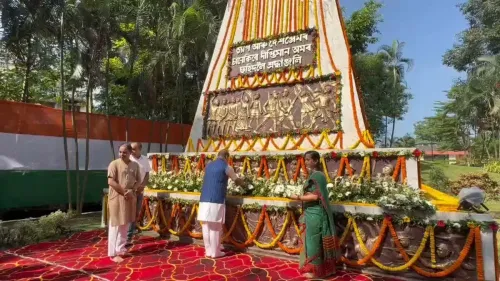
The Chief Minister's Office of Assam announced on Tuesday, 28 July 2026 that Chief Minister Dr Himanta Biswa Sarma paid tributes to Deshbhakta Tarun Ram Phookan on his punyatithi (death anniversary), observed by the state as Deshbhakti Diwas, honouring his legacy as a leader of India's freedom struggle whose ideals of selfless service continue to inspire generations.
Context
Tarun Ram Phookan was an eminent Assamese lawyer, politician, and independence activist who rose to prominence as a senior Congress leader in Assam. He actively participated in the Non-Cooperation Movement and the Civil Disobedience Movement led by Mahatma Gandhi, making him one of the most significant contributors to the freedom struggle from the northeastern region. The honorific 'Deshbhakta' — meaning 'patriot' — was conferred upon him in recognition of his lifelong dedication to the national cause.
The state government's annual observance of his death anniversary as Deshbhakti Diwas places Phookan's legacy within a broader effort to foreground Assam's distinct role in the national independence movement, ensuring that regional icons receive recognition alongside figures celebrated at the national level.
Policy Backdrop
Since the 1950s, successive Assam governments have maintained formal annual observances honouring state-level contributors to India's independence. CM Sarma, who has led the state since 2021, has prioritised such cultural commemorations as a consistent feature of governance, integrating tributes to regional freedom fighters into the state's official calendar.
This practice reflects a wider pattern seen across Indian states, where governments use death and birth anniversaries of pre-independence figures to connect local history with the national freedom narrative. In Assam's case, such observances also carry a cultural dimension, reinforcing the region's identity within the Indian Union.
Stakeholders and Impact
Assamese youth and regional historians are among the primary audiences for Deshbhakti Diwas observances. By formally marking the occasion at the level of the Chief Minister's Office, the state government signals institutional commitment to preserving the memory of figures like Phookan who might otherwise receive limited attention in national discourse.
Educational institutions, cultural organisations, and civil society groups in Assam have historically participated in such commemorations, using them as occasions to recount the state's contributions to the freedom struggle for younger audiences.
What's Next
Observers will watch whether the Assam government moves to expand Deshbhakti Diwas beyond an official tribute into a wider public programme — for instance, by integrating Tarun Ram Phookan's legacy into school curricula or organising state-level public events in subsequent years. Such steps would signal a deeper institutionalisation of the observance beyond annual commemorations. The trajectory of this initiative could set a template for how other northeastern states elevate their own regional freedom fighters in public memory.
Point of View
The administration simultaneously reinforces Assam's historical contribution to the national movement and strengthens its own cultural credentials. This approach reflects a broader trend among state governments — particularly in the northeast — of using pre-independence icons to build regional identity and political legitimacy. The longer-term question is whether these observances translate into substantive educational or public-engagement programmes, or remain primarily symbolic.
NationPress
26 Oct 2026
Frequently Asked Questions
Who was Tarun Ram Phookan?
Tarun Ram Phookan was an Assamese lawyer, politician, and independence activist who participated in the Non-Cooperation and Civil Disobedience movements. He was a senior Congress leader in Assam and was honoured with the title 'Deshbhakta' for his lifelong service to the freedom struggle.
What is Deshbhakti Diwas in Assam?
Deshbhakti Diwas is the death anniversary of Deshbhakta Tarun Ram Phookan, observed officially by the Assam government as a day to honour his contributions to India's independence movement.
What did CM Himanta Biswa Sarma do on Deshbhakti Diwas 2026?
Chief Minister Dr Himanta Biswa Sarma paid tributes to Tarun Ram Phookan on his punyatithi on 28 July 2026, honouring his leadership in India's freedom struggle and noting that his ideals of selfless service continue to inspire generations.
Why does Assam observe Deshbhakti Diwas?
Assam observes Deshbhakti Diwas to formally recognise the contribution of Tarun Ram Phookan to the national independence movement. It is part of a long-standing state tradition of marking anniversaries of regional freedom fighters to integrate local history with the national narrative.
What movements did Tarun Ram Phookan participate in?
Tarun Ram Phookan participated in the Non-Cooperation Movement and the Civil Disobedience Movement, both key phases of India's struggle for independence from British rule.