CM Himanta vows to keep pushing out infiltrators from Assam

Synopsis
Assam Chief Minister Himanta Biswa Sarma declared on X that evicting infiltrators from Assam is a maternal command he will honour as long as he holds public office, reaffirming BJP's hardline stance on illegal immigration rooted in the 1985 Assam Accord.
Key Takeaways
Himanta Biswa Sarma posted a personal vow on 9 August 2026 to never let infiltrators 'sit in peace' as long as he is in public life.
He framed the commitment as his mother's wish — a direct order he will not refuse.
The post is anchored in Assam's four-decade political fault line over illegal immigration from Bangladesh , codified in the Assam Accord of 1985 .
The National Register of Citizens , finalised in 2019 , remains the legal instrument meant to separate citizens from post- 1971 entrants.
The BJP government in Assam has conducted multiple eviction drives since 2016 , with district administrations directed to identify and remove illegal settlers.
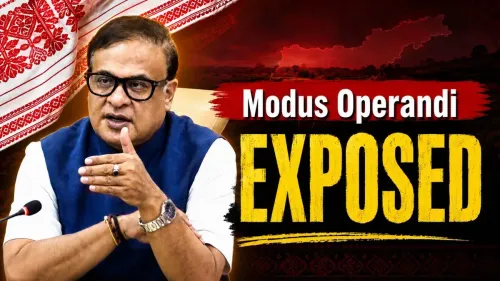
A mother's wish has become a son's political oath. Assam Chief Minister Himanta Biswa Sarma posted a sharp, personal declaration on X on Sunday, 9 August 2026, framing his government's relentless drive against illegal immigration not as policy — but as a filial duty he cannot refuse.
In Hindi, the Chief Minister wrote: 'माँ की ये इच्छा, इस बेटे के लिए आदेश है। जब तक हम सार्वजनिक जीवन में हैं, घुसपैठियों को चैन से बैठने नहीं देंगे।' — 'A mother's wish is an order for this son. As long as we are in public life, we will not let infiltrators sit in peace.'
The post, accompanied by a video, strips the political down to the personal. It is a message aimed squarely at the indigenous Assamese constituency that has anchored BJP's dominance in the state since 2016.
The 40-year wound that never fully closed
The anxiety over illegal immigration in Assam is not new — it is the defining fault line of the state's modern politics. The Assam Agitation of 1979–85, which convulsed the state for six years, ended with the Assam Accord of 1985. That accord set 24 March 1971 as the cut-off: anyone who entered the state from Bangladesh after that date would be identified and deported. Four decades later, that promise remains only partially fulfilled — and it remains the most combustible issue in Assamese public life. The National Register of Citizens (NRC), updated and finalised in 2019, was designed to give that old promise a legal spine. It sought to separate citizens from post-1971 entrants across Assam's 33 districts. The exercise was vast, contentious, and incomplete in its political resolution — leaving both indigenous communities and excluded individuals in legal limbo.Sarma's governance plank: eviction as a standing order
Since taking charge as Chief Minister in 2021, Sarma has made infiltrator detection and eviction a signature of his administration. District administrations have been directed to identify encroachments and illegal settlers. Multiple eviction drives have been carried out — some drawing national attention for their scale and speed. Sunday's post signals that this posture is not softening. By invoking a mother's wish — a deeply resonant image in Indian political culture — Sarma elevates the commitment beyond electoral calculation. The message: this is personal, it is permanent, and it will not pause between election cycles. For Assam's indigenous communities, the post will read as a reaffirmation. For critics who argue that anti-infiltration drives have at times swept up long-settled residents and Bengali-speaking minorities, it is a reminder that the political pressure behind these operations is not easing. The intersection with national debates — on the Citizenship Amendment Act, on border fencing along the India-Bangladesh frontier, on the future of the NRC — means that what Sarma says in Guwahati echoes far beyond Assam's borders. A chief minister who frames border enforcement as a maternal command is not signalling a policy review. He is signalling continuity — at full throttle.Point of View
Sarma is doing something strategically deliberate: he is insulating the drive from being read as mere electoral posturing and recasting it as a moral, near-sacred obligation. This taps directly into the emotional core of the Assam Agitation's legacy — a wound that successive governments promised to heal and never fully did. The post also signals that Sarma intends to keep the issue at the centre of Assam's political identity regardless of where the NRC's legal journey lands. In a broader BJP context, it reinforces the party's national narrative on border security and demographic anxiety, with Assam serving as the frontline exhibit.
NationPress
24 Sept 2026
Frequently Asked Questions
What did Himanta Biswa Sarma post about infiltrators?
Assam Chief Minister Himanta Biswa Sarma posted on X that his mother's wish is an order for him, and that as long as he is in public life, he will not let infiltrators sit in peace in Assam.
What is the Assam Accord and how does it relate to this?
The Assam Accord is a 1985 agreement between the central government and Assam agitators that set 24 March 1971 as the cut-off date for identifying illegal immigrants — anyone who entered from Bangladesh after that date is to be detected and deported. Sarma's vow is a reaffirmation of that commitment.
What is the National Register of Citizens in Assam?
The National Register of Citizens (NRC) is an Assam-specific register that was updated and finalised in 2019 to identify genuine citizens and exclude those who entered after the 1971 cut-off date set by the Assam Accord.
Has the Assam government carried out eviction drives against infiltrators?
Yes. The BJP government in Assam has conducted multiple eviction drives targeting alleged infiltrators since coming to power in 2016, with district administrations directed to identify encroachments and illegal settlers.
Why is illegal immigration such a big issue in Assam?
Assam shares a long border with Bangladesh and experienced large-scale migration, particularly around the 1971 Bangladesh Liberation War. The resulting demographic anxiety triggered the Assam Agitation of 1979–85 and has remained the defining political issue in the state ever since.