CM Himanta Warns: Infiltrators Must Be Removed From Assam Voter Rolls
Synopsis
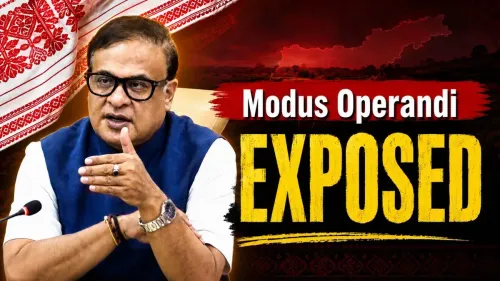
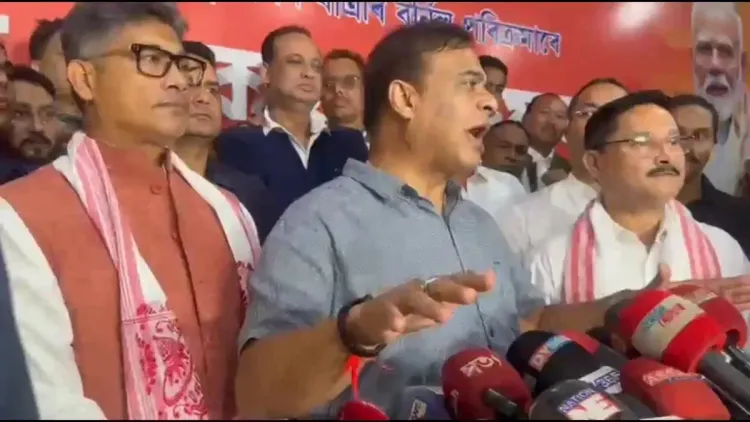
Assam CM Himanta Biswa Sarma declared on October 9, 2026, that India will not bow to threats and that infiltrators must be purged from the electoral process, invoking Assam's decades-long struggle for a clean voter list.
Key Takeaways
CM Himanta Biswa Sarma posted on October 9, 2026 warning that 'this country will not be intimidated' by unnamed threats.
He asserted that infiltrators must be removed from the electoral process without exception.
Sarma invoked Assam's years-long public struggle for a clean voter list as the basis for continued action.
The statement lands against the backdrop of the Assam NRC exercise, which excluded nearly 1.9 million applicants in August 2019 .
The Assam Accord of 1985 set March 24, 1971 as the legal cut-off date for identifying illegal migrants in the state.
As NEDA convenor , Sarma's push on voter roll integrity has implications across all eight north-eastern states .
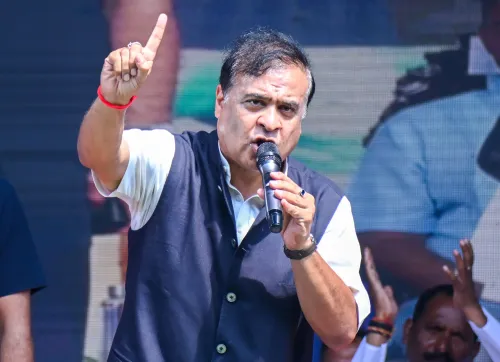
Assam's electoral integrity battle is heating up again. Assam Chief Minister Himanta Biswa Sarma on Friday, October 9, 2026, fired a sharp warning at those he described as threatening forces, declaring that neither Assam nor India would be intimidated — and that infiltrators must be driven out of the electoral process.
Writing in Hindi on X, CM Sarma stated: 'इन लोगों की धमकी से देश नहीं डरेगा। घुसपैठियों को चुनावी प्रक्रिया से बाहर जाना ही होगा।' — 'This country will not be intimidated by the threats of these people. Infiltrators will have to be removed from the electoral process.' He added that the people of Assam have struggled for many years for a clean voter list, and will continue to do so.
Assam's Long Fight for a Clean Voter List
The demand for a clean electoral roll in Assam is not new — it is rooted in decades of demographic anxiety and political mobilisation. The state witnessed one of India's most turbulent citizenship movements, culminating in the Assam Accord of 1985, which set March 24, 1971 as the cut-off date for identifying illegal migrants. That accord became the foundation for the National Register of Citizens (NRC) exercise, which consumed years of administrative effort and remains deeply contested.
The NRC's final list, published in August 2019, excluded nearly 1.9 million applicants — a figure that sparked fierce debate across political lines. Questions about who is a 'genuine citizen' and who is an 'infiltrator' have never been fully resolved, and voter list verification exercises in the state periodically reignite that fault line. Sarma's post lands squarely in that charged context.
A Warning to 'These People' — and What It Signals
The phrase 'in logon ki dhamki' — 'the threats of these people' — is pointed but deliberately unnamed. CM Sarma did not specify which individuals or groups he was referring to, but the framing — 'threats,' 'infiltrators,' 'electoral process' — signals a fresh flashpoint around voter roll scrutiny in Assam. Such scrutiny exercises, when announced, routinely draw protests from opposition parties and minority community organisations who argue they are used to disenfranchise legitimate citizens.
By invoking the 'struggle of Assam's people' across 'many years,' Sarma is drawing a direct line from the Assam Agitation of the 1970s–80s to the present BJP-led push, framing clean voter rolls as a civilisational demand rather than a partisan one. That framing is politically potent in a state where demographic change and border migration remain live anxieties.
BJP's Electoral Politics in the North-East
As convenor of the North-East Democratic Alliance (NEDA), Sarma's statements carry weight well beyond Assam's borders. Any move to tighten voter list verification ahead of the next election cycle will be watched closely by all eight north-eastern states, where identity, citizenship, and electoral legitimacy are intertwined in uniquely sensitive ways.
The Assam government has previously launched door-to-door verification drives and flagged 'D-voters' (Doubtful voters) in border districts. Each such exercise triggers legal challenges and community pushback. Sarma's defiant tone today suggests the government is prepared to press ahead regardless — threats or no threats.
The battle for Assam's voter rolls is far from settled — and the Chief Minister has just made clear he has no intention of stepping back.
Point of View
He makes any opposition to the drive look like a defence of infiltrators. The unnamed 'threats' lend urgency and victimhood simultaneously — a sharp dual message. With north-eastern states perpetually sensitive on identity and citizenship, this kind of signal from the NEDA convenor can set the political agenda well beyond Assam.
NationPress
9 Oct 2026
Frequently Asked Questions
What did Assam CM Himanta Biswa Sarma say about infiltrators and the voter list?
CM Sarma declared on October 9, 2026 that India will not be intimidated by threats, that infiltrators must be removed from the electoral process, and that Assam's people have long struggled for a clean voter list and will continue to do so.
What is the NRC and how does it relate to Assam's voter list issue?
The National Register of Citizens (NRC) was an exercise to identify genuine Indian citizens in Assam, rooted in the Assam Accord of 1985. Its final list published in August 2019 excluded nearly 1.9 million applicants, and disputes over citizenship directly feed into voter list verification controversies.
Who are 'D-voters' in Assam?
'D-voters' or Doubtful voters are persons flagged by Assam's electoral authorities as having uncertain citizenship status. Their voting rights are suspended pending verification, a category that has repeatedly triggered legal and political disputes in border districts.
What is the Assam Accord and why does it matter for voter rolls?
The Assam Accord, signed in 1985, set March 24, 1971 as the cut-off date for detecting illegal migrants in Assam. It remains the legal bedrock for all NRC and voter roll verification exercises in the state.
What is NEDA and why does Himanta Biswa Sarma's statement matter for the north-east?
The North-East Democratic Alliance (NEDA) is a BJP-led political coalition of parties across north-eastern states, convenored by CM Sarma. His statements on citizenship and voter rolls therefore carry political weight across all eight north-eastern states, not just Assam.