CM Himanta at Kalakshetra: History must guide youth
Synopsis
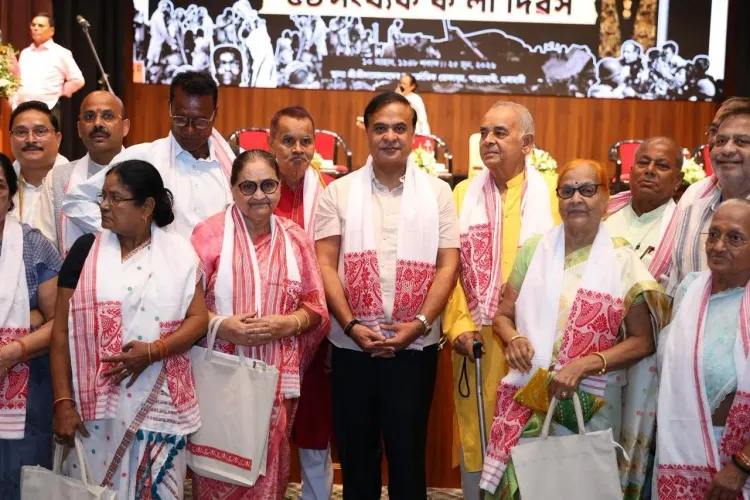
Chief Minister Himanta Biswa Sarma attended a programme at Srimanta Sankardev Kalakshetra in Guwahati on 25 June 2026, calling on younger generations to learn from the nation's past and emphasising historical awareness as a pillar of civic identity in Assam.
Key Takeaways
CM Himanta Biswa Sarma attended a programme at Srimanta Sankardev Kalakshetra , Guwahati, on 25 June 2026 .
He underscored the importance of preserving historical awareness and encouraged youth to learn from India's past.
Srimanta Sankardev Kalakshetra was established in 1998 as a state-supported institution honouring the 15th-16th century saint-reformer Srimanta Sankardev.
The Assam government has consistently backed institutions linked to Sankardev as part of efforts to strengthen regional identity in the Northeast.
Possible policy follow-through may include curriculum modules on Sankardev-era history or expanded school outreach programmes by the Kalakshetra.
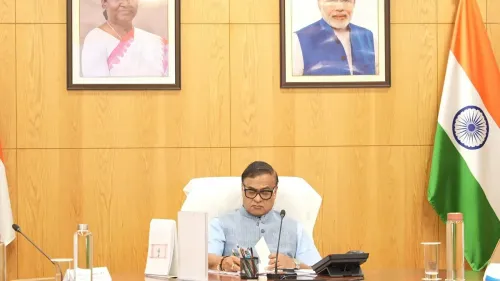
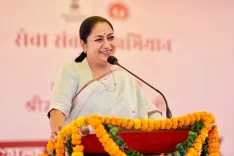
The Chief Minister's Office of Assam announced on Thursday, 25 June 2026, that Chief Minister Dr. Himanta Biswa Sarma attended a programme at Srimanta Sankardev Kalakshetra in Guwahati, where he underscored the importance of preserving historical awareness and urged younger generations to draw lessons from the nation's past.
Context
Srimanta Sankardev Kalakshetra is a state-supported cultural complex in Guwahati established in 1998 to honour the legacy of the 15th-16th century saint-reformer Srimanta Sankardev, who transformed Assamese society through his philosophy, literature, and devotional arts. The institution hosts programmes on Assamese arts, literature, and history, serving as a central hub for regional cultural preservation. CM Himanta Biswa Sarma, who has been in office since 2021, has regularly participated in events of this nature as part of his administration's emphasis on Assamese heritage.
At the event, the Chief Minister highlighted that an understanding of history is not merely academic but essential for shaping the values and civic identity of future generations. His remarks positioned historical consciousness as a foundation for informed citizenship among Assam's youth.
Policy Backdrop
Assam governments have long supported institutions linked to Srimanta Sankardev as instruments of regional identity and historical consciousness in the Northeast. The Kalakshetra itself was conceived as a living cultural institution — not simply a museum — capable of actively transmitting Sankardev's philosophical and artistic traditions to new audiences.
Under the current administration, this emphasis has continued alongside a broader national focus on integrating indigenous and regional histories into public education and cultural programming. The state has consistently backed outreach efforts that bring Sankardev-era history closer to school-going children and college students across Assam.
Stakeholders and Impact
Assamese youth are the primary audience for the message delivered at the event, with CM Sarma's remarks framing historical learning as a civic responsibility rather than an optional pursuit. Cultural organisations operating within and around the Kalakshetra ecosystem stand to benefit from renewed political attention to heritage programming.
For communities across Assam's diverse linguistic and ethnic landscape, the Kalakshetra serves as a unifying cultural reference point. Events of this kind reinforce the institution's role as a bridge between the state's historical identity and its contemporary population.
What's Next
Observers will watch for potential policy follow-through, including the possible introduction of state curriculum modules on Sankardev-era history or expanded Kalakshetra outreach programmes targeting schools across Assam. The Chief Minister's public emphasis on historical education at a flagship cultural venue signals that such initiatives may be in active consideration.
Whether this event catalyses formal educational or cultural policy announcements will become clearer in the weeks ahead, but the administration's sustained engagement with heritage institutions suggests a deliberate and continuing strategic direction.
Point of View
He signals that cultural policy is not peripheral but central to his governance narrative. This sits within a broader national trend of state governments elevating regional histories alongside mainstream curricula. The event keeps open the door to concrete policy action — curriculum reform or institutional expansion — that could give the rhetoric a measurable policy footprint.
NationPress
24 Sept 2026
Frequently Asked Questions
What is Srimanta Sankardev Kalakshetra and why is it significant?
Srimanta Sankardev Kalakshetra is a state-supported cultural complex in Guwahati, Assam, established in 1998 to preserve and promote the legacy of 15th-16th century saint-reformer Srimanta Sankardev. It hosts programmes on Assamese arts, literature, and history, making it a central institution for regional cultural preservation.
Why did CM Himanta Biswa Sarma attend the Kalakshetra programme?
CM Himanta Biswa Sarma attended the programme to underscore the importance of preserving historical awareness and to encourage younger generations in Assam to learn from the nation's past, reflecting his administration's broader emphasis on heritage and cultural identity.
What did Himanta Biswa Sarma say at Srimanta Sankardev Kalakshetra?
According to the Chief Minister's Office of Assam, CM Sarma stressed the importance of historical awareness and urged youth to draw lessons from the nation's past, framing historical learning as essential for shaping civic values.
What policies might follow CM Sarma's visit to Kalakshetra?
Observers are watching for possible introduction of state curriculum modules on Sankardev-era history or expanded Kalakshetra outreach programmes targeting schools across Assam, though no formal announcements have been confirmed yet.
Who was Srimanta Sankardev and what is his relevance to Assam today?
Srimanta Sankardev was a 15th-16th century saint-reformer who profoundly shaped Assamese society through his philosophy, devotional literature, and arts. His legacy remains a cornerstone of Assamese cultural and regional identity, and successive state governments have supported institutions dedicated to preserving his contributions.