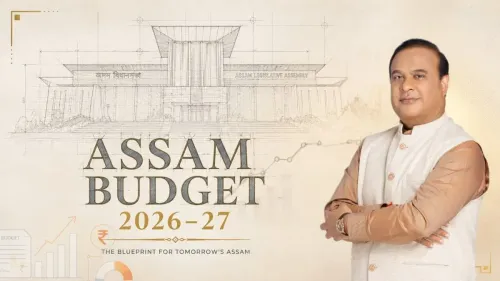
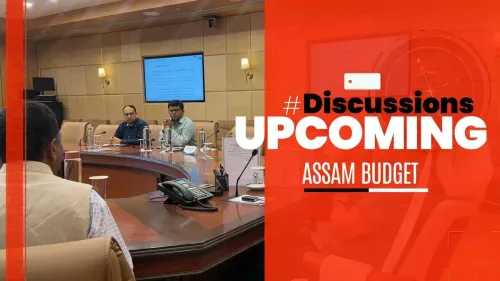
CM Himanta chairs meet on Assam's 2026-27 Budget
Synopsis
Chief Minister Himanta Biswa Sarma chaired a Finance Department meeting on 29 May 2026 to begin drafting Assam's 2026-27 Budget, directing officials to prioritise welfare commitments alongside industrialisation and entrepreneurship to make the state self-reliant.
Key Takeaways
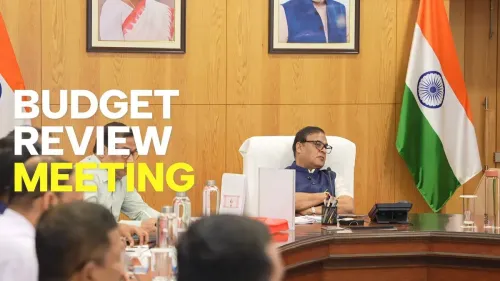
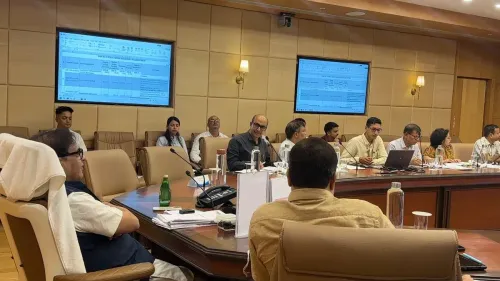
Himanta Biswa Sarma chaired a budget-preparation meeting with Finance Department officials on 29 May 2026 .
The meeting was held at Lok Sewa Bhawan , the secretariat complex in Dispur, Guwahati .
The 2026-27 Budget will be the first Budget of the new government following its return to power.
The Chief Minister directed that the budget be welfare-oriented and fulfil public promises made during elections.
A strong focus on industrialisation and entrepreneurship was emphasised to make Assam self-reliant.
The approach aligns with the broader national Atmanirbhar Bharat framework while targeting sectors such as textiles, food processing and tourism.
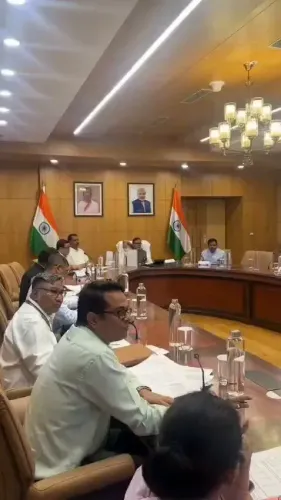
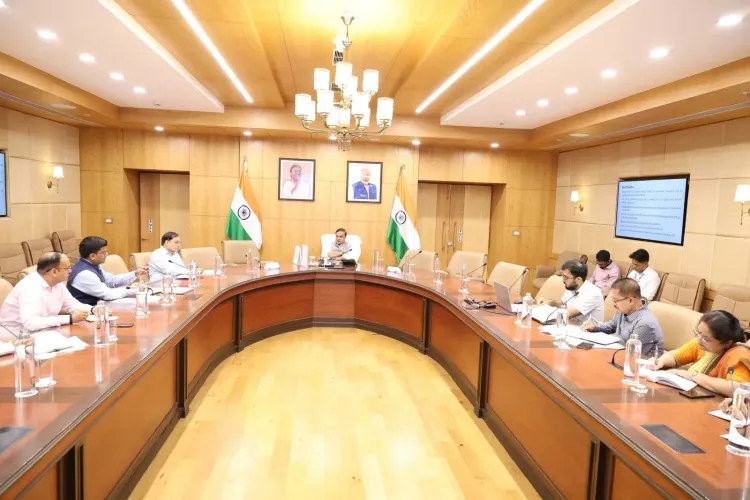
The Chief Minister's Office of Assam announced on Friday, 29 May 2026 that Chief Minister Dr. Himanta Biswa Sarma chaired a meeting with Finance Department officials at Lok Sewa Bhawan, Dispur, to discuss preparations for the first Budget of the new government for 2026-27.
The Chief Minister directed officials to draft a welfare-oriented budget that fulfils public promises, with a strong focus on industrialisation and entrepreneurship to make Assam self-reliant.
Context
The meeting at Lok Sewa Bhawan — the secretariat complex in Guwahati that houses key administrative departments — marks the beginning of the formal budget-drafting exercise for the upcoming fiscal year. The 2026-27 Budget will be the first presented by the government following its return to power, giving it symbolic and programmatic significance.
Dr. Himanta Biswa Sarma has led the BJP-led government in Assam since May 2021, steering successive budgets that have balanced welfare spending with infrastructure investment and measures to attract private capital.
Policy Backdrop
Since 2021, Assam's budgets have consistently combined direct-benefit welfare schemes — most notably the Orunodoi cash-transfer programme — with allocations for skill development and industrial infrastructure. The dual mandate of welfare and economic self-reliance mirrors the national Atmanirbhar Bharat framework championed by the central government.
The state has targeted sectors such as textiles, food processing and tourism to diversify its revenue base and reduce dependence on central transfers. The Chief Minister's explicit emphasis on entrepreneurship signals a continued push to deepen this strategy in the new budget cycle.
Stakeholders and Impact
The budget's dual mandate directly affects two broad constituencies: welfare beneficiaries who rely on state-funded schemes for income support and social services, and local entrepreneurs and industrial units who look to government policy for investment incentives, credit access and infrastructure support.
A welfare-oriented budget that also prioritises industrialisation would need to carefully manage fiscal space, balancing revenue expenditure on schemes against capital outlay for economic infrastructure — a challenge the Finance Department will be expected to navigate in the drafting process.
What's Next
The immediate next step is the formal drafting of the 2026-27 Budget by the Finance Department, Government of Assam, incorporating the Chief Minister's directives. The budget will subsequently be presented in the Assam Legislative Assembly, where the specific allocations for welfare programmes, industrial incentives and entrepreneurship support will become public.
Observers will watch closely for new schemes or enhanced outlays targeting micro, small and medium enterprises, as well as any expansion of existing welfare programmes — both of which will test the government's ability to honour its electoral commitments within fiscal constraints.
Point of View
The government is setting expectations among both welfare beneficiaries and the business community. The dual emphasis on industrialisation and public promises is a familiar but politically potent combination in Assam, where the ruling party has used targeted welfare schemes to consolidate support while using investment pitches to project developmental credibility. The real test will come at budget presentation, when the numbers must reconcile these competing demands within the state's fiscal limits.
NationPress
21 Oct 2026
Frequently Asked Questions
What is the Assam Budget 2026-27 about?
The Assam Budget 2026-27 is being drafted as a welfare-oriented budget that also focuses on industrialisation and entrepreneurship. Chief Minister Himanta Biswa Sarma directed Finance Department officials on 29 May 2026 to ensure the budget fulfils public promises and aims to make Assam self-reliant.
Where was the Assam budget meeting held?
The budget-preparation meeting was held at Lok Sewa Bhawan in Dispur, Guwahati, which is the secretariat complex housing key administrative departments of the Assam government.
When will the Assam Budget 2026-27 be presented?
The exact date of presentation has not been announced. The budget will be formally presented in the Assam Legislative Assembly after the Finance Department completes the drafting process based on the Chief Minister's directives.
What is CM Himanta Biswa Sarma's focus for the new Assam budget?
CM Himanta Biswa Sarma has directed officials to focus on welfare commitments made to the public, alongside a strong push for industrialisation and entrepreneurship, with the goal of making Assam economically self-reliant.
What is Orunodoi scheme in Assam?
Orunodoi is a direct cash-transfer welfare scheme run by the Assam government that provides financial assistance to eligible households. It has been a flagship programme of the Sarma government since 2021 and is expected to feature in the 2026-27 Budget as well.