CM Himanta lauds Aparna Sinha's work at Sripur PWSS
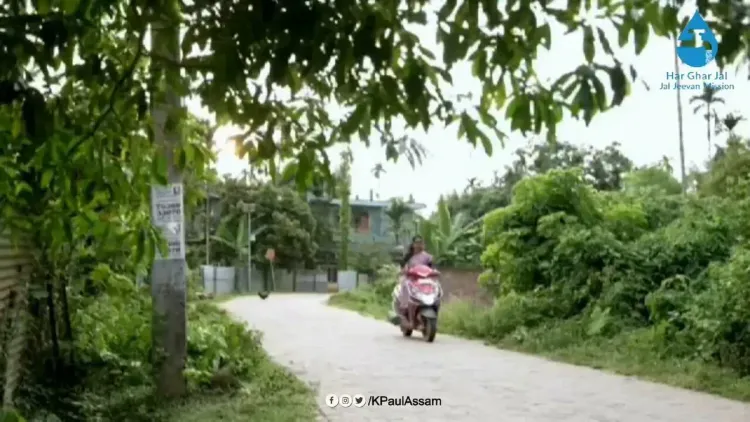
Synopsis
Chief Minister Himanta Biswa Sarma praised Smt. Aparna Sinha of Sripur PWSS for leading tariff collection, infrastructure upkeep, and community participation in rural water management — a model aligned with Assam's push for self-sustaining Jal Jeevan Mission schemes.
Key Takeaways
Himanta Biswa Sarma publicly recognised Smt.
Aparna Sinha for her work at Sripur PWSS on 26 September 2026 .
Sinha is leading tariff collection, water infrastructure maintenance, and community participation at the scheme.
Assam is scaling community-managed Public Water Supply Scheme models to reduce dependence on state subsidies for upkeep.
The approach mirrors the sustainability framework of the Jal Jeevan Mission , launched nationally in 2019 .
Tariff recovery and local operation-and-maintenance are the critical metrics being tracked under the JJM dashboard for rural schemes.
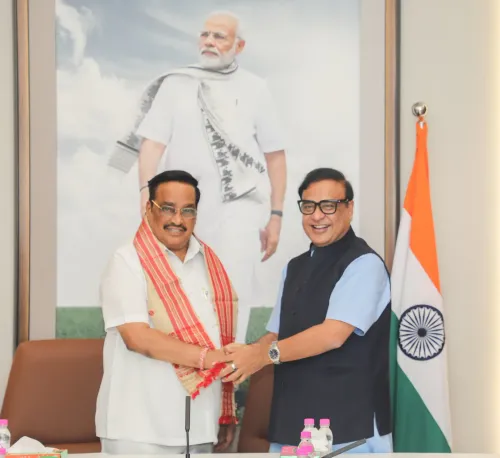
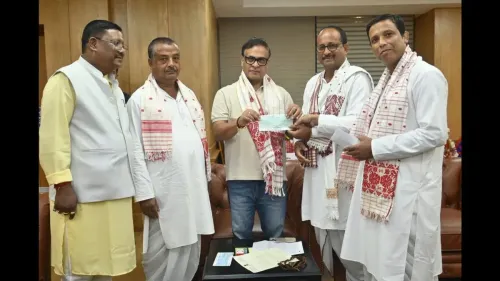
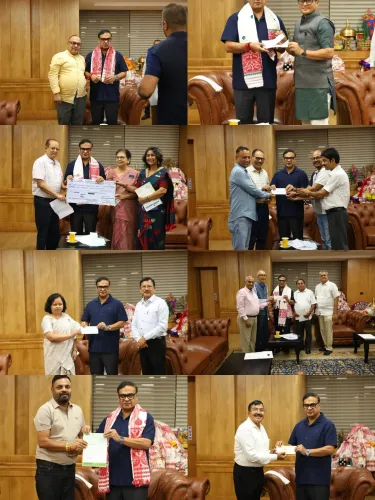
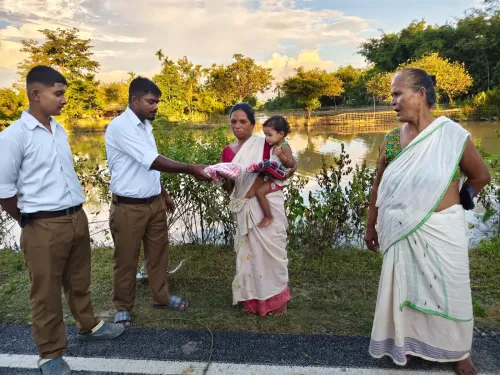
A grassroots water official in Assam is being held up as a model for what rural infrastructure management can look like when community ownership takes centre stage. Chief Minister Dr. Himanta Biswa Sarma on Saturday, 26 September 2026, recognised the work of Smt. Aparna Sinha at the Sripur Public Water Supply Scheme (PWSS), praising her role in driving tariff collection, maintaining water infrastructure, and building community participation in rural water management.
What Aparna Sinha is building at Sripur PWSS
According to the Chief Minister's Office of Assam, Smt. Sinha is leading efforts on three critical fronts: strengthening tariff collection to make the scheme financially self-sustaining, maintaining the physical water infrastructure, and ensuring the community remains an active stakeholder in water access. These are precisely the levers that determine whether a rural water scheme survives beyond its inauguration or quietly falls into disuse.
HCM Dr. Sarma's acknowledgement underlines the state's deliberate push toward community-managed water systems — where local participation, not just state funding, keeps the taps running.
Sripur's role in Assam's larger water mission
The Sripur PWSS is part of Assam's broader scaling of community-managed public water supply models, a strategy that aligns directly with the Jal Jeevan Mission (JJM), the flagship national programme launched in 2019 to deliver functional household tap connections across rural India. JJM's long-term sustainability framework places tariff recovery and local operation-and-maintenance at its core — the exact work Smt. Sinha is being credited for.
Assam has been working to shift rural water schemes away from dependence on recurring state subsidies, instead building cost-recovery mechanisms through structured tariff collection. When a scheme generates its own revenue, it can fund its own upkeep — a simple principle that is notoriously hard to execute at the last mile.
Why tariff collection is the hardest part
Across India's rural water infrastructure landscape, the weakest link is almost always post-construction: schemes get built, then slowly degrade because no one collects fees, no one owns the maintenance, and no one is accountable when a pump breaks. Community participation — the kind Smt. Sinha is being recognised for — is what bridges that gap.
The state-level review of tariff collection performance and functionality assessments under the JJM dashboard will be the measure of whether this model scales. Sripur, right now, is being positioned as a benchmark worth watching.
In rural water management, the official who keeps the books and fixes the pipe is often the most consequential person in the room — and Assam is making sure that point lands.
Point of View
Structurally vital work — the Assam government is quietly signalling that the post-construction phase of rural water infrastructure is now a governance priority. This fits a broader national pattern where states under JJM are being pushed to show functionality, not just coverage, as the programme moves from rapid expansion toward durability benchmarks. Whether schemes like Sripur can genuinely become replicable models will depend on whether the community-participation structures survive personnel changes at the local level.
NationPress
26 Sept 2026
Frequently Asked Questions
Who is Smt. Aparna Sinha and what is she doing at Sripur PWSS?
Smt. Aparna Sinha is a rural water management official leading efforts at the Sripur Public Water Supply Scheme in Assam. She is driving tariff collection, maintaining water infrastructure, and strengthening community participation to make the scheme financially and operationally self-sustaining.
Why did CM Himanta Biswa Sarma recognise Aparna Sinha?
Chief Minister Dr. Himanta Biswa Sarma appreciated Smt. Sinha's dedicated work in strengthening rural water management and community participation at Sripur PWSS, highlighting her as a model for community-managed water supply schemes in Assam.
What is the Jal Jeevan Mission and how does it relate to Assam's PWSS schemes?
Jal Jeevan Mission is a national programme launched in 2019 to provide functional household tap connections in rural India. Assam's community-managed PWSS model, with its focus on tariff collection and local upkeep, directly aligns with JJM's long-term sustainability requirements.
Why is tariff collection important for rural water schemes in Assam?
Tariff collection allows rural water schemes to fund their own maintenance and reduce dependence on state subsidies. Without it, schemes often fall into disrepair after construction because there is no dedicated revenue stream for upkeep and repairs.
What is Assam's strategy for rural water supply sustainability?
Assam is scaling community-managed Public Water Supply Scheme models where local user committees and officials handle tariff collection and operations, reducing the state's recurring financial burden while improving scheme functionality and longevity.