CM Himanta Launches Flood Resilience Plan for Assam on Independence Day

Synopsis
On Independence Day 2026, Assam CM Himanta Biswa Sarma outlined a flood resilience framework anchored by rapid digital damage assessments, support for house repairs and livelihoods including looms, a loan moratorium for affected families, and protected education for flood-hit students.
Key Takeaways
Digital-first damage mapping: Assam will use rapid digital assessment to speed up flood-relief disbursement and cut bureaucratic delays.
House and livelihood support: Eligible families will receive aid to repair homes and restore livestock, poultry, tube wells, looms and textiles.
Loan moratorium: A repayment moratorium will prevent flood losses from compounding into debt crises for affected households.
Education protected: Dedicated support for flood-affected schools and students aims to prevent academic disruption.
Resilience over relief: The plan explicitly targets stronger infrastructure, early-warning systems and modern technology — moving beyond one-time ex-gratia payments.
Independence Day timing: The announcement was made on 15 August 2026 , signalling the state government's framing of flood resilience as a development priority.
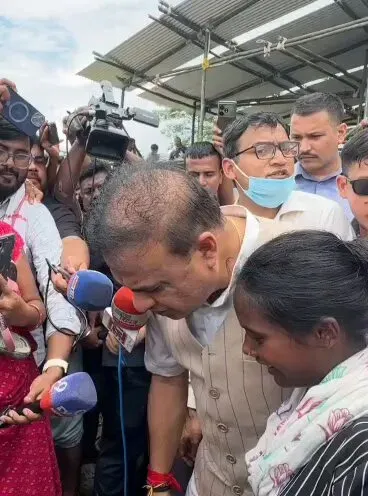
On Independence Day, 15 August 2026, the Chief Minister's Office of Assam announced a sweeping flood rehabilitation and resilience framework — one that reaches past emergency relief to rebuild homes, protect livelihoods, and keep children in classrooms even as floodwaters recede.
Digital damage assessment at the centre of the plan
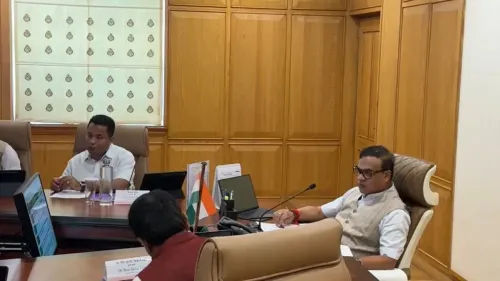
The cornerstone of the announcement is a rapid digital assessment of flood damage — a shift from the slow, paper-heavy surveys that have historically delayed relief disbursements in Assam. By digitising the damage-mapping process, the state aims to compress the gap between a flood event and the arrival of support in affected households. Chief Minister Dr. Himanta Biswa Sarma framed the move as part of building 'a more flood-resilient Assam through stronger infrastructure, reliable early forecasts, modern technology and resilient livelihoods.'
What flood-affected families will receive
Eligible families are in line for support to repair damaged houses and to restore livestock, poultry, tube wells, looms and textiles — the last two items a pointed acknowledgment of Assam's weaving communities, whose handloom-based incomes are among the first casualties of inundation. A loan repayment moratorium will also be extended to ease the immediate financial pressure on affected households, preventing a flood from cascading into a debt crisis.
Schools and students shielded from disruption
The plan explicitly ring-fences education: affected schools and students will receive dedicated support to ensure, in the Chief Minister's words, 'that floods do not disrupt their future.' In a state where annual flooding routinely forces school closures and destroys textbooks and infrastructure, this commitment directly addresses one of the longer-term human costs of the monsoon cycle.
A chronic crisis meets a modern response
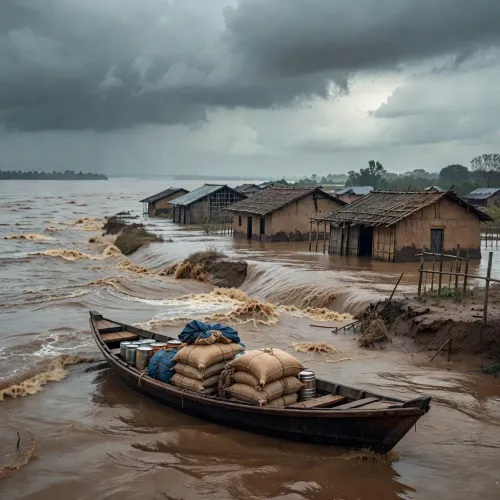
Annual monsoon flooding along the Brahmaputra and its tributaries is not a surprise in Assam — it is a near-certainty. Successive state governments have combined immediate ex-gratia payments under State Disaster Response Fund guidelines with longer-term embankment and early-warning investments. What marks the current approach is the deliberate layering of digital tools onto that traditional framework, aligning with the spirit of the Disaster Management Act, 2005, which encourages resilient reconstruction rather than repeated emergency patching. The test, as always, will be in the rollout — whether digital assessments reach the most remote flood-hit villages before the next monsoon season arrives.
Point of View
Paper-driven process. Tying the rollout to Independence Day gives CM Himanta Biswa Sarma a high-visibility platform to frame flood management as a governance achievement rather than an annual crisis. The explicit inclusion of looms, textiles and livestock reflects political attentiveness to rural and weaving communities whose votes are consequential in the Brahmaputra valley. The real measure of ambition, however, will be whether digital assessment infrastructure and moratorium mechanisms are operationalised before the 2027 monsoon — or remain aspirational announcements.
NationPress
15 Aug 2026
Frequently Asked Questions
What is Assam's new flood rehabilitation plan announced on Independence Day 2026?
The plan centres on a rapid digital assessment of flood damage to speed up relief, with support for house repairs, livestock and loom restoration, a loan repayment moratorium for affected families, and dedicated aid for flood-hit schools and students.
Who announced the Assam flood resilience plan?
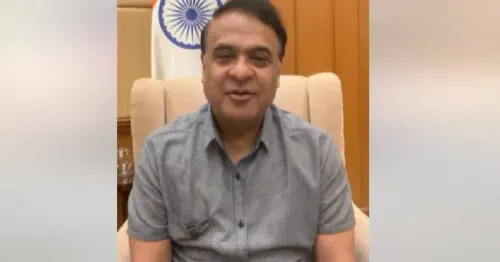
Chief Minister Dr. Himanta Biswa Sarma announced the framework through the Chief Minister's Office of Assam on 15 August 2026 , Independence Day.
What is the digital flood damage assessment in Assam?
It is a technology-driven process to rapidly map and record flood damage across affected areas, replacing slower manual surveys — with the aim of accelerating relief disbursement to eligible families.
Will Assam flood victims get help for looms and textiles?
Yes. The plan explicitly includes support to restore looms and textiles alongside livestock, poultry and tube wells, acknowledging the importance of handloom livelihoods in flood-affected communities.
How will Assam protect students affected by floods?
The plan commits dedicated support for flood-affected schools and students so that educational continuity is maintained even after severe flood events.