CM Himanta Declares Open Door Policy for Public Feedback in Assam
Synopsis
Assam Chief Minister Himanta Biswa Sarma on 18 June 2026 declared an 'Open Door' policy enabling residents to directly contact all elected representatives, including himself, for institutional grievance redressal — reinforcing the BJP-led government's citizen-outreach governance agenda.
Key Takeaways
Assam CM Himanta Biswa Sarma announced an 'Open Door' policy on 18 June 2026 for direct public feedback to elected representatives.
Citizens can contact all elected representatives , including the Chief Minister, directly to raise issues.
The government has committed to addressing grievances 'institutionally' within the 'earliest possible time frame.' The policy builds on the Assam Right to Public Services Act, 2012 , which established time-bound service delivery mandates.
The initiative is consistent with a broader BJP and NEDA governance agenda of citizen-interface mechanisms across Northeast India since 2016.
Formal grievance disposal tracking and legislative codification of the policy remain to be announced.
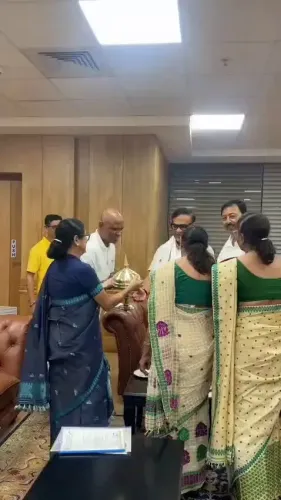
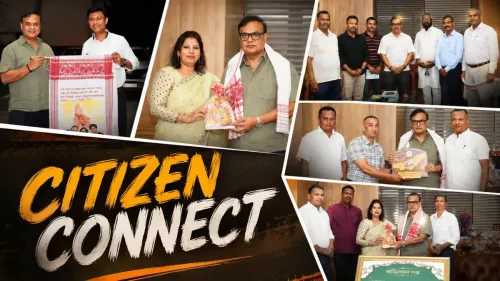
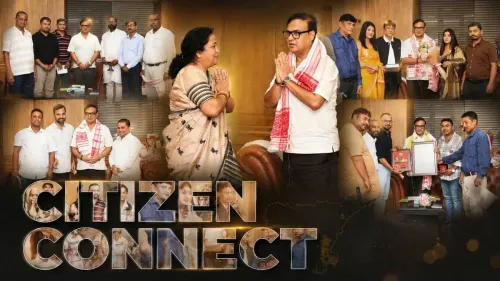
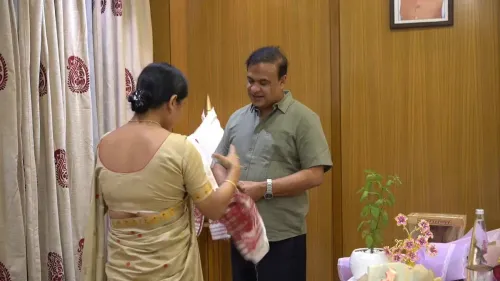
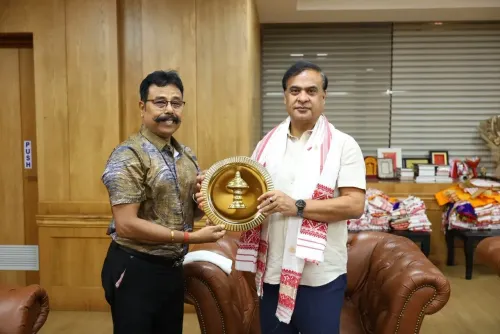
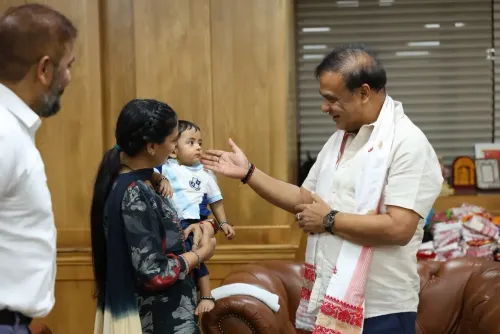
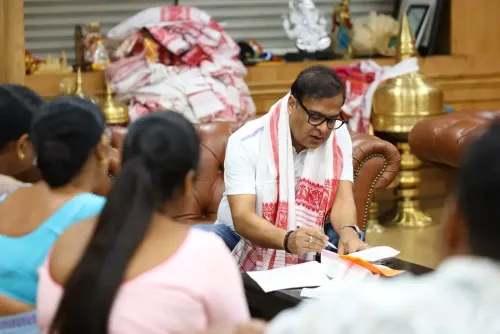
Assam Chief Minister Himanta Biswa Sarma on Thursday, 18 June 2026, announced that the state maintains an 'Open Door' policy under which residents can directly reach out to elected representatives — including the Chief Minister himself — to raise grievances and seek institutional redressal.
Context
In his post on X, Sarma stated: 'In Assam, we have an Open Door policy to receive and address public feedback. People can get in touch with all our elected representatives including myself directly and share their issues — which we will try and institutionally address at the earliest possible time frame.' The statement positions direct citizen access to legislators as a defining feature of his administration's governance model.
The announcement comes as the BJP-led coalition government in Assam continues to emphasise administrative responsiveness and ease of access to public officials. Sarma, who has served as Chief Minister since 2021, has made citizen outreach a recurring theme of his tenure.
Policy Backdrop
Assam has a statutory foundation for grievance redressal in the form of the Assam Right to Public Services Act, 2012, which mandated time-bound delivery of government services. The 'Open Door' framing builds on this legislative lineage by extending the principle of accountability to direct, person-to-person access between constituents and their elected representatives.
Across Northeast India, BJP-led governments have promoted citizen-interface mechanisms since 2016 as part of a broader 'good governance' agenda. This approach aligns with the coordination role of the North-East Democratic Alliance (NEDA) — convened by Sarma — in harmonising state-level public engagement practices with central government priorities on administrative accessibility.
Stakeholders and Impact
The primary beneficiaries of the stated policy are Assam's residents, who are being invited to contact state legislators directly rather than navigating bureaucratic intermediaries. For rural and semi-urban constituents, direct access to elected officials can significantly reduce the time and cost involved in seeking government attention for local issues.
State legislators and Members of the Legislative Assembly are also stakeholders, as the policy places an expectation of responsiveness on all elected representatives under the ruling coalition. The announcement effectively frames public accessibility as a collective institutional commitment rather than an individual gesture by the Chief Minister alone.
What's Next
The practical effectiveness of the 'Open Door' policy will depend on whether the government formalises response timelines and tracks grievance disposal rates across departments. Observers will watch for quarterly disclosures on how public feedback is being processed and whether any legislative proposals emerge to codify the mechanism beyond its current informal framing.
If the administration follows through with institutional structures, the initiative could serve as a model for other NEDA-aligned states in the Northeast seeking to demonstrate governance responsiveness ahead of future electoral cycles.
Point of View
Action-oriented administrator ahead of future electoral cycles in Assam. By framing citizen access as an institutional commitment rather than a personal gesture, he distributes accountability across the entire ruling coalition's legislative bench — a politically useful signal. The invocation of direct outreach aligns with the BJP's national narrative of 'maximum governance, minimum government,' while also serving the NEDA agenda of presenting Northeast states as models of administrative responsiveness. The real test will be whether measurable grievance-redressal data follows the rhetoric.
NationPress
19 Sept 2026
Frequently Asked Questions
What is Assam's Open Door policy announced by CM Himanta?
The Open Door policy, announced by Assam Chief Minister Himanta Biswa Sarma on 18 June 2026 , allows residents to contact all elected representatives in the state — including the Chief Minister — directly to share their issues, which the government has committed to addressing institutionally at the earliest.
How can Assam residents contact their elected representatives under this policy?
CM Sarma stated that people can get in touch directly with all elected representatives, including himself, though the specific channels — such as phone lines, digital portals, or in-person meetings — were not detailed in the announcement.
What is the legal basis for grievance redressal in Assam?
Assam has the Assam Right to Public Services Act, 2012 , which mandates time-bound delivery of government services and provides a statutory framework for grievance redressal that predates the current 'Open Door' initiative.
Who is Himanta Biswa Sarma?
Himanta Biswa Sarma is the Chief Minister of Assam , serving since 2021 . He is a senior BJP leader and the convenor of the North-East Democratic Alliance (NEDA) , a coalition of regional parties across Northeast India aligned with the central government.
How does Assam's Open Door policy fit into BJP's Northeast governance agenda?
BJP -led governments across Northeast India have promoted direct citizen-interface mechanisms since 2016 as part of a 'good governance' agenda. The NEDA framework, convened by Sarma , has helped coordinate these public-engagement practices across member states.