CM Himanta lays foundation of JK Lakshmi Cement plant in Dima Hasao
Synopsis
Assam CM Himanta Biswa Sarma laid the foundation stone of JK Lakshmi Cement's Integrated Cement Plant in Dima Hasao on 30 October 2026 — a ₹1,800 crore Phase I project promising 1,000 jobs in a district that transitioned from insurgency to investment.
Key Takeaways
JK Lakshmi Cement will invest ₹1,800 crore in Phase I of an Integrated Cement Plant in Dima Hasao , Assam.
The project is projected to create 1,000 direct jobs in the hill district.
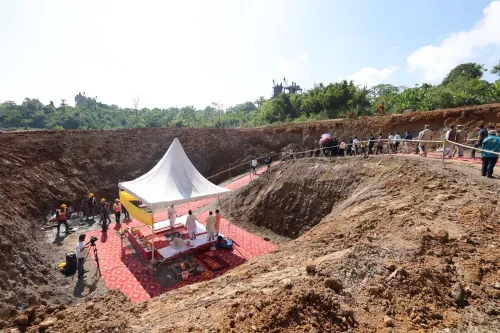
CM Himanta Biswa Sarma laid the foundation stone on 30 October 2026 .
Dima Hasao saw sustained militancy by the Dima Halam Daogah (DHD) until peace accords between 2003 and 2012 ended major insurgent activity.
The investment is part of a broader Northeast India pattern of private industrial inflows into post-insurgency districts.
Further phases of the cement project and parallel proposals for neighbouring districts will determine the long-term economic impact.
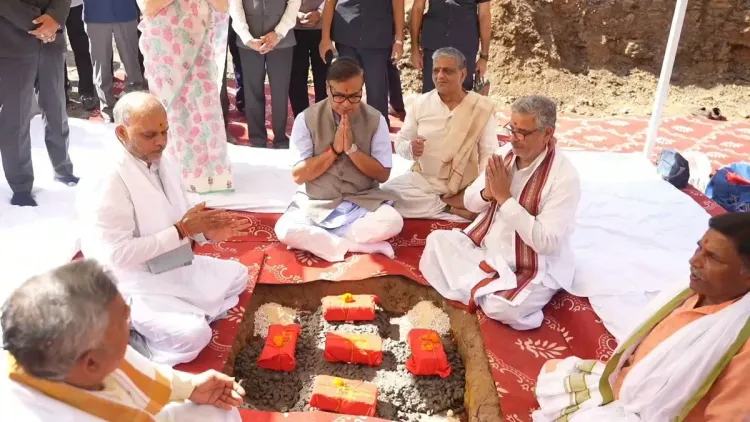
A district that once made headlines for insurgency now breaks ground for industry. Assam Chief Minister Himanta Biswa Sarma on Friday, 30 October 2026, laid the foundation stone of JK Lakshmi Cement's Integrated Cement Plant in Dima Hasao — a ₹1,800 crore Phase I commitment that the company says will generate 1,000 direct jobs.
From peace accord to production floor
Dima Hasao's transformation has been years in the making. The hill district, tucked in the southern ranges of Assam, was for decades a stronghold of the Dima Halam Daogah (DHD), a Dimasa insurgent group whose factional violence kept investors away and development at bay. A series of ceasefire agreements and peace accords between 2003 and 2012 gradually wound down organised militancy, restoring a basic security environment across the district.
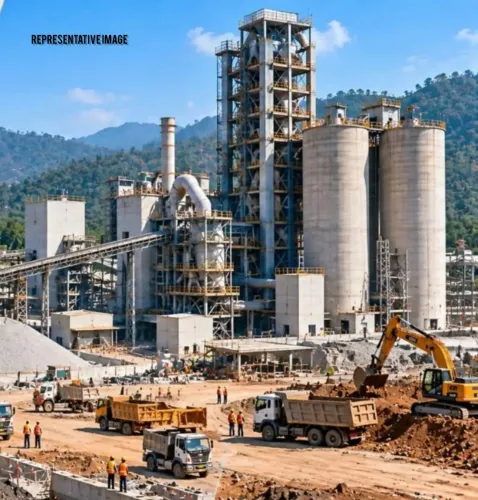
That hard-won stability is now the foundation on which JK Lakshmi Cement is staking ₹1,800 crore. The integrated plant — meaning it will handle limestone extraction through to finished cement under one roof — is among the larger single-district industrial commitments in recent Assam history. CM Sarma framed the moment in a post on X, calling Dima Hasao 'a region that until recently saw militancy and unrest' that is 'fast becoming a hub of tourism, trade and industry.'
JK Lakshmi Cement's northeast bet
JK Lakshmi Cement is a major national cement manufacturer, and its decision to site an integrated plant in a remote hill district signals both confidence in Assam's improving connectivity and an appetite for the growing construction demand across the Northeast. Cement is the backbone material for every road, bridge and building the region needs — and demand from government infrastructure programmes has been climbing steadily.
The 1,000 jobs the project is projected to create matter enormously in a district where young people historically had few formal employment options and where the pull of militant outfits was partly economic. Local youth moving from uncertainty to factory floors is precisely the cycle that peace-dividend economics is supposed to produce.
A wider regional playbook taking shape
Dima Hasao is not an isolated case. Across Northeast India, districts where long-running insurgencies have been resolved through negotiated settlements are attracting cement, tourism and connectivity projects — a deliberate policy to convert former conflict zones into economic corridors. Sarma, as convenor of the North-East Democratic Alliance (NEDA), has made industrial investment in such districts a signature part of his governance pitch, arguing that durable peace requires visible economic rewards for communities that laid down arms.
Further phases of the JK Lakshmi plant, and any parallel industrial proposals for neighbouring districts, will be the real test of whether this foundation stone becomes a turning point or a photo opportunity.
For Dima Hasao, the concrete being poured today carries a weight that goes far beyond construction.
Point of View
Not just signed agreements. By anchoring a ₹1,800 crore private investment in a district still associated in popular memory with insurgency, he converts security gains into a governance narrative ahead of broader Northeast electoral cycles. The choice of an integrated cement plant is also strategic: cement demand in the region is structurally driven by central infrastructure spend, making the project relatively insulated from private market swings. Whether Phase II and further industrial proposals follow will determine if Dima Hasao becomes a replicable model or a singular showcase.
NationPress
30 Oct 2026
Frequently Asked Questions
What is the JK Lakshmi Cement plant being built in Dima Hasao?
It is an Integrated Cement Plant — handling limestone extraction through to finished cement — with a Phase I investment of ₹1,800 crore announced by Assam CM Himanta Biswa Sarma on 30 October 2026.
How many jobs will the JK Lakshmi Cement plant in Dima Hasao create?
The project is projected to create 1,000 direct jobs in the district, according to CM Sarma's announcement.
Why is Dima Hasao significant for this investment?
Dima Hasao was long affected by Dimasa insurgency led by the Dima Halam Daogah (DHD). Peace accords between 2003 and 2012 ended major militant activity, making the district newly attractive to private investors.
What is Himanta Biswa Sarma's role in Northeast India's development?
Sarma is the Chief Minister of Assam and convenor of the North-East Democratic Alliance (NEDA), and has prioritised converting post-insurgency districts into industrial and economic corridors.
What comes next after the Phase I investment in Dima Hasao?
Further phases of the JK Lakshmi Cement plant are expected, and analysts are watching for parallel industrial proposals in Dima Hasao and neighbouring districts as indicators of the region's investment momentum.