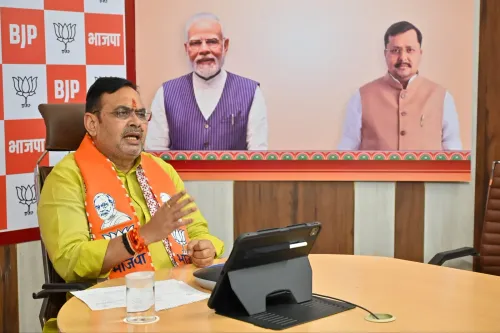
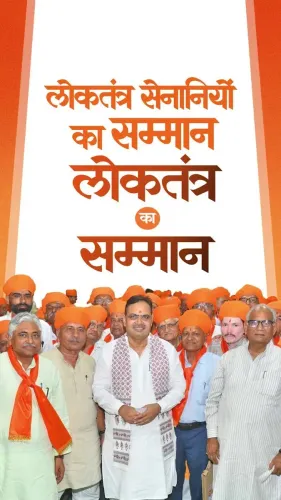
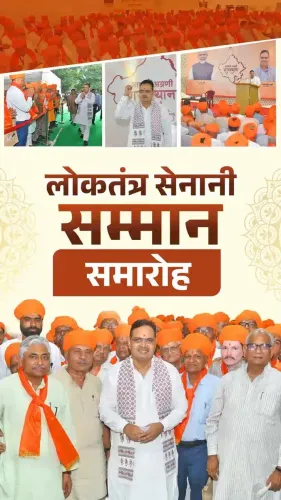
CM Bhajan Lal leads 'Save Democracy' padayatra in Kota
Synopsis
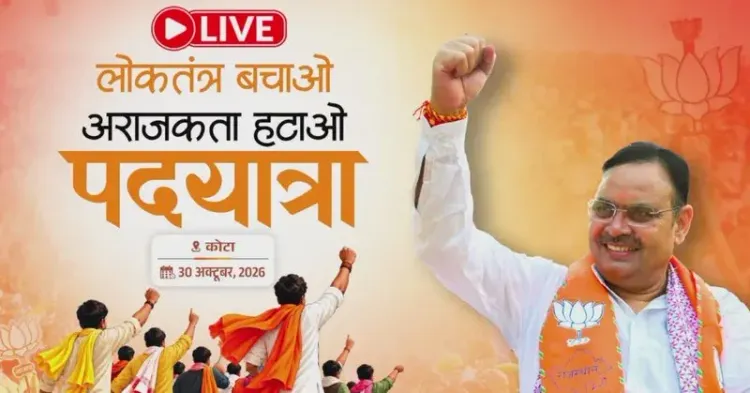
Rajasthan Chief Minister Bhajan Lal Sharma led a live-streamed padayatra in Kota on 30 October 2026 under the slogan 'Save Democracy — Remove Anarchy', reinforcing the BJP government's law-and-order narrative ahead of an expected period of heightened political contestation.
Key Takeaways
Rajasthan CM Bhajan Lal Sharma participated in a padayatra in Kota on 30 October 2026 .
The march was held under the slogan 'Loktantra Bachao — Anarchata Hatao' ('Save Democracy — Remove Anarchy').
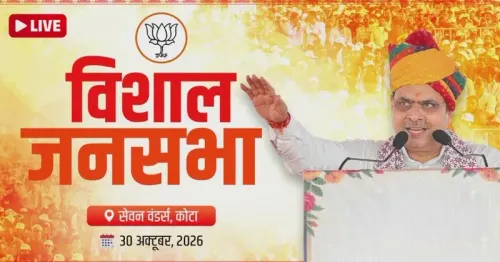
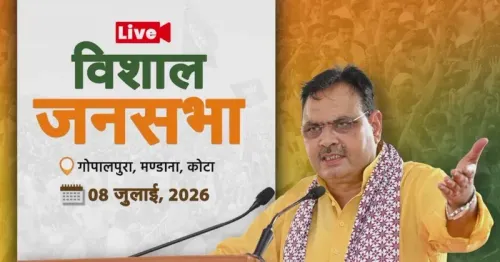
The event was broadcast live on X , extending its reach beyond street-level participants to a national digital audience.
Kota was the chosen venue — a city of national visibility due to its massive coaching and education industry.
The BJP government, in power since December 2023 , has consistently anchored its identity around administrative stability and law-and-order.
Opposition responses and follow-up statements from the Rajasthan government are expected in the coming days.
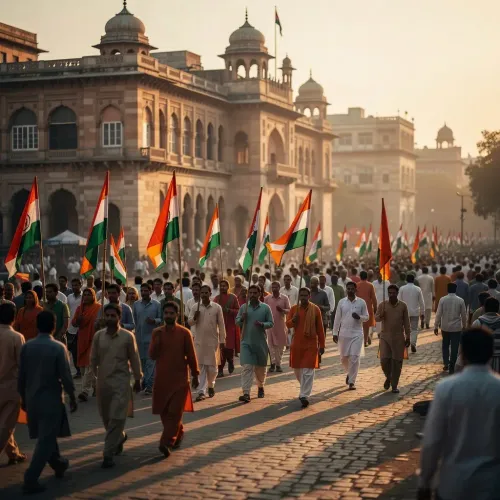
A march through the heart of Kota — Rajasthan's coaching-industry capital — became a political statement on Friday, 30 October 2026, as Rajasthan Chief Minister Bhajan Lal Sharma flagged off and joined a live-streamed padayatra under the banner 'Loktantra Bachao — Anarchata Hatao' ('Save Democracy — Remove Anarchy').
'Loktantra Bachao' — the message behind the march
The slogan cuts to the core of the BJP's current political positioning in Rajasthan. Framed around two sharply contrasting ideas — the sanctity of democratic governance on one side, and what the ruling party characterises as political anarchy on the other — the padayatra is designed to carry that message directly to citizens on foot, bypassing rally stages and press conferences.
Padayatras have a deep lineage in Indian politics: from Vinoba Bhave's Bhoodan movement to contemporary election campaigns, the on-ground march signals proximity to ordinary voters in a way that motorcades cannot. By going live on X, the Sharma camp simultaneously took the street energy to a national digital audience.
Why Kota, and why now
Kota is not a neutral backdrop. Home to India's most concentrated coaching ecosystem — drawing hundreds of thousands of students from across the country each year — it is a city perpetually in the national spotlight. Choosing Kota gives the padayatra an audience that stretches far beyond Rajasthan's borders: every parent and student watching the livestream recognises the city's name instantly.
The BJP government, which swept to power in December 2023 under Chief Minister Sharma's leadership, has consistently emphasised law-and-order and administrative stability as its governing identity. A march explicitly framed around combating 'anarchy' reinforces that narrative heading into what observers expect to be a contested political period in the state.
Padayatra politics in the BJP playbook
The foot-march format carries symbolic weight for a reason. It signals accessibility, grassroots energy, and a willingness to meet constituents where they live. For Bhajan Lal Sharma — still consolidating his authority as a relatively new Chief Minister — being seen walking Kota's streets with supporters is a deliberate projection of ground-level connect, not just administrative command from Jaipur.
Opposition responses to the march's framing — particularly the 'anarchy' charge — are expected to sharpen in the coming days, with rival parties likely to contest both the characterisation and the optics of a sitting Chief Minister leading what amounts to a political mobilisation event.
The streets of Kota have spoken today. Whether the message echoes through Rajasthan's corridors of power will depend on what the opposition says next.
Point of View
Traditionally the tool of the opposition, to reinforce its own governance narrative. By labelling political opposition as 'anarchy', the BJP is attempting to frame the state's political contest not as a competition between parties but as a binary between order and chaos. Kota's national visibility as India's coaching hub amplifies that message well beyond Rajasthan. The padayatra format, combined with a live digital stream, signals that the Sharma government is actively building grassroots political capital — suggesting the party senses real competition ahead.
NationPress
30 Oct 2026
Frequently Asked Questions
What is the 'Loktantra Bachao — Anarchata Hatao' padayatra?
It is a political foot-march organised in Kota, Rajasthan on 30 October 2026 , led by Chief Minister Bhajan Lal Sharma under the slogan meaning 'Save Democracy — Remove Anarchy', aimed at reinforcing the BJP government's law-and-order message.
Why was Kota chosen for the padayatra?
Kota is Rajasthan's most nationally visible city due to its massive coaching and competitive-exam preparation industry, which attracts students from across India, giving any political event there an audience far beyond the state.
Who is Bhajan Lal Sharma?
Bhajan Lal Sharma is the Chief Minister of Rajasthan and a BJP leader who assumed office in December 2023 after the party won the state assembly elections.
What is the significance of a padayatra in Indian politics?
Padayatras — political foot-marches — have a long tradition in India as a method of direct public mobilisation, signalling grassroots connect and accessibility. They have been used across the political spectrum, from independence-era movements to modern election campaigns.
What can we expect after the Kota padayatra?
Political observers expect the Rajasthan opposition to respond to the 'anarchy' framing used by the BJP, and the Sharma government is likely to issue follow-up statements building on the march's message.