CM Bhajan Lal backs Vocal for Local, artisan push
Synopsis
Rajasthan CM Bhajan Lal Sharma on 25 October 2026 invoked PM Modi's Vocal for Local and Atmanirbhar Bharat vision, pledging state backing for local artisans, craftsmen and indigenous products as part of India's self-reliance drive.
Key Takeaways
Rajasthan CM Bhajan Lal Sharma posted on 25 October 2026 reaffirming state support for the Vocal for Local campaign.
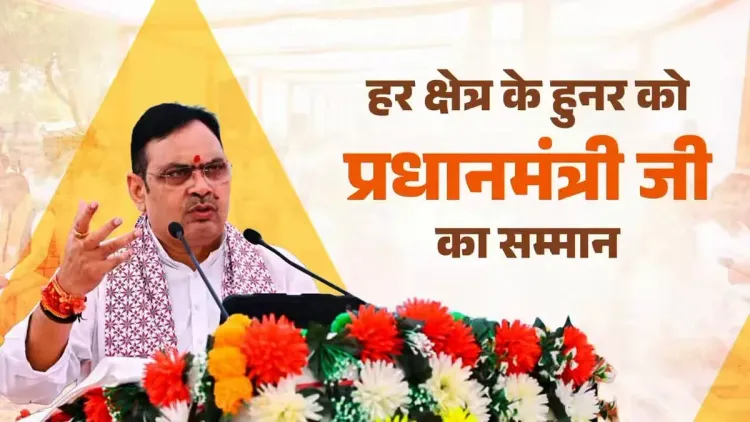
He credited PM Narendra Modi 's resolve to give every region's talent, tradition and skill proper recognition and respect.
The Atmanirbhar Bharat Abhiyan was announced by PM Modi in May 2020 to promote domestic production and reduce import dependence.
Make in India , launched in September 2014 , laid the original policy groundwork for domestic manufacturing incentives.
Rajasthan holds a rich artisan legacy — including GI-tagged crafts from Jaipur, Sanganer, Barmer and Jodhpur — making it a key state for Vocal for Local implementation.
The BJP has consistently linked cultural heritage and traditional skills to economic self-reliance goals since 2014, at both central and state levels.
Every potter in Jaipur's old city, every weaver in Barmer, every metalworker along Rajasthan's craft corridors — Rajasthan Chief Minister Bhajan Lal Sharma invoked them all on Sunday, 25 October 2026, reaffirming the BJP government's commitment to putting indigenous talent at the centre of India's economic story.
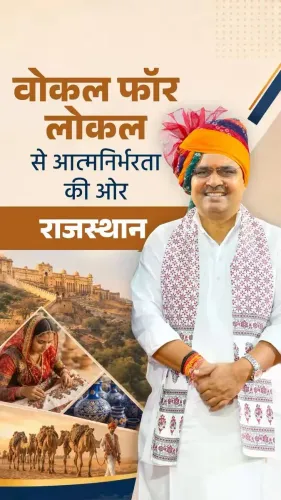
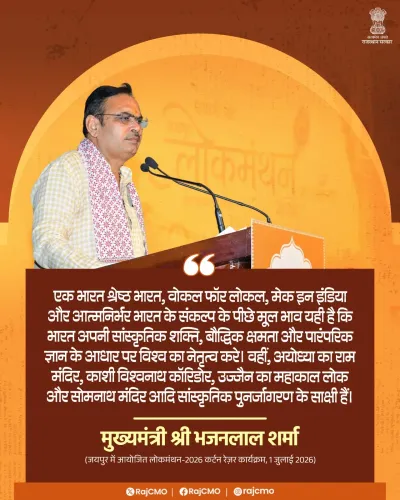
Posting in Hindi on X, CM Sharma wrote that it is Prime Minister Narendra Modi's resolve that 'the talent, tradition and skill of every region of the country receives proper recognition and respect.' He added that the government is 'strengthening the resolve of Atmanirbhar Bharat [Self-Reliant India] by encouraging local artisans, craftsmen and indigenous products through Vocal for Local.'
From a 2020 campaign to a governing philosophy
PM Modi announced the Atmanirbhar Bharat Abhiyan in May 2020, initially as an economic response to pandemic-era supply-chain shocks. The Vocal for Local campaign was woven into that framework — a call for citizens and governments alike to consciously prefer domestically made goods over imports. Six years on, both slogans have evolved from emergency measures into a core plank of BJP economic messaging at the Centre and in states.
The roots go back further still. Make in India, launched in September 2014, set the original template: incentivise domestic production, attract investment, reduce external dependence. Vocal for Local added a cultural dimension — explicitly linking traditional craftsmanship with national self-reliance, a pairing that resonates especially hard in a state like Rajasthan.
Why Rajasthan sits at the heart of this conversation
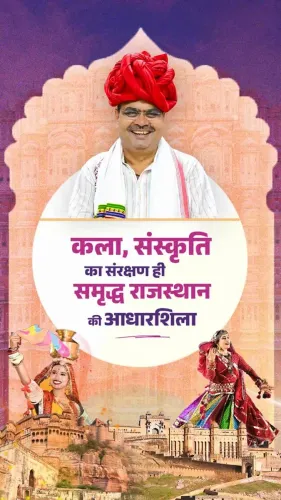
Rajasthan carries one of India's deepest artisan legacies — from the block-printed textiles of Sanganer and the blue pottery of Jaipur to the leatherwork of Jodhpur and the tie-dye traditions of Barmer. Many of these crafts carry Geographical Indication (GI) tags, meaning they are legally recognised as products of a specific region — exactly the kind of heritage the Vocal for Local framework is designed to protect and promote commercially.
For local artisans and micro, small and medium enterprises (MSMEs) — the backbone of Rajasthan's rural economy — national campaigns translate into real opportunity only when state governments back them with on-ground schemes, trade fair participation, and supply-chain support. CM Sharma's post signals continued political will at the state level to keep that pipeline open.
The BJP's consistent economic-cultural playbook
Sunday's post is not a standalone statement. It is part of a deliberate and consistent pattern since 2014: BJP governments at the Centre and in states have repeatedly framed cultural heritage and traditional skills as economic assets, not just soft-power symbols. The messaging ties artisan livelihoods directly to macro goals — reducing import dependence, growing domestic manufacturing, and building an aspirational identity around Indian-made goods.
That playbook has grown more sophisticated over time. GI-tagged products are showcased at international trade fairs. Artisan clusters are linked to e-commerce platforms. State budgets earmark funds for craft corridors. Whether those policies produce durable income gains for the craftsmen themselves — rather than just promotional optics — remains the real test.
For now, the political signal from Jaipur is clear: the Atmanirbhar Bharat conversation is very much alive, and Rajasthan intends to keep its artisans front and centre in it.
Point of View
Using state CMs as amplifiers of central schemes. The real policy question it leaves open is whether Rajasthan will announce concrete follow-through — artisan cluster funding, e-commerce linkages, or trade fair participation — or whether this remains in the realm of political signalling. With Rajasthan's deep GI-tagged craft ecosystem, the stakes for translating rhetoric into livelihoods are unusually high.
NationPress
25 Oct 2026
Frequently Asked Questions
What is the Vocal for Local campaign in India?
Vocal for Local is a campaign promoted by the Indian government, particularly under PM Narendra Modi, encouraging citizens and institutions to prefer and promote domestically made goods and indigenous products over imports. It is a key pillar of the broader Atmanirbhar Bharat (Self-Reliant India) initiative.
What is Atmanirbhar Bharat Abhiyan?
Atmanirbhar Bharat Abhiyan is India's self-reliance campaign announced by PM Modi in May 2020, aimed at boosting domestic manufacturing, reducing import dependence, and making India economically self-sufficient across sectors.
What did Rajasthan CM Bhajan Lal Sharma say about Vocal for Local?
On 25 October 2026, CM Bhajan Lal Sharma posted that PM Modi's resolve is to give proper recognition to every region's talent and tradition, and that the government is strengthening Atmanirbhar Bharat by promoting local artisans, craftsmen and indigenous products through the Vocal for Local campaign.
What crafts is Rajasthan known for under the Vocal for Local initiative?
Rajasthan is known for GI-tagged crafts including blue pottery from Jaipur, block-printed textiles from Sanganer, tie-dye from Barmer, and leatherwork from Jodhpur — all of which align with the Vocal for Local push to promote indigenous products.
What is Make in India and how does it relate to Vocal for Local?
Make in India was launched by PM Modi in September 2014 to encourage domestic production and attract investment. Vocal for Local builds on that foundation by adding a cultural dimension — directly linking traditional artisanship with national self-reliance goals.