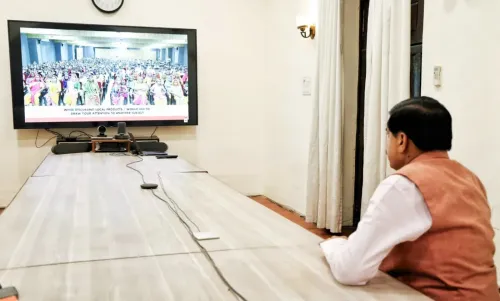
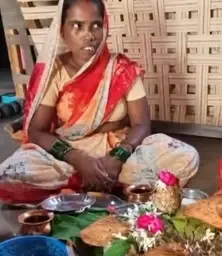
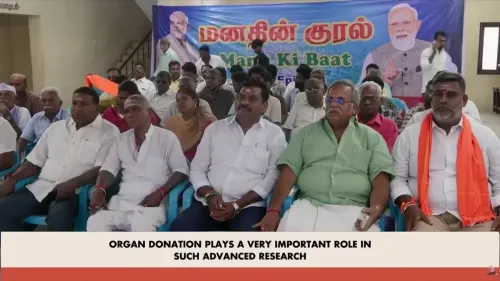
Nadda hails Narmadapuram family's organ donation courage
Synopsis
Union Health Minister J. P. Nadda praised the family of Shivani from Narmadapuram, Madhya Pradesh, for choosing organ donation after her road-accident injury — a decision PM Modi had cited in Mann Ki Baat as a beacon of compassion and humanity.
Key Takeaways
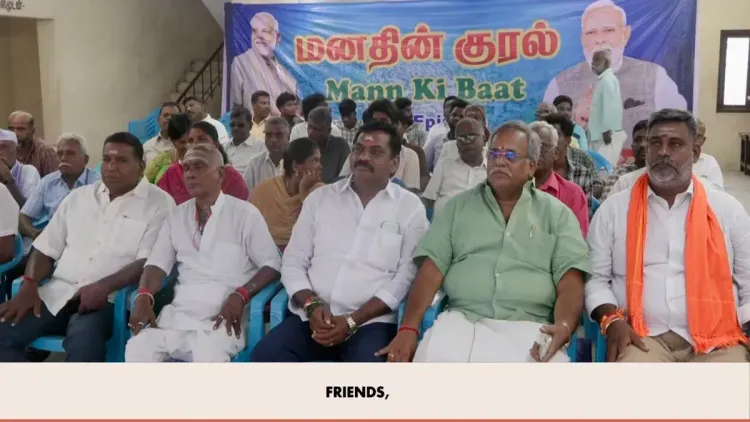
Prime Minister Narendra Modi cited Shivani's family from Narmadapuram, Madhya Pradesh as an inspiring example during his Mann Ki Baat address on 25 October 2026 .
Union Health Minister J.
Nadda amplified the tribute on X, calling the family's decision 'courageous and humane.' Shivani was critically injured in a road accident; her family opted for organ donation during their time of grief.
Nadda stated the decision will 'restore happiness in the lives of several families' and give new direction to medical research.
The National Organ and Tissue Transplant Organisation (NOTTO) , set up in 2014 , coordinates organ retrieval and allocation nationwide.
Mann Ki Baat has repeatedly been used as a platform to normalise posthumous organ donation across India.
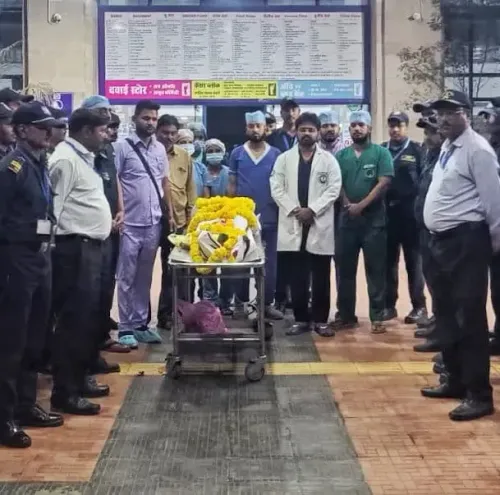
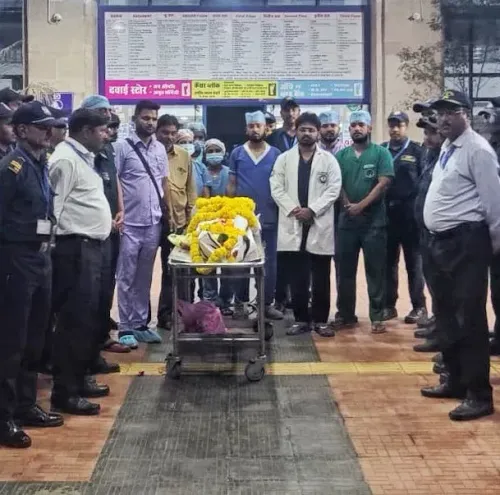
In the shadow of unbearable grief, a family from Narmadapuram, Madhya Pradesh made a decision that will outlive their loss — and on Sunday, 25 October 2026, Union Health Minister J. P. Nadda amplified that decision for the nation, saluting the family of Shivani, who chose organ donation after she was critically injured in a road accident.
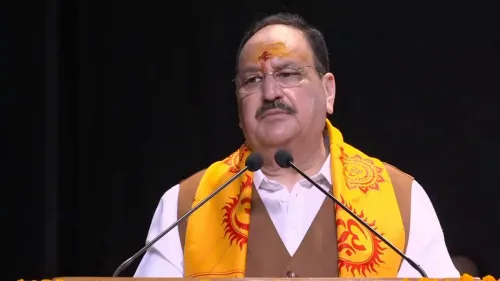
Prime Minister Narendra Modi had just cited the family's choice in his monthly radio address Mann Ki Baat, calling it an inspiring example of compassion. Nadda echoed that tribute on X, writing that 'a mountain of sorrow fell on her family when Shivani was injured in a road accident, but even in that difficult hour, her family took the courageous and humane decision of organ donation.' The minister added that organ donation is not merely an act of saving a life — it is a 'powerful medium for kindling new hope in someone's life.'
A family's grief turned into others' second chance
Shivani's story, as recounted by the Prime Minister and the Health Minister, distils the entire case for posthumous organ donation into a single human moment. A road accident — among the leading causes of sudden, unplanned deaths in India — brought a family to its most devastating crossroads. Their choice in that moment transforms private grief into a public gift.
Nadda's post notes that the family's step will 'restore happiness in the lives of several families' while also giving 'new direction to medical research.' That framing is deliberate: it places Shivani's family inside a larger national story about expanding India's donor pool, not just a touching individual anecdote.
Mann Ki Baat as a platform for the donor pool drive
This is not the first time Mann Ki Baat has served as a soft-power stage for organ donation awareness. Successive central governments have used public broadcasts and campaigns to normalise the idea of donation after brain death or accidents, recognising that cultural hesitation — not legal barriers — remains the primary obstacle to widening supply.
The National Organ and Tissue Transplant Organisation (NOTTO), established in 2014, coordinates organ retrieval, allocation, and transplantation across the country. Its work depends entirely on families saying yes in their worst moments. Every high-profile mention by the Prime Minister on a programme with tens of millions of listeners is, in effect, a recruitment drive for future donors.
Why Narmadapuram's moment matters nationally
India's gap between organ demand and supply remains stark. Thousands of patients await kidney, liver, heart, and cornea transplants at any given time, and the waiting lists stretch across years. Each new donor family does not just save individual lives — it tests and strengthens the logistics chain: hospitals, state coordination centres, and NOTTO's national network.
When the Health Minister publicly honours a family by name and district, he signals to every other family in a similar situation that their choice will be seen, respected, and remembered. That signal — travelling through social media, radio, and community networks — is policy operating at the level of human emotion. Sometimes, that is exactly where the most consequential policy lives.
Point of View
The government nudges millions of others toward a decision India's transplant system desperately needs more of. Embedding the tribute inside PM Modi's Mann Ki Baat amplifies it beyond the minister's own audience and lends it prime-ministerial moral weight. The move also reflects the ministry's broader strategy of using emotional storytelling — rather than regulatory mandates — to close the country's chronic donor-supply gap. Watch for whether this sparks a fresh NOTTO awareness drive or state-level campaign in Madhya Pradesh.
NationPress
25 Oct 2026
Frequently Asked Questions
Who is Shivani from Narmadapuram and why is she in the news?
Shivani is a resident of Narmadapuram district in Madhya Pradesh whose family chose to donate her organs after she was critically injured in a road accident. Prime Minister Narendra Modi mentioned the family's decision in his Mann Ki Baat programme, calling it an inspiring act of compassion.
What did JP Nadda say about organ donation on 25 October 2026?
Union Health Minister J. P. Nadda praised Shivani's family on X, saying that even in the unbearable sorrow of losing her to a road accident, they took a courageous and humane decision to donate her organs — a step that will give new hope and happiness to several families.
What is Mann Ki Baat and why did it mention organ donation?
Mann Ki Baat is Prime Minister Narendra Modi's monthly radio address to the nation. He has repeatedly used the programme to spotlight inspiring citizen stories, including organ donation decisions, as part of broader government efforts to normalise posthumous donation and expand India's donor pool.
What is NOTTO and what role does it play in organ donation in India?
The National Organ and Tissue Transplant Organisation (NOTTO) was established in 2014 to coordinate organ retrieval, allocation, and transplantation across India. It acts as the national hub linking donor families, hospitals, and transplant recipients.
How can families register for organ donation in India?
Families and individuals can pledge organ donation through NOTTO's official online portal or at registered hospitals across India. State-level coordination centres also facilitate the process, particularly in cases of brain death following accidents.