CM Fadnavis: NAINA Project to Create 15 Lakh Jobs

Synopsis
Maharashtra CM Devendra Fadnavis launched development works under the NAINA project in Raigad on 25 October 2026, projecting 15 lakh employment opportunities from the Navi Mumbai Airport Influence Notified Area and distributing property title documents to local landowners.
Key Takeaways
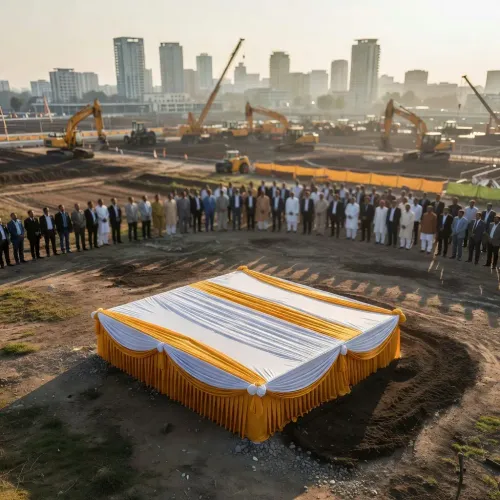
CM Devendra Fadnavis inaugurated multiple development works under the NAINA scheme at Raigad on 25 October 2026 .
The NAINA project is projected to generate 15 lakh (1.5 million) employment opportunities in the Navi Mumbai Airport influence zone.
Property title documents ( malmatta patrak ) were distributed to landowners within the NAINA notified boundary at the event.
The Navi Mumbai International Airport project, which anchors the NAINA zone, received central government approval in 2007 to ease congestion at Mumbai's existing airport.
NAINA is designed to guide land use, housing, logistics and industrial activity across the Mumbai Metropolitan Region .
Key milestones to watch include actual employment data, phased civic-works completion, and further land-titling exercises in Raigad and adjacent districts.
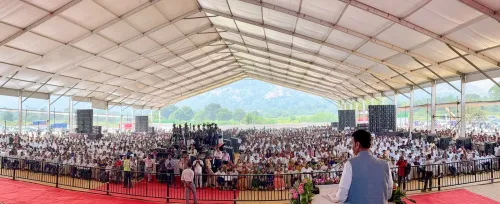
Fifteen lakh jobs from a single urban-development zone — that is the scale Maharashtra Chief Minister Devendra Fadnavis put on the table at Raigad on Sunday, 25 October 2026, as he launched a series of development works under the NAINA (Navi Mumbai Airport Influence Notified Area) project and distributed property documents to landowners in the region.
What NAINA promises for Raigad's landowners
The event was not merely a ribbon-cutting. Fadnavis oversaw the distribution of malmatta patrak — property title documents — to landowners whose land falls within the NAINA notified boundary, a step that converts years of administrative limbo into formal, bankable ownership rights. For thousands of families in Raigad district, that piece of paper is the difference between a claim and a clear title.
NAINA was carved out as a planned urban-influence zone specifically to guide land use, housing and economic activity in the corridors surrounding the incoming Navi Mumbai International Airport. The airport project itself received central government approval back in 2007, conceived as a pressure-valve for the perpetually congested Chhatrapati Shivaji Maharaj International Airport in Mumbai and as a catalyst for growth across the broader Mumbai Metropolitan Region.
The 15 lakh employment figure and its logic
The projected 15 lakh employment opportunities — 1.5 million jobs — is the headline number Fadnavis has attached to the NAINA corridor. Airport-anchored urban zones, by design, attract logistics hubs, warehousing, light manufacturing, hospitality, retail and a cascade of ancillary services. Maharashtra governments have pursued this airport-led urban development model as a replicable template, and NAINA is its most ambitious iteration in the Mumbai Metropolitan Region to date.
The real test will come in execution: how fast infrastructure works progress, how quickly private developers commit capital, and whether the newly titled landowners can participate as stakeholders rather than being displaced by the development wave. Those are the implementation milestones — actual employment data, phased completion of civic works, and further land-titling rounds in adjacent districts — that will give the 15 lakh number its eventual weight.
Airport urbanism as Maharashtra's growth template
NAINA sits inside a well-established pattern. Globally and within India, influence-area notifications around major airports have become instruments of planned urbanisation — corralling speculative development, creating zoned corridors for industry and housing, and generating a tax base that can fund public infrastructure. Maharashtra's approach with NAINA is to get ahead of the airport's activation curve, so that by the time Navi Mumbai Airport is fully operational, the surrounding zones are already structured, titled and investor-ready.
Sunday's ceremony at Raigad was, in that sense, both a bureaucratic milestone and a political statement: the land records are being cleared, the shovels are in the ground, and the state is staking its credibility on 15 lakh reasons why this time the promise will hold.
Point of View
Not casualties of, the development surge. The 15 lakh jobs figure, however ambitious, will now serve as a public benchmark against which the Fadnavis government's delivery is measured. If implementation lags, that number becomes a liability; if phased milestones are met, it becomes the centrepiece of a 2029 electoral narrative.
NationPress
25 Oct 2026
Frequently Asked Questions
What is the NAINA project in Maharashtra?
NAINA stands for Navi Mumbai Airport Influence Notified Area — a planned urban development zone created around the upcoming Navi Mumbai International Airport to guide land use, housing, industry and employment generation in the Mumbai Metropolitan Region.
How many jobs will the NAINA project create?
Maharashtra Chief Minister Devendra Fadnavis has projected that the NAINA project will generate 15 lakh (1.5 million) employment opportunities across the notified influence zone.
What happened at the Raigad NAINA event on 25 October 2026?
CM Fadnavis launched multiple development works under the NAINA scheme and distributed property title documents (malmatta patrak) to landowners in the Raigad district who fall within the NAINA notified boundary.
When did the Navi Mumbai International Airport project get approval?
The Navi Mumbai International Airport project received central government approval in 2007 as part of efforts to ease congestion at Mumbai's existing airport and support regional economic growth.
Which districts are covered under the NAINA notified area?
Raigad district is among the areas included in the NAINA notified zone, alongside parts of the broader Navi Mumbai metropolitan region. Further phases of development and land-titling exercises are expected in adjacent districts.