CM Fadnavis Vows to Build NAINA Into a Model City
Synopsis
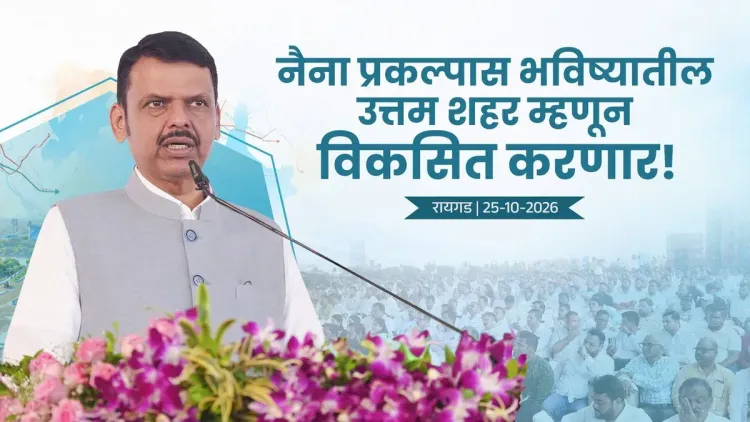
Maharashtra CM Devendra Fadnavis launched development works in Raigad on 25 October 2026 and distributed property cards to NAINA-zone landowners, pledging to build the Navi Mumbai Airport Influence Area into a model planned city through fast connectivity, drinking water supply, and regulated urban growth.
Key Takeaways
CM Devendra Fadnavis announced plans to develop NAINA (Navi Mumbai Airport Influence Notified Area) into a future model city.
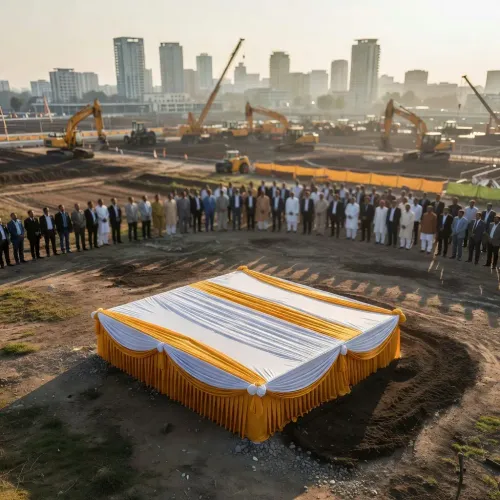
The event was held in Raigad on 25 October 2026 and included the launch of multiple development works.
Property cards were distributed to landowners within the NAINA notified zone, formalising land tenure.
The three-pillar development framework covers rapid connectivity , adequate drinking water , and planned urban zoning .
NAINA was created to manage controlled urban growth around the upcoming Navi Mumbai International Airport , a greenfield project in the Mumbai Metropolitan Region.
The initiative mirrors Maharashtra's broader pattern of building satellite growth nodes around major transport infrastructure.
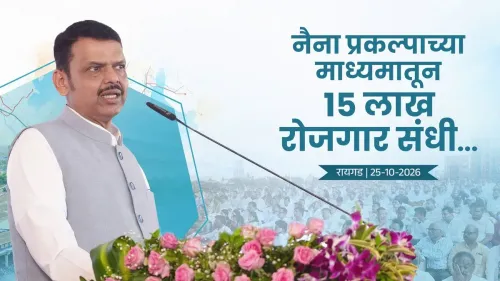
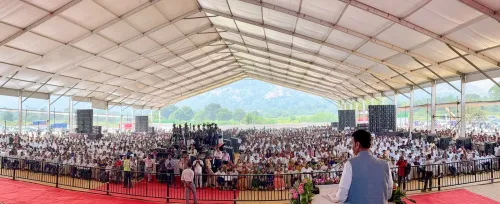
A new city is taking shape in the shadow of Mumbai's next great airport — and Maharashtra Chief Minister Devendra Fadnavis wants everyone to know it. On Sunday, 25 October 2026, at an event in Raigad marking the launch of multiple development works and the distribution of property cards to landowners, Fadnavis laid out an ambitious blueprint for NAINA — the Navi Mumbai Airport Influence Notified Area — as a world-class planned city of the future.
Posting in both Marathi and Hindi, the Chief Minister declared: 'Through rapid connectivity, abundant drinking water, and planned development, we will develop NAINA into an excellent city of the future.' The event also saw landholders in the notified zone receive formal property cards — a step that directly secures tenure for communities whose land falls within one of Maharashtra's most consequential new planning corridors.
What NAINA Is — and Why It Matters Now
NAINA was notified specifically to manage the urban growth that any major new airport inevitably triggers. As the Navi Mumbai International Airport — a greenfield project conceived to ease pressure on the existing congested airport — moves closer to becoming operational, the land surrounding it risks either chaotic sprawl or, with the right intervention, a properly planned satellite city. NAINA is Maharashtra's bet on the latter.
The zone spans parts of Raigad district, where land-use pressures from Mumbai's expanding metropolitan footprint have long been felt. By issuing property cards to landowners today, the state government is simultaneously formalising ownership and signalling that the planning framework is real, enforceable, and moving forward.
Three Pillars: Connectivity, Water, and Planned Zoning
Fadnavis anchored his vision on three concrete promises. First, fast connectivity — road and transit links that tie NAINA to the airport, to Navi Mumbai, and to the wider Mumbai Metropolitan Region. Second, adequate drinking water — a perennial challenge in peri-urban Maharashtra where new townships frequently outpace utility infrastructure. Third, planned development — an insistence that growth follows zoning, not speculation.
This three-pillar approach is not new to Maharashtra. The state has repeatedly attempted to build ordered satellite nodes around transport anchors in the Mumbai Metropolitan Region, integrating land titling, roads, and utilities as a bundled package to attract both residents and investors while preventing the informal settlements that have historically mushroomed around infrastructure projects.
Property Cards: Turning Landowners Into Stakeholders
The distribution of property cards — mालमत्ता पत्रक — at the Raigad event carries weight beyond symbolism. For farmers and village landholders in the NAINA zone, formal title documentation means the ability to participate in the land economy around a major airport: to sell, lease, or mortgage with legal standing. It also reduces the risk of displacement without compensation that has historically clouded large infrastructure zones in India.
Watched closely now: how quickly the announced connectivity and water projects move from inauguration to execution, and whether NAINA's development timeline stays anchored to the airport's own operational rollout — the two are only as valuable as each other.
Point of View
Left unmanaged, tends to produce the very congestion and informality the new airport is meant to relieve. By tying property-card distribution to development launches, the state signals that land formalisation and infrastructure delivery are a single package, not sequential steps. This matters politically too: Raigad landowners converted into documented stakeholders are far less likely to become opponents of the project. The real test, as always in Mumbai-region mega-infrastructure, is whether execution speed matches the ambition of the announcement.
NationPress
25 Oct 2026
Frequently Asked Questions
What is NAINA in Maharashtra?
NAINA stands for Navi Mumbai Airport Influence Notified Area — a designated planning zone established to regulate and guide urban development in the region surrounding the upcoming Navi Mumbai International Airport, primarily covering parts of Raigad district.
What did CM Fadnavis announce for NAINA on 25 October 2026?
CM Devendra Fadnavis launched multiple development works in Raigad and distributed property cards to landowners in the NAINA zone, pledging to develop the area into a model future city through fast connectivity, drinking water infrastructure, and planned urban development.
Why are property cards being given to landowners in the NAINA zone?
Property cards formalise land ownership for farmers and villagers within the NAINA notified area, giving them legal title documents that allow them to sell, lease, or mortgage their land, and ensuring they can seek fair compensation in any development process.
When will Navi Mumbai International Airport open?
A precise opening date for Navi Mumbai International Airport has not been confirmed in the latest available information. The NAINA development framework is being advanced in parallel with the airport's construction and operational timeline.
How does NAINA fit into Maharashtra's urban development strategy?
NAINA is part of Maharashtra's long-running approach of creating planned satellite cities around major transport anchors in the Mumbai Metropolitan Region, integrating roads, water supply, and land regularisation to attract investment and prevent uncontrolled urban sprawl.