Nadda Hails Rishi Dadhichi as Symbol of Body Donation
Synopsis
Union Health Minister J. P. Nadda cited the Puranic sage Rishi Dadhichi — who sacrificed his body to forge Indra's Vajra — as the ultimate symbol of body donation, urging Indians to follow his example. The post connects ancient cultural memory to a pressing public-health need: cadaver shortages in medical education and organ transplantation.
Key Takeaways
Union Health Minister J.
Nadda posted on 27 June 2026 invoking Rishi Dadhichi as a model for voluntary body donation.
Rishi Dadhichi is a revered Puranic sage who sacrificed his bones to forge the Vajra , Indra's thunderbolt weapon.
India's body and organ donation framework is governed by the Transplantation of Human Organs Act, 1994 , amended in 2011 and 2014 .
The National Organ and Tissue Transplant Organisation (NOTTO) under the Health Ministry oversees organ procurement and distribution nationally.
Cadaver shortages remain a key challenge for Indian medical colleges and transplant centres.
The post reflects a recurring BJP communication strategy of anchoring public-health appeals in classical Indian civilisational narratives.
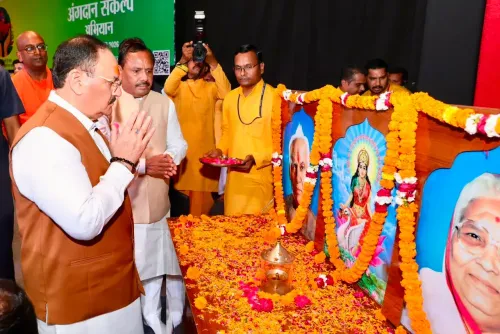
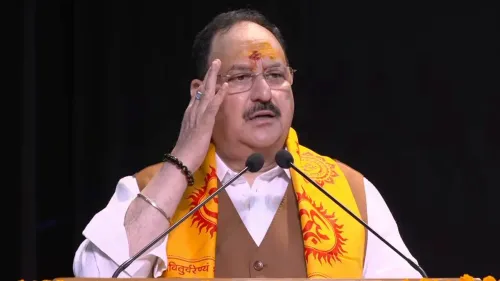
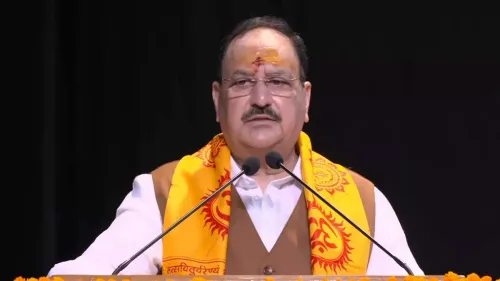
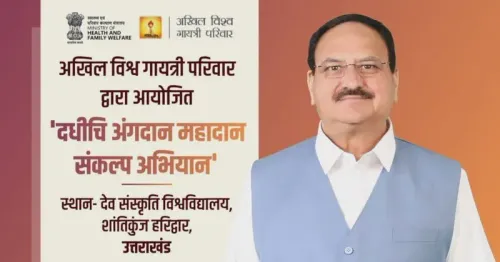
Union Health Minister J. P. Nadda on Saturday, 27 June 2026 invoked the mythological sage Rishi Dadhichi as an eternal symbol of self-sacrifice, drawing a direct line between the ancient Puranic narrative and the modern cause of body donation in India.
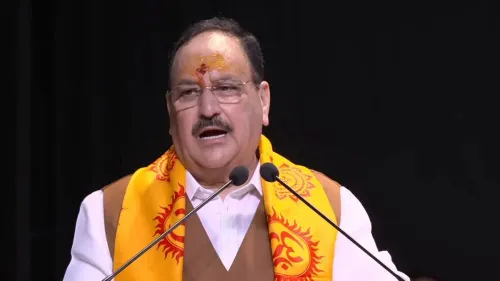
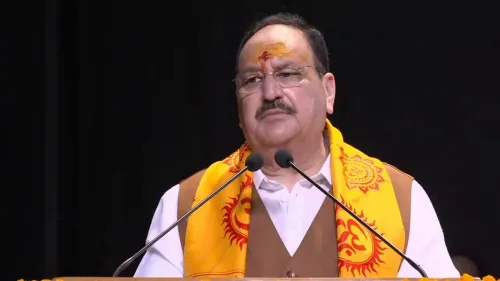
Posting on X, Nadda wrote in Hindi: 'Rishi Dadhichi hamare liye tyaag ki moorti hain. Dehdaan ki drishti se Rishi Dadhichi ji ka yogdaan hum sabhi ke liye anukarniya hai' — 'Rishi Dadhichi is the embodiment of sacrifice for us. From the perspective of body donation, the contribution of Rishi Dadhichi is exemplary for all of us.'
Context
In Hindu Puranic tradition, Rishi Dadhichi is revered as a sage who voluntarily gave up his physical body so that the gods could fashion his bones into the Vajra — the thunderbolt weapon wielded by Indra — to defeat demonic forces. The act is considered the highest form of bodily sacrifice in the tradition, predating modern medical concepts of organ and body donation by millennia.
Nadda's invocation of this narrative places body donation — the voluntary bequest of one's entire physical body to medical science after death — within a familiar and deeply respected cultural framework, making the appeal resonate with a wide cross-section of Indian society.
Policy Backdrop
India's legal framework for organ and tissue donation rests on the Transplantation of Human Organs Act, 1994, subsequently amended in 2011 and 2014 to expand the definition of brain death and streamline consent procedures. The National Organ and Tissue Transplant Organisation (NOTTO), functioning under the Health Ministry, coordinates procurement and distribution of organs across the country.
Despite these structures, cadaver shortages remain a persistent challenge for medical colleges and transplant centres. Senior government figures have periodically turned to cultural and spiritual narratives to bridge the gap between legal permissibility and public willingness to donate, an approach the Health Ministry has employed across multiple awareness drives.
Stakeholders and Impact
The message reaches two overlapping audiences: prospective body and organ donors from the general public, and medical institutions — including government medical colleges — that depend on donated cadavers for anatomical education and surgical training. A higher rate of voluntary body donation directly reduces the pressure on institutions to source cadavers through other channels.
For the BJP's broader political communication, the post also reflects a consistent pattern of integrating classical Indian civilisational references into contemporary public-health messaging, reinforcing a cultural continuity argument that resonates with the party's core voter base.
What's Next
Observers will watch whether this post precedes a formal Health Ministry campaign, a parliamentary statement, or an expansion of the NOTTO network in the coming weeks. Awareness drives around body and organ donation in India have historically seen spikes in pledge registrations when backed by high-profile ministerial communication. If the government follows through with structured outreach, Nadda's cultural framing could serve as the messaging anchor for a wider public-health push.
Point of View
The post signals that the Health Ministry is alive to the cultural levers available to it. The real test will be whether this symbolic nudge translates into measurable increases in body-donation pledges or institutional policy movement.
NationPress
26 Sept 2026
Frequently Asked Questions
Who is Rishi Dadhichi and why is he associated with body donation?
Rishi Dadhichi is a sage from Hindu Puranic tradition who voluntarily surrendered his body so that his bones could be used to make the Vajra weapon for Indra. This act of supreme bodily sacrifice makes him a natural symbol for modern body and organ donation campaigns in India.
What did J. P. Nadda say about Rishi Dadhichi?
Nadda said that Rishi Dadhichi is the embodiment of sacrifice and that his contribution from the perspective of body donation is exemplary for all Indians, posting the message in Hindi on X on 27 June 2026.
What is the legal framework for body and organ donation in India?
The Transplantation of Human Organs Act, 1994, is the primary law governing organ and tissue donation in India. It was amended in 2011 and 2014 to include brain-death definitions and streamline consent processes.
What is NOTTO and what role does it play?
The National Organ and Tissue Transplant Organisation (NOTTO) functions under the Union Health Ministry and coordinates the procurement, allocation, and distribution of organs and tissues across India.
Why is body donation important for medical education in India?
Medical colleges depend on donated cadavers for anatomy training and surgical education. Cadaver shortages have long been a challenge in India, making voluntary body donation a critical public-health priority.