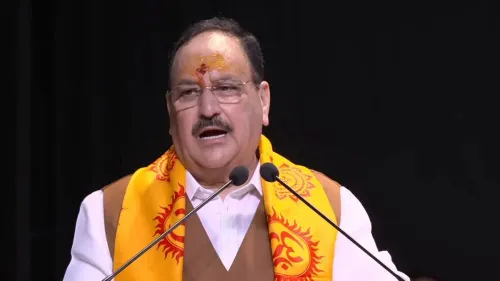
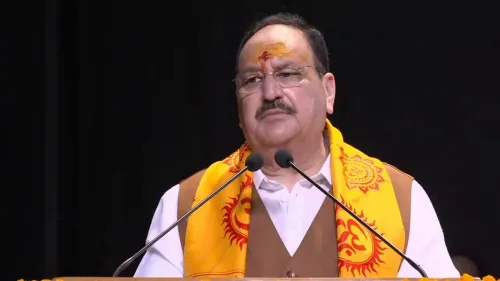
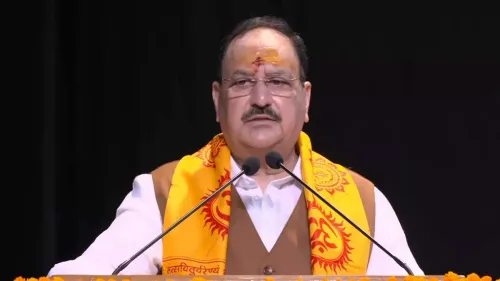
Nadda attends organ donation drive at Haridwar university
Synopsis
Union Health Minister J. P. Nadda on 27 June 2026 addressed the 'Dadhichi Angdaan Sankalp Abhiyan' at Shantikunj, Haridwar, praising the Gayatri Parivar's organ-donation drive and citing a near four-fold rise in annual transplants in India under PM Modi's leadership.
Key Takeaways
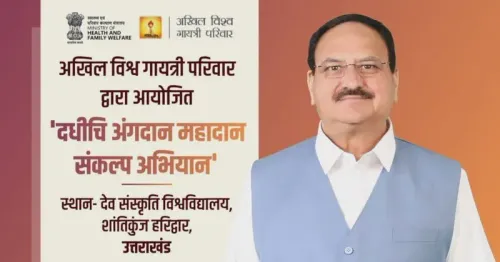
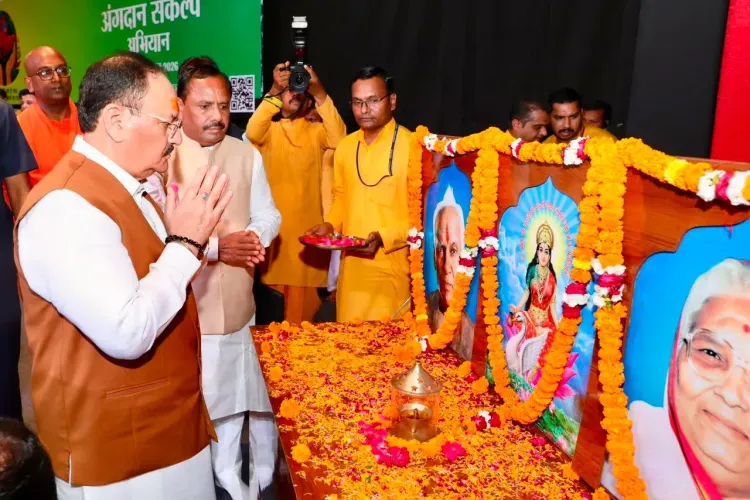
Nadda addressed the Dadhichi Angdaan Sankalp Abhiyan at Dev Sanskriti Vishwavidyalaya, Shantikunj, Haridwar on 27 June 2026 .
The campaign is organised by Akhil Vishwa Gayatri Parivar as part of its centenary-year celebrations.
Annual organ transplants in India have reportedly risen from approximately 5,000 in 2013 to nearly 20,000 currently.
NOTTO was established in 2014 to coordinate organ procurement and distribution across states.
The Gayatri Parivar's campaign targets religious misconceptions about organ and body donation to boost voluntary donor registration.
Nadda credited PM Narendra Modi 's leadership for elevating organ donation to a national mass movement.
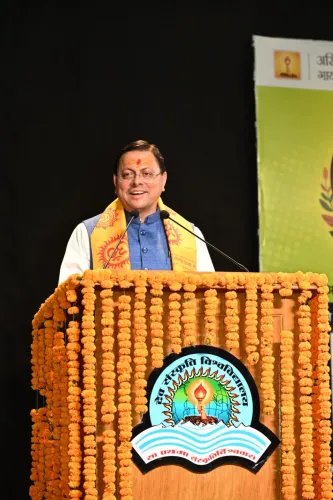
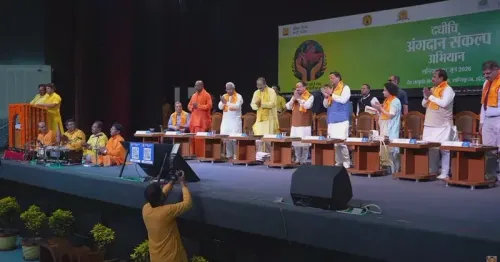
Union Health Minister J. P. Nadda addressed participants at the 'Dadhichi Angdaan Sankalp Abhiyan' (Dadhichi Organ Donation Pledge Campaign) organised at Dev Sanskriti Vishwavidyalaya, Shantikunj, Haridwar, on 27 June 2026, marking the centenary year of the Akhil Vishwa Gayatri Parivar. The minister praised the campaign as a model of civil-society leadership in advancing organ, body and eye donation across India.
Context
Posting on X, Nadda wrote — 'ऋषि दधीचि जी के नाम पर यह अभियान हम सभी को उनके जीवनदर्शन से प्रेरणा प्राप्त करने का संदेश देता है' — ('This campaign, named after Rishi Dadhichi, gives all of us the message to draw inspiration from his life philosophy.'). The campaign invokes the mythological sage Rishi Dadhichi, who according to Hindu tradition sacrificed his bones for the welfare of others, making him a potent symbol for voluntary organ donation drives in India.
The event was hosted by Dev Sanskriti Vishwavidyalaya, the university arm of Shantikunj, Haridwar, as part of the centenary-year celebrations of the Gayatri Parivar. Nadda participated in the programme and addressed those present, offering his 'heartfelt congratulations' (hriday poorvak abhinandan) to the Gayatri Parivar for running the initiative.
Policy backdrop
Nadda credited Prime Minister Narendra Modi's leadership for transforming organ donation into a national mass movement. He stated that annual organ transplants in India have risen from approximately 5,000 in 2013 to nearly 20,000 at present — a nearly four-fold increase that he described as proof of growing public acceptance of organ donation as 'the highest service to humanity.'
The policy architecture supporting this growth includes the National Organ and Tissue Transplant Organisation (NOTTO), established in 2014 to coordinate procurement and distribution across states, and amendments to the Transplantation of Human Organs and Tissues Act in 2011 that broadened the definition of near relatives and tightened regulatory oversight. Successive governments have treated organ donation as a public-health priority, with post-2014 administrations layering active awareness campaigns on top of the earlier legislative framework.
Stakeholders and impact
The Gayatri Parivar's campaign specifically targets the removal of religious misconceptions that have historically suppressed donor registration rates in India. Nadda noted that the organisation promotes the ideal of 'maranoprant bhi paropkar' — 'benevolence even after death' — through wide-ranging awareness drives covering organ donation, body donation and eye donation.
The direct beneficiaries are the tens of thousands of patients on transplant waiting lists across the country. A four-fold rise in annual transplants translates to thousands of additional lives saved each year, though demand continues to outpace supply. Civil-society organisations such as the Gayatri Parivar, with its large volunteer network rooted in spiritual values, are increasingly seen by the government as force-multipliers for public-health messaging that state machinery alone cannot achieve.
What's next
The National Organ and Tissue Transplant Organisation is expected to release updated annual transplant data that will provide a fuller picture of progress. Policymakers are also watching state-level organ donation policies that may be tabled in the next parliamentary session. With the Gayatri Parivar's centenary year providing a sustained platform through 2026, the 'Dadhichi Angdaan Sankalp Abhiyan' is likely to expand its outreach to new districts and demographics, potentially driving donor-registration numbers higher in the months ahead.
Point of View
The administration sidesteps the religious resistance that has long constrained donor registration, using faith as an enabler rather than a barrier. The four-fold transplant growth figure, if corroborated by official NOTTO data, would represent one of the more tangible public-health gains of the post-2014 policy period. The event also reinforces the BJP's broader pattern of aligning government health outreach with cultural and spiritual institutions to reach audiences that conventional public-health campaigns do not easily penetrate.
NationPress
26 Sept 2026
Frequently Asked Questions
What is the Dadhichi Angdaan Sankalp Abhiyan?
The Dadhichi Angdaan Sankalp Abhiyan is an organ, body and eye donation awareness campaign run by the Akhil Vishwa Gayatri Parivar, named after the mythological sage Rishi Dadhichi who is venerated for his self-sacrifice. The campaign aims to remove religious misconceptions and encourage voluntary donor registration across India.
Why did JP Nadda visit Haridwar on 27 June 2026?
J. P. Nadda attended the 'Dadhichi Angdaan Sankalp Abhiyan' programme at Dev Sanskriti Vishwavidyalaya, Shantikunj, Haridwar, organised by the Gayatri Parivar as part of its centenary-year celebrations, and addressed participants to promote organ donation as a national cause.
How many organ transplants happen in India per year?
According to statements made by Union Health Minister J. P. Nadda, annual organ transplants in India have grown from approximately 5,000 in 2013 to nearly 20,000 at present, reflecting increased public awareness and expanded hospital infrastructure under PM Modi's government.
What is NOTTO and what does it do?
NOTTO, the National Organ and Tissue Transplant Organisation, was established in 2014 to coordinate organ procurement and equitable distribution across states in India. It serves as the apex body overseeing the country's organ transplant network.
What role does the Gayatri Parivar play in organ donation in India?
The Akhil Vishwa Gayatri Parivar, headquartered at Shantikunj, Haridwar, runs large-scale awareness drives promoting organ donation, body donation and eye donation under the ideal of 'benevolence even after death.' The organisation uses its extensive volunteer network to counter religious misconceptions and encourage pledges.