Nadda Flags Govt Push on Body Donation Awareness
Synopsis
Union Health Minister J. P. Nadda announced on 27 June 2026 that a body donation awareness campaign is running under PM Modi's leadership, with the central government providing financial assistance to states and voluntary organisations to boost participation across India.
Key Takeaways
Union Health Minister J.
Nadda announced on 27 June 2026 that a nationwide body donation awareness campaign is active under PM Narendra Modi's leadership.
The Government of India provides financial assistance to both state governments and voluntary organisations for body donation awareness activities.
NOTTO (National Organ and Tissue Transplant Organisation) coordinates organ and tissue donation activity at the national level, operating under the health ministry.
India's donation framework is governed by the Transplantation of Human Organs and Tissues Act, 1994 , amended in 2011 .
The National Organ Transplant Programme , launched in 2014 , laid the infrastructure foundation for current awareness efforts.
Medical colleges are key beneficiaries, as cadaver availability directly affects anatomy education quality for trainee doctors.
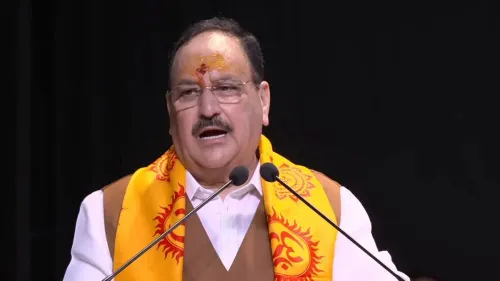
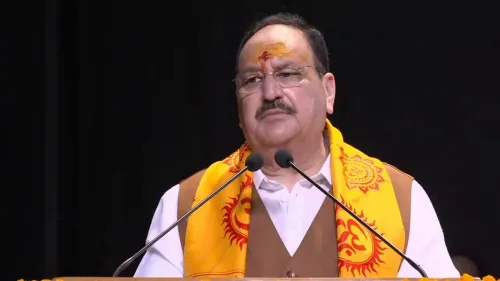
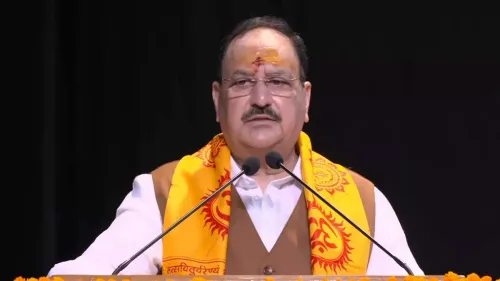
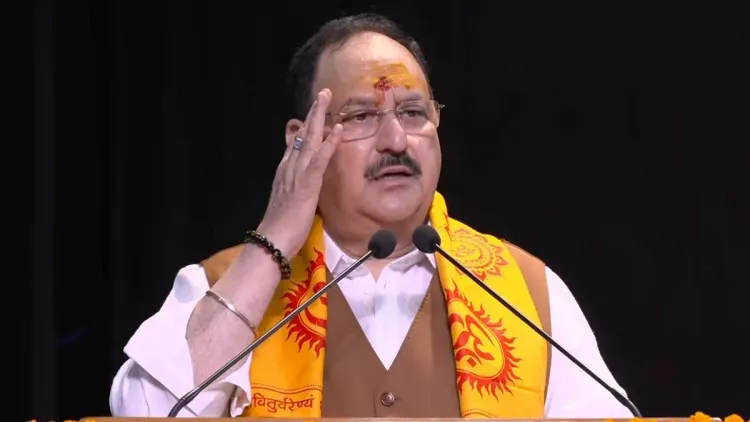
Union Health Minister J. P. Nadda on Saturday, 27 June 2026 announced that a nationwide awareness campaign on body donation is being run under the leadership of Prime Minister Narendra Modi, and that the central government provides financial assistance to both states and voluntary organisations for this purpose.
Posting on X, Nadda wrote in Hindi: 'आदरणीय प्रधानमंत्री श्री @narendramodi जी के नेतृत्व में देहदान की जागरूकता के लिए अभियान चलाया जा रहा है। भारत सरकार राज्यों समेत स्वयंसेवी संस्थाओं को भी सहायता राशि प्रदान करती है।' ('Under the leadership of respected Prime Minister Shri Narendra Modi, a campaign is being run for body donation awareness. The Government of India provides financial assistance to states as well as voluntary organisations.')
Context
Body donation — the pledging of one's mortal remains to medical institutions for research and education — has historically seen low participation rates across India. Unlike organ donation, which involves transplantable tissue from deceased or living donors, body donation supplies anatomy departments of medical colleges with cadavers essential for training future doctors. The central government's role in financing awareness efforts signals a recognition that civil society and state machinery together are needed to shift public behaviour.
The Ministry of Health and Family Welfare has periodically extended grants to non-governmental organisations and state health departments for public-health awareness since the early 2010s. This pattern mirrors the approach used in blood donation and palliative care outreach under the broader framework of national health missions.
Policy Backdrop
India's legal framework for donation is anchored in the Transplantation of Human Organs and Tissues Act, 1994, which was significantly amended in 2011 to strengthen regulation and widen the scope of permissible donations. The National Organ Transplant Programme, launched in 2014, expanded infrastructure and awareness activity for organ and tissue donation nationwide.
Coordinating these efforts at the national level is NOTTO — the National Organ and Tissue Transplant Organisation — set up by the central government to streamline donation registries and facilitate transplant logistics across states. Body donation awareness campaigns typically work in tandem with NOTTO's broader mandate, even though body donation for medical education sits in a slightly different regulatory space from organ transplantation.
Stakeholders and Impact
Voluntary organisations are central to the government's implementation model: they conduct community outreach, facilitate pledge registration, and liaise with medical colleges. State health departments act as nodal agencies that channel central funds and coordinate with district administrations. Medical colleges are the end beneficiaries, as an adequate supply of cadavers directly affects the quality of anatomy education and, by extension, the competence of graduating doctors.
Low donation rates have long created a shortfall of cadavers in teaching hospitals, prompting institutions to rely on unclaimed bodies — a practice that raises ethical questions. A sustained, government-backed awareness push, if accompanied by streamlined pledge mechanisms, could meaningfully improve supply over time.
What's Next
The government's next steps are likely to include updated grant guidelines for eligible NGOs and state-level reporting on body-donation pledge registrations in the current financial year. Nadda's post, coming from the BJP's national president who also heads the health ministry, signals that the campaign will receive both political visibility and administrative follow-through. Observers will watch whether the government releases a formal campaign name, a dedicated pledge portal, or enhanced funding allocations to accompany the announcement.
Point of View
The ministry positions itself as an enabler rather than a sole executor — a federal optics choice that is consistent with the cooperative-federalism framing used across health missions. The body donation focus is notable because it addresses a quieter but chronic problem in medical education, suggesting the ministry is broadening its public-health awareness portfolio beyond the more visible organ transplant agenda. Whether this translates into measurable upticks in pledge registrations will be the real test of the campaign's reach.
NationPress
26 Sept 2026
Frequently Asked Questions
What is body donation and why is the Indian government promoting it?
Body donation is the act of pledging one's body after death to medical colleges for anatomy research and education. The Indian government is promoting it because cadaver shortages affect the quality of medical training, and low public awareness is a key barrier to participation.
How does the central government support body donation awareness in India?
The Ministry of Health and Family Welfare provides financial assistance to state governments and voluntary organisations to run awareness campaigns, facilitate pledge registrations, and engage communities on body donation.
What is NOTTO and what role does it play in donation in India?
NOTTO, the National Organ and Tissue Transplant Organisation, is a central government body that coordinates organ and tissue donation and transplantation activities across India, maintaining registries and supporting state-level networks.
What law governs body and organ donation in India?
The Transplantation of Human Organs and Tissues Act, 1994 — amended in 2011 — is the primary legislation regulating organ and tissue donation and transplantation in India.
What did J. P. Nadda say about body donation on 27 June 2026?
Nadda posted on X that a body donation awareness campaign is being run under PM Narendra Modi's leadership and that the Government of India provides financial assistance to states as well as voluntary organisations for this purpose.