Nadda calls for voluntary blood donation on World Blood Donor Day
Synopsis
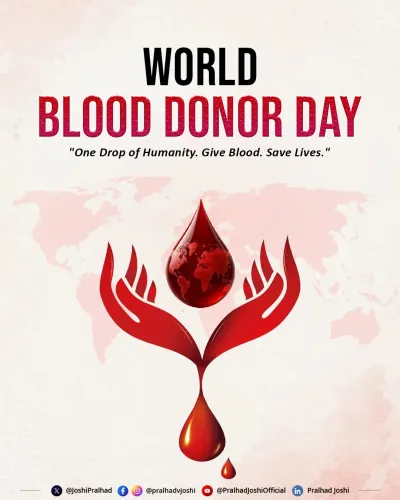
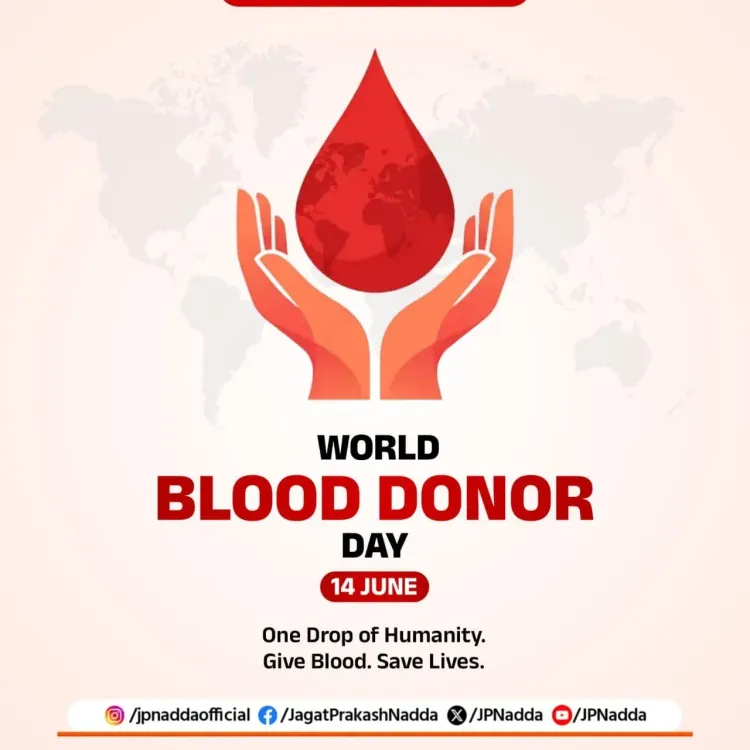
Union Health Minister J. P. Nadda marked World Blood Donor Day on 14 June 2026 by urging citizens to spread awareness, bust myths, and embrace voluntary blood donation, invoking this year's WHO theme 'One Drop of Humanity. Give Blood. Save Lives.'
Key Takeaways
Nadda , Union Health Minister, posted a call to action for voluntary blood donation on World Blood Donor Day, 14 June 2026 .
He cited this year's global theme: 'One Drop of Humanity.
Save Lives.' World Blood Donor Day was established by the WHO in 2005 and is observed annually on 14 June .
India's National Blood Policy (2002) commits to 100 per cent voluntary, non-remunerated blood donation , phasing out paid and replacement donations.
The National Blood Transfusion Council under the health ministry coordinates blood transfusion services and donor campaigns nationwide.
Voluntary donation drives are linked to national health goals including reducing maternal mortality and supporting trauma care under Ayushman Bharat .
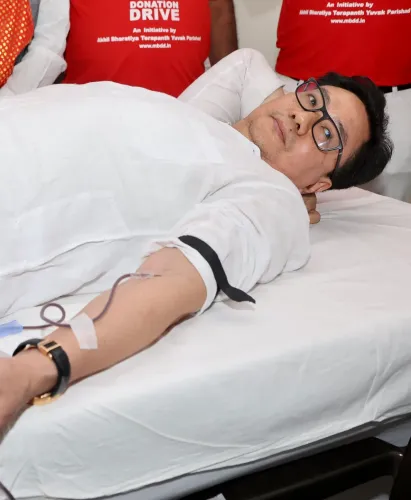
Union Health Minister J. P. Nadda on Sunday, 14 June 2026 called on citizens to spread awareness about voluntary blood donation, dispel common myths, and inspire wider participation in what he described as a noble cause, marking World Blood Donor Day with a message on X.
Context
Nadda's post underscored the global theme for this year's observance — 'One Drop of Humanity. Give Blood. Save Lives.' — framing voluntary donation as a life-changing act accessible to ordinary citizens. He urged the public to treat a single donation as an act of hope for someone in critical need, and called for building a 'healthier, caring, and compassionate society' through collective action.
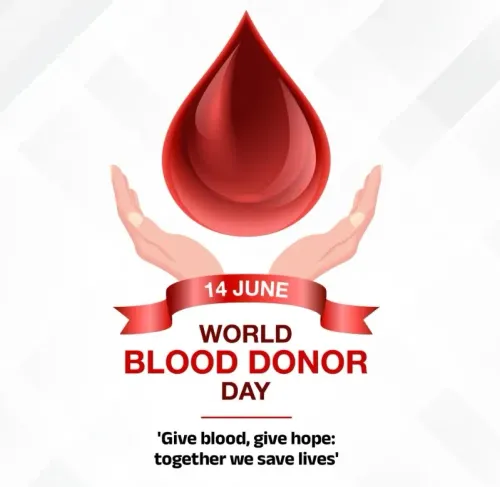
World Blood Donor Day is observed every year on 14 June, a date chosen to honour the birth anniversary of Karl Landsteiner, the scientist who discovered the ABO blood group system. The day was established by the World Health Organization (WHO) in 2005 to promote voluntary, unpaid blood donation worldwide.
Policy Backdrop
India has been committed to achieving 100 per cent voluntary non-remunerated blood donation since its National Blood Policy of 2002, which sought to phase out replacement and paid donations entirely. The policy placed the National Blood Transfusion Council (NBTC) — the apex body under the Ministry of Health and Family Welfare — at the centre of coordinating blood transfusion services across states.
The National AIDS Control Organisation (NACO) has run successive phases of the National Blood Safety Programme since 1992, building a network of licensed blood banks and voluntary donor mobilisation campaigns. Successive governments have linked blood donation drives to broader health goals, including reducing maternal mortality, supporting trauma care, and enabling affordable access to treatment under flagship schemes such as Ayushman Bharat.
As Union Minister of Health and Family Welfare, Nadda oversees this entire architecture — from blood bank licensing norms to national donor awareness campaigns — making his call on World Blood Donor Day an extension of ongoing ministry priorities rather than a standalone gesture.
Stakeholders and Impact
The most immediate beneficiaries of a robust voluntary donation ecosystem are transfusion-dependent patients: those undergoing surgery, cancer treatment, or dialysis, as well as mothers facing complications during childbirth and victims of road accidents. India's large and growing hospital network means demand for safe blood is continuous and substantial.
For voluntary blood donors, awareness campaigns on days like this serve to address persistent myths — around eligibility, health risks, and frequency of donation — that continue to deter potential first-time donors. Blood banks and hospitals benefit directly when voluntary donation rates rise, reducing dependence on replacement donations from family members, which carry higher risks of transfusion-transmissible infections.
What's Next
The health ministry is expected to release updated data from the National Blood Safety Programme on voluntary donation percentages, which will indicate how close India is to its long-standing goal of eliminating paid and replacement donations entirely. Policymakers are also watching the expansion of component separation and plasma fractionation facilities, which allow a single donated unit to be split into multiple therapeutic components — multiplying the impact of each donor's contribution.
As India's health infrastructure continues to scale under Ayushman Bharat and allied schemes, closing the gap between blood demand and voluntary supply will remain a critical, if often under-reported, dimension of the country's public health agenda.
Point of View
But it arrives at a moment when India's voluntary donation rate — while improving — continues to fall short of the 100 per cent target set in the 2002 National Blood Policy. By invoking the WHO theme publicly, the health ministry signals that awareness mobilisation remains a live policy priority, not a settled achievement. The post also fits a broader pattern of the BJP leadership using social media to align the party with public-health messaging, reinforcing Nadda's dual identity as both a health policymaker and a party president. The real test will be whether the observance translates into updated programme data and concrete targets for component separation infrastructure.
NationPress
13 Sept 2026
Frequently Asked Questions
What is World Blood Donor Day and why is it celebrated on 14 June?
World Blood Donor Day is an annual global observance on 14 June , chosen to mark the birth anniversary of Karl Landsteiner , who discovered the ABO blood group system. It was established by the WHO in 2005 to promote voluntary, unpaid blood donation and recognise donors who save lives.
What did J. P. Nadda say on World Blood Donor Day 2026?
J. P. Nadda called on citizens to spread awareness about voluntary blood donation, clear common myths, and inspire more people to donate, citing the theme 'One Drop of Humanity. Give Blood. Save Lives.' He emphasised that a single donation can give hope to someone in critical need.
What is India's policy on blood donation?
India's National Blood Policy of 2002 commits to achieving 100 per cent voluntary, non-remunerated blood donation , phasing out replacement and paid donations. The National Blood Transfusion Council under the health ministry oversees implementation across states.
Who oversees blood safety programmes in India?
The National Blood Transfusion Council (NBTC) , functioning under the Ministry of Health and Family Welfare , is India's apex body for blood transfusion services. The National AIDS Control Organisation (NACO) also runs the National Blood Safety Programme, which has operated since 1992 .
How does voluntary blood donation connect to Ayushman Bharat?
Voluntary blood donation is a critical input for the broader healthcare access goals of Ayushman Bharat . Safe, adequate blood supply supports maternal health, trauma care, and cancer treatment — all areas the scheme aims to make affordable — making donor mobilisation an integral part of India's public health strategy.