Rijiju Salutes Blood Donors on World Blood Donor Day
Synopsis
Union Parliamentary Affairs Minister Kiren Rijiju marked World Blood Donor Day on 14 June 2026 by honouring voluntary blood donors and calling on citizens to inspire others to donate. His message underscores India's ongoing push to shift from replacement to fully voluntary blood donation, in line with WHO recommendations.
Key Takeaways
Kiren Rijiju , Union Parliamentary Affairs Minister, posted a tribute to voluntary blood donors on World Blood Donor Day, 14 June 2026 .
He stated that 'a single unit of blood can make the difference between life and death,' directly quoting the critical importance of donation.
World Blood Donor Day was established by the WHO in 2005 to promote voluntary, non-remunerated blood donation globally.
The WHO recommends 100 per cent voluntary non-remunerated donations as the gold standard for national blood supply safety.
India's health policy has long sought to move away from replacement donation toward fully voluntary systems to meet demand from trauma care, surgeries, and thalassemia patients.
State-level donation camps and potential parliamentary queries on blood-bank modernisation are expected in the weeks ahead.
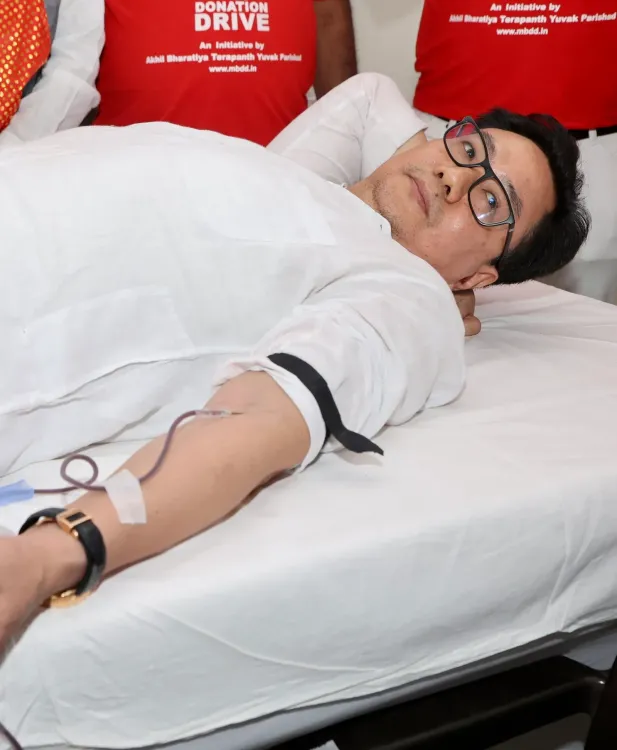
Union Parliamentary Affairs Minister Kiren Rijiju on Sunday, 14 June 2026, marked World Blood Donor Day by saluting voluntary blood donors across the country, urging citizens to donate blood and help save lives.
Context
World Blood Donor Day is observed every year on 14 June to raise awareness of the critical need for safe blood and blood products. In his post on X, Rijiju wrote: 'A single unit of blood can make the difference between life and death for someone in need,' adding that he salutes all voluntary blood donors for their 'compassion and generosity.'
The minister called on citizens to inspire more people around them to step forward and donate blood. The message comes from a senior cabinet minister who holds the Parliamentary Affairs portfolio, giving it visible institutional weight during the observance.
Policy Backdrop
The World Health Organization (WHO) designated World Blood Donor Day in 2005 as a global platform to promote voluntary, non-remunerated blood donation and to address persistent shortages in blood banks worldwide. The WHO recommends that countries aim for 100 per cent voluntary non-remunerated donations to ensure a safe and adequate supply.
India's successive national health policies have prioritised a shift from replacement donation — where a patient's family or friends donate in exchange — to fully voluntary donation. This shift is considered essential to meeting rising demand from trauma care, elective surgeries, and patients managing conditions such as thalassemia, who require regular transfusions.
Indian ministers routinely amplify international health observances on social media, reinforcing messaging from the Ministry of Health and Family Welfare and aligning national communication with global health campaigns.
Stakeholders and Impact
Voluntary blood donors are the backbone of India's transfusion ecosystem. Every unit donated by a voluntary donor directly benefits patients in emergency wards, operating theatres, and chronic-disease management programmes. Public figures lending their voice to such campaigns have historically contributed to measurable upticks in donation registrations during and immediately after major observances.
Patients dependent on regular transfusions — including those with thalassemia, sickle cell anaemia, and haemophilia — stand to benefit most from any sustained increase in voluntary donation rates. Blood banks in smaller cities and rural districts frequently face acute shortages, making national-level amplification by senior ministers particularly relevant.
What's Next
State governments and civil-society organisations are expected to organise blood donation camps across India in the days surrounding 14 June, leveraging the visibility created by such public calls to action. Parliamentary observers will also watch for any queries on blood-bank modernisation or targets set by the National Blood Transfusion Council when the monsoon session of Parliament convenes. Sustained policy attention — beyond a single day's social media push — will determine whether voluntary donation rates see a durable improvement.
Point of View
Consistent with the BJP government's practice of using senior cabinet voices to reinforce Ministry of Health messaging. The call to shift public behaviour toward voluntary donation fits squarely within India's long-standing policy goal of achieving a fully voluntary blood supply, a target that remains unmet in many states. What distinguishes such interventions is their potential to generate short-term donation surges, though critics have noted that durable change requires structural investment in blood-bank infrastructure and donor-retention programmes rather than annual social media campaigns. The timing — ahead of a likely monsoon session of Parliament — may also set the stage for legislative or budgetary questions on the National Blood Transfusion Council's modernisation agenda.
NationPress
20 Sept 2026
Frequently Asked Questions
Why is World Blood Donor Day celebrated on 14 June?
World Blood Donor Day is observed on 14 June each year because it marks the birth anniversary of Karl Landsteiner , the scientist who discovered the ABO blood group system. The WHO designated the date in 2005 to honour voluntary donors and raise awareness of safe blood needs.
What did Kiren Rijiju say on World Blood Donor Day 2026?
Kiren Rijiju posted on X that 'a single unit of blood can make the difference between life and death,' saluted voluntary blood donors for their compassion and generosity, and urged citizens to inspire more people to donate blood.
What is India's policy on voluntary blood donation?
India's national health policy promotes a shift from replacement blood donation — where a patient's relatives donate in lieu — to fully voluntary, non-remunerated donation, in line with the WHO target of 100 per cent voluntary supply to ensure safety and adequacy.
Who oversees blood donation policy in India?
The National Blood Transfusion Council (NBTC) , under the Ministry of Health and Family Welfare , is the apex body responsible for framing policies, setting standards, and coordinating blood transfusion services across India.
How can I donate blood in India?
You can donate blood at government hospitals, licensed blood banks, or during organised donation camps held by NGOs and state health departments. Donors generally need to be between 18 and 65 years of age, weigh at least 45 kg , and be in good health on the day of donation.