Giriraj Singh urges blood donation on World Blood Donor Day
Synopsis
Union Textiles Minister Giriraj Singh marked World Blood Donor Day on 14 June 2026 by calling on citizens to pledge voluntary blood donation, saying 'your small effort can give someone a new life' — amplifying a WHO-coordinated global health observance.
Key Takeaways
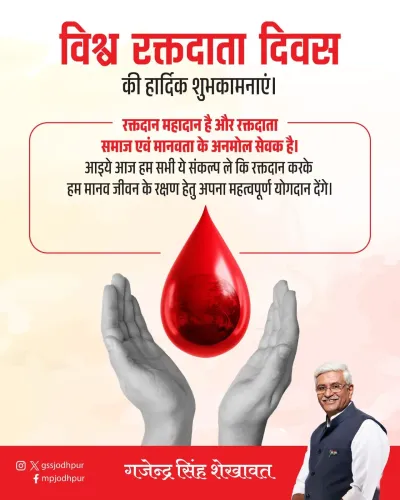
Union Textiles Minister Giriraj Singh posted a blood donation appeal on 14 June 2026 , coinciding with World Blood Donor Day .
He urged citizens to collectively resolve to donate blood, stating that 'a small effort can give someone a new life.' World Blood Donor Day has been observed globally on 14 June every year since 2005 , coordinated by the WHO .
India's National Blood Policy (2002) mandates a shift to voluntary, non-remunerated donation to ensure safe blood supply.
Blood safety has been a component of India's National AIDS Control Programme since 1992 under NACO .
India faces recurring seasonal shortfalls in blood supply, making public awareness drives by prominent figures particularly significant.
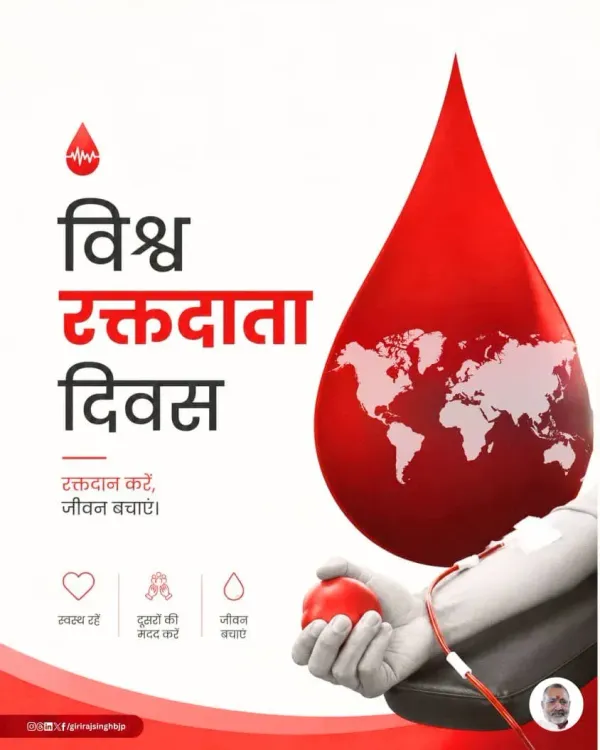
Union Textiles Minister Giriraj Singh on Sunday, 14 June 2026 called on citizens to pledge voluntary blood donation on the occasion of World Blood Donor Day, sharing a message of solidarity and civic responsibility through his official social media handle.
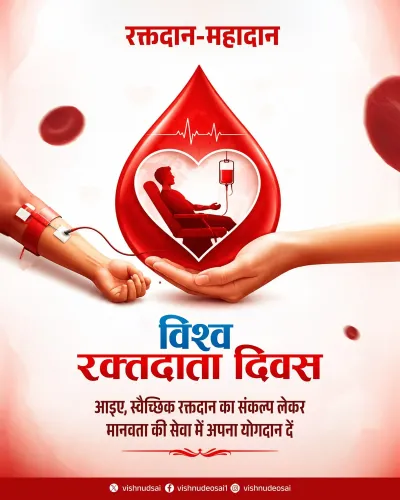
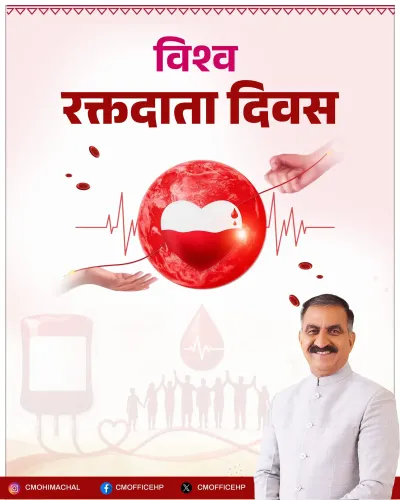
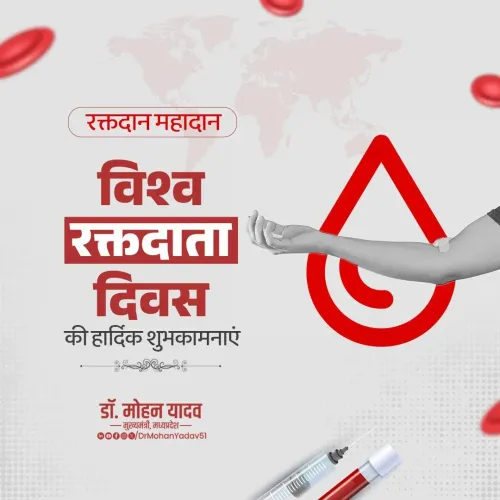
In his post, Singh wrote in Hindi: 'रक्तदान करें, जीवन बचाएं' ('Donate blood, save lives'), urging collective resolve. He noted that 'your small effort can give someone a new life,' framing voluntary donation as an act of profound human impact accessible to every citizen.
Context
World Blood Donor Day is observed every year on 14 June — the birth anniversary of Karl Landsteiner, the scientist who discovered the ABO blood group system. The day has been coordinated by the World Health Organization (WHO) since its formal launch in 2005, with the goal of raising awareness about the global need for safe, voluntary, and unpaid blood donation.
Indian ministers across portfolios routinely use the occasion to amplify public-health messaging, reflecting a broader government posture of leveraging social media for civic outreach beyond ministerial mandates. Singh's post follows this established pattern.
Policy Backdrop
India's foundational commitment to voluntary blood donation is enshrined in its National Blood Policy of 2002, which set the goal of ensuring universal access to safe blood through non-remunerated voluntary donation. The policy sought to phase out the practice of paid or replacement donation, which carries higher risks of transfusion-transmitted infections.
Blood safety has also been a component of the National AIDS Control Programme (NACP), operational since 1992 under the National AIDS Control Organisation (NACO). Successive governments have worked to expand and modernise blood-bank networks across urban and rural India, though gaps in supply — particularly for rare blood groups — remain a persistent challenge.
Stakeholders and Impact
The call to donate directly benefits patients dependent on transfusions — including those undergoing surgery, cancer treatment, or managing conditions such as thalassaemia and sickle-cell anaemia. Voluntary, unpaid donors are considered the safest source of blood globally, as they are statistically less likely to conceal health conditions that could compromise blood safety.
India faces a recurring seasonal shortfall in blood supply, with donation rates dipping outside organised camp drives. Public appeals by prominent political figures on days such as this are seen as a low-cost, high-visibility mechanism to nudge citizen behaviour and encourage first-time donors.
What's Next
Attention will now turn to the Ministry of Health and Family Welfare and its plans for blood-bank modernisation, expansion of mobile donation units, and any revision of national voluntary donation targets in the current fiscal year. WHO's annual thematic focus for World Blood Donor Day 2026 is also expected to shape domestic campaign messaging in the weeks ahead. Singh's appeal, while ceremonial in nature, adds ministerial weight to a public-health cause that transcends political affiliation.
Point of View
It reflects a deliberate government strategy of deploying social media reach to supplement formal public-health campaigns at no additional outreach cost. The post arrives against a backdrop of persistent gaps in India's voluntary blood donation infrastructure, where supply regularly falls short of demand outside organised camp drives. The real test will be whether such appeals translate into coordinated institutional action — expanded blood-bank networks, mobile donation units, or revised national targets — rather than remaining one-day social media moments.
NationPress
13 Sept 2026
Frequently Asked Questions
Why is World Blood Donor Day celebrated on 14 June?
World Blood Donor Day is observed on 14 June each year to mark the birth anniversary of Karl Landsteiner , the scientist who discovered the ABO blood group system. The day has been coordinated by the WHO since 2005 to raise awareness about voluntary, unpaid blood donation.
What did Giriraj Singh say on World Blood Donor Day 2026?
Union Textiles Minister Giriraj Singh urged citizens to pledge voluntary blood donation, writing in Hindi that 'your small effort can give someone a new life' and signing off with the message 'Donate blood, save lives.'
What is India's National Blood Policy?
India's National Blood Policy , adopted in 2002 , aims to ensure universal access to safe blood through voluntary, non-remunerated donation, seeking to phase out paid and replacement donation practices that carry higher infection risks.
Is blood donation safe in India?
Yes. Blood donation at registered blood banks and during government-organised camps is considered safe. NACO and the Ministry of Health maintain safety protocols under the National AIDS Control Programme to screen donated blood for transfusion-transmitted infections.
Why do Indian ministers post about health topics outside their portfolios?
Indian ministers routinely use national and global health observances to amplify public-health messaging, reflecting a broader government strategy of leveraging social media reach to support civic campaigns even when the subject falls outside their official ministerial mandate.