CM Sukhu Calls for Voluntary Blood Donation on World Blood Donor Day

Synopsis
Chief Minister Sukhvinder Singh Sukhu has called on Himachal Pradesh residents to pledge voluntary blood donation on World Blood Donor Day, 14 June 2026, framing the act as a collective moral duty to protect human life and supporting India's national goal of 100% voluntary non-remunerated donation.
Key Takeaways
CM Thakur Sukhvinder Singh Sukhu issued a public appeal on 14 June 2026 urging voluntary blood donation on World Blood Donor Day .
World Blood Donor Day is observed annually on 14 June , established by the WHO in 2004 .
India's National Blood Policy (2002) mandates a shift to 100% voluntary, non-remunerated blood donation .
Himachal Pradesh faces unique supply challenges due to its hilly terrain and dispersed blood bank network.
Key beneficiaries include accident victims, thalassaemia patients, surgical cases, and mothers during childbirth in the state's district hospitals.
The June–July period is the primary window for state-organised blood donation camps across Himachal Pradesh .
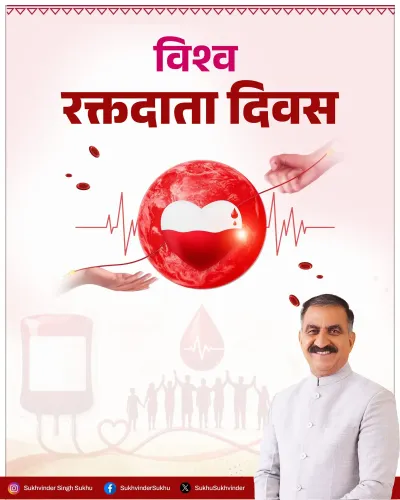
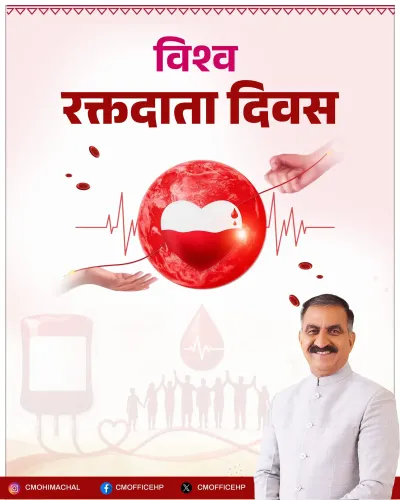
The Chief Minister's Office of Himachal Pradesh, on behalf of Chief Minister Thakur Sukhvinder Singh Sukhu, on Sunday, 14 June 2026, issued a public appeal urging citizens to pledge voluntary blood donation on the occasion of World Blood Donor Day, describing the act as participation in a 'mahayagya' — a great collective endeavour — for the protection of human life.
In the post, CM Sukhu said, 'Aaiye, Vishwa Raktadaata Diwas ke avsar par swaichhik raktadaan ka sankalp lein aur maanav jeevan ki raksha ke is mahayagya mein sahbhaagi banein' — ('Come, let us take a pledge of voluntary blood donation on the occasion of World Blood Donor Day and become participants in this great endeavour to protect human life.')
Context
World Blood Donor Day falls on 14 June every year, a date established by the World Health Organization (WHO) in 2004 to honour voluntary, unpaid blood donors and raise awareness about the need for safe blood supplies. The day marks the birth anniversary of Karl Landsteiner, the scientist who discovered the ABO blood group system. Indian states, including Himachal Pradesh, have consistently marked the occasion with public campaigns, donation drives, and official appeals.
Policy Backdrop
India's National Blood Policy of 2002 set a foundational goal of achieving self-sufficiency in blood supply through 100% voluntary, non-remunerated blood donation, moving away from replacement and paid donation models. The National AIDS Control Organisation (NACO) and the National Blood Transfusion Council continue to guide states toward this target. Himachal Pradesh, a hill state with geographically dispersed blood banks, faces particular challenges in maintaining adequate stocks, especially during lean seasons when road access can be limited.
State health departments across India use the June–July window — anchored by World Blood Donor Day — to organise donation camps, replenish reserves, and register new voluntary donors. These campaigns are especially critical for patients requiring regular transfusions, such as those with thalassaemia or those undergoing surgery in remote district hospitals.
Stakeholders and Impact
The appeal is directed at the general public of Himachal Pradesh, but its implications extend to the state's network of blood banks, district hospitals, and the patients they serve. Voluntary donation reduces dependence on family-replacement donors, which health authorities consider a safer and more sustainable model. For a state where seasonal migration and tourism affect population density, maintaining donor registries is a year-round administrative priority.
The broader beneficiaries include accident victims, mothers during childbirth, cancer patients, and individuals with chronic blood disorders — populations that rely on timely transfusion access in a state where the nearest tertiary care facility can be hours away.
What's Next
Following such appeals, the Himachal Pradesh health department typically coordinates blood donation camps across districts in June and July. Observers will watch for official data on units collected during this campaign window and whether the state announces any revision to its blood bank targets or donor registration drives in the upcoming budget or health policy cycle. The appeal by CM Sukhu signals that voluntary donation remains a stated priority for the current government as it seeks to strengthen public health infrastructure across the hill state.
Point of View
Such public appeals carry operational weight — donor registries built through awareness campaigns directly affect emergency response capacity in remote districts. The framing of blood donation as a 'mahayagya' draws on cultural resonance to motivate participation beyond the usual donor base. Whether this translates into measurable increases in voluntary donations will depend on the follow-through by the state health department in organising and publicising camps across all districts.
NationPress
13 Sept 2026
Frequently Asked Questions
What is World Blood Donor Day and when is it observed?
World Blood Donor Day is observed every year on 14 June , a date established by the WHO in 2004 to promote voluntary, unpaid blood donation and honour existing donors. The date marks the birth anniversary of scientist Karl Landsteiner, who discovered the ABO blood group system.
What did CM Sukhu say on World Blood Donor Day 2026?
Chief Minister Thakur Sukhvinder Singh Sukhu called on citizens to take a pledge of voluntary blood donation, describing the act as participation in a 'mahayagya' — a great collective endeavour — for the protection of human life.
What is India's National Blood Policy?
India's National Blood Policy of 2002 aims to achieve self-sufficiency in blood supply through 100% voluntary, non-remunerated blood donation , replacing paid and family-replacement donation models. It is overseen by NACO and the National Blood Transfusion Council .
Why is voluntary blood donation important in Himachal Pradesh?
Himachal Pradesh faces unique supply challenges due to its hilly terrain, dispersed blood banks, and seasonal population fluctuations. Voluntary donation helps maintain adequate stocks for accident victims, surgical patients, and those with chronic blood disorders in remote district hospitals.
How can I donate blood in Himachal Pradesh?
Residents can contact their nearest district hospital or blood bank in Himachal Pradesh , or participate in donation camps organised by the state health department, particularly during the June–July campaign window around World Blood Donor Day.