CM Bhajan Lal Urges Rajasthan to Pledge Blood Donation
Synopsis
On World Blood Donor Day, 14 June 2026, Rajasthan Chief Minister Bhajan Lal Sharma called on all state residents to pledge voluntary blood donation, describing it as a sacred act of human service and saying a small effort can be someone's greatest hope.
Key Takeaways
Rajasthan Chief Minister Bhajan Lal Sharma posted a public appeal on 14 June 2026 marking World Blood Donor Day .
He urged all residents of Rajasthan to pledge voluntary blood donation on this occasion.
World Blood Donor Day has been observed globally every year on 14 June since 2004 , coordinated by the WHO .
India's National Blood Policy (2002) mandates a shift to voluntary unpaid donations and governs state blood bank operations.
Rajasthan's health department periodically organises blood donation camps under the National Health Mission framework.
The appeal targets voluntary donors whose contributions directly benefit transfusion-dependent patients across the state.
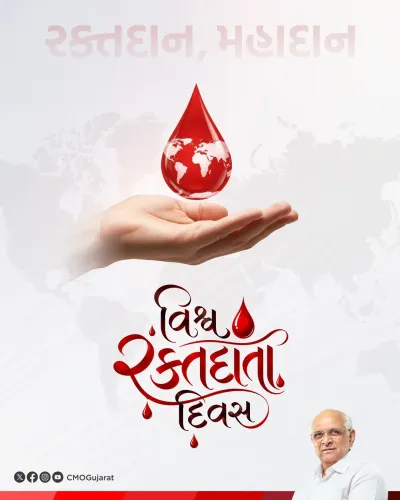
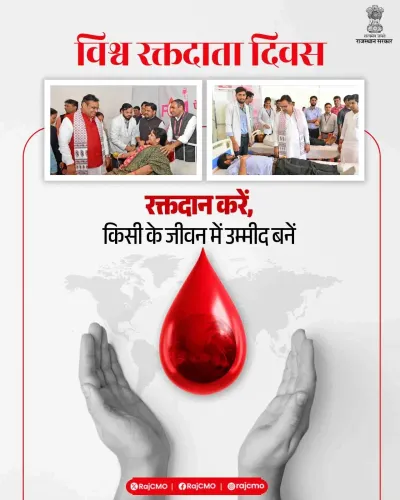
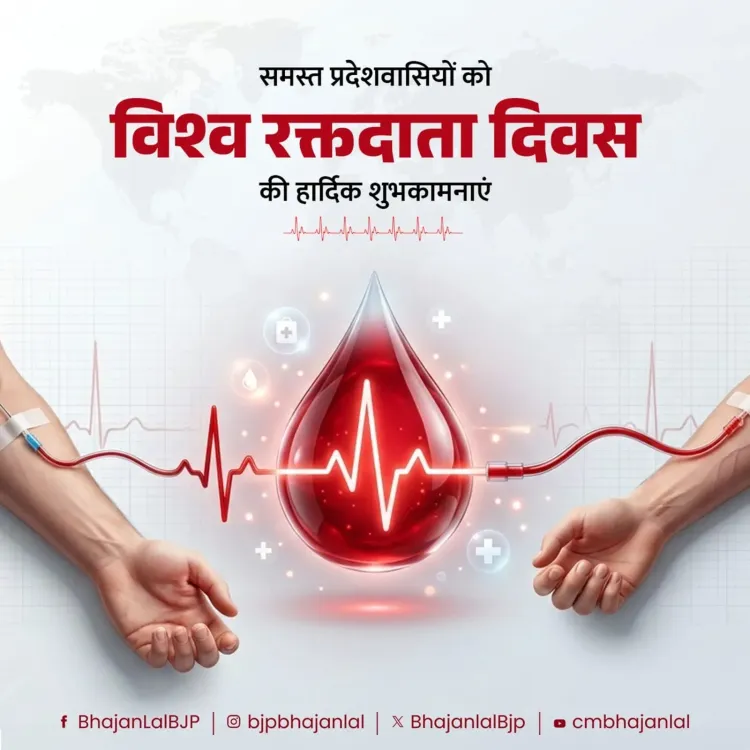
Rajasthan Chief Minister Bhajan Lal Sharma on Sunday, 14 June 2026, extended greetings to all residents of the state on the occasion of World Blood Donor Day, urging them to pledge voluntary blood donation and participate in what he called a sacred act of human service.
Context
Posting on X in Hindi, CM Sharma wrote: 'समस्त प्रदेशवासियों को विश्व रक्तदाता दिवस की हार्दिक शुभकामनाएं!' ('Heartfelt greetings to all residents of the state on World Blood Donor Day!'). He called on citizens to resolve to donate blood on this occasion and ensure their participation in this noble cause. 'Your small effort can become the greatest hope in someone's life,' he added.
World Blood Donor Day is observed globally every year on 14 June to thank voluntary, unpaid donors and to raise awareness about the need for a safe and adequate blood supply. The day has been observed annually since 2004, coordinated by the World Health Organization (WHO).
Policy Backdrop
India adopted its National Blood Policy in 2002, with the primary goal of ensuring an adequate, safe supply of blood through voluntary unpaid donations and phasing out replacement donations. The policy placed responsibility on state health departments to organise and maintain functional blood banks under programmes such as the National Health Mission.
Rajasthan's health department periodically organises blood donation camps aligned with these national goals. The state's blood banks operate under the broader framework set by the National Blood Policy and national health authorities, reflecting a long-standing institutional effort to increase the share of voluntary donations across India.
Stakeholders and Impact
The appeal is directed at the general public of Rajasthan, particularly voluntary donors who form the backbone of the state's blood transfusion system. Patients requiring transfusions — including those undergoing surgery, cancer treatment, or managing conditions such as thalassaemia — are the direct beneficiaries of an adequate voluntary blood supply.
Indian state leaders routinely issue public messages on international health days to encourage citizen participation. Such messaging from senior elected officials is considered an important tool in normalising voluntary donation and reducing dependence on replacement or paid donors, a concern that national health bodies have flagged for decades.
What's Next
The Chief Minister's message is expected to be followed by on-ground blood donation camps organised by Rajasthan's health department and civil society groups across the state. Observers will watch for official announcements on camp schedules, collection targets, or updated blood-bank utilisation data from the state health department in the coming weeks. The broader national push to raise voluntary donation rates remains a continuing policy priority.
Point of View
Reinforcing India's two-decade-old push to normalise voluntary blood donation. The appeal fits a broader pattern of BJP-governed states using social media to signal alignment with national health priorities and WHO-led global campaigns. While the post carries no new policy announcement, it keeps voluntary donation in public discourse at a moment when Rajasthan's health infrastructure is under scrutiny. The real measure of impact will be whether the message translates into organised camp activity and measurable collection data from the state health department.
NationPress
19 Sept 2026
Frequently Asked Questions
Why is World Blood Donor Day celebrated on 14 June?
World Blood Donor Day is observed on 14 June every year because it marks the birth anniversary of Karl Landsteiner, the scientist who discovered the ABO blood group system. The day has been coordinated by the WHO since 2004 to thank voluntary donors and promote safe blood supply globally.
What did Rajasthan CM Bhajan Lal Sharma say on World Blood Donor Day 2026?
CM Bhajan Lal Sharma extended greetings to all residents of Rajasthan and urged them to pledge voluntary blood donation, calling it a sacred act of human service and saying that 'your small effort can become the greatest hope in someone's life.'
What is India's National Blood Policy?
India's National Blood Policy , adopted in 2002 , aims to ensure an adequate and safe supply of blood through voluntary unpaid donations. It seeks to phase out replacement and paid donations and places responsibility on state health departments to maintain functional blood banks under national health programmes.
Does Rajasthan organise blood donation camps?
Yes, Rajasthan's health department periodically organises blood donation camps aligned with national health goals under the National Health Mission framework, often timed around awareness days such as World Blood Donor Day .
Who is Bhajan Lal Sharma?
Bhajan Lal Sharma is the Chief Minister of Rajasthan and a BJP leader who assumed office in December 2023 . He represents the party's government in the state and is active on social media platforms including X.