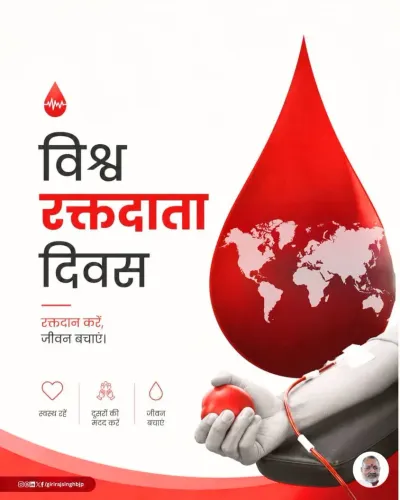
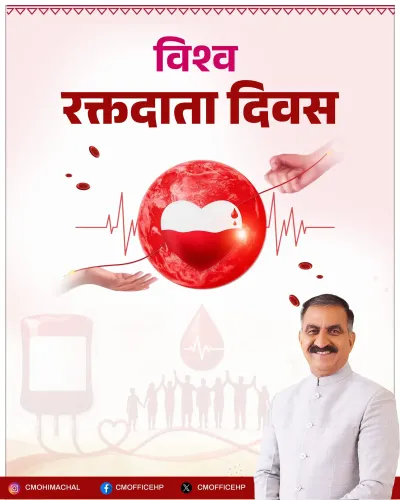
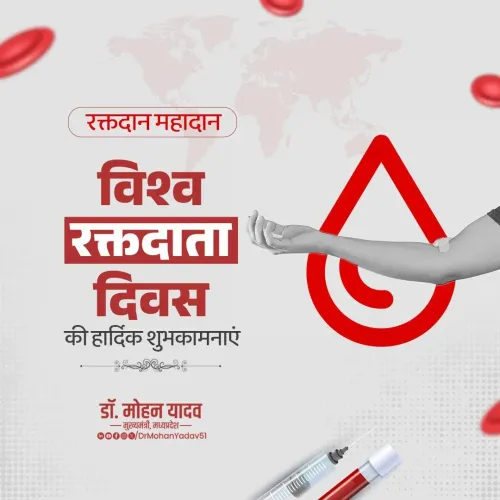
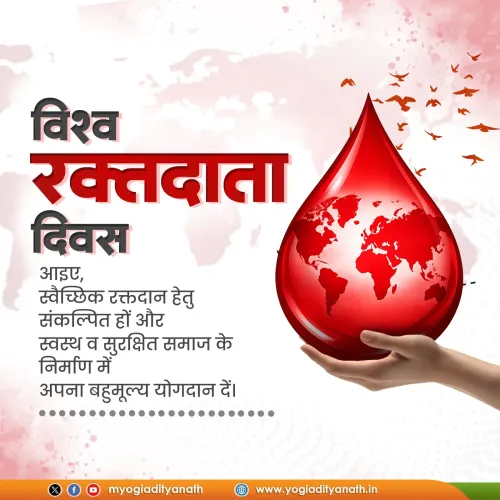
CM Bhupendra Patel Marks World Blood Donor Day
Synopsis
Gujarat Chief Minister Bhupendra Patel marked World Blood Donor Day on 14 June 2026 by saluting voluntary donors and organisations, calling blood donation an invaluable life-giving act and true human service. The global observance, initiated by WHO in 2005, highlights the need for safe, voluntary blood donation to sustain transfusion services.
Key Takeaways
Gujarat CM Bhupendra Patel posted a tribute to voluntary blood donors on World Blood Donor Day, 14 June 2026 .
He described blood donation as 'an invaluable life-giving force' and 'true human service.' World Blood Donor Day has been observed annually on 14 June since it was established by WHO in 2005 .
India's National Blood Policy prioritises voluntary, non-remunerated donation to meet clinical transfusion demand.
Gujarat maintains a network of government and licensed blood banks operating under the national framework.
Voluntary donors, patients requiring transfusions, and civil society organisations are the primary stakeholders of this observance.
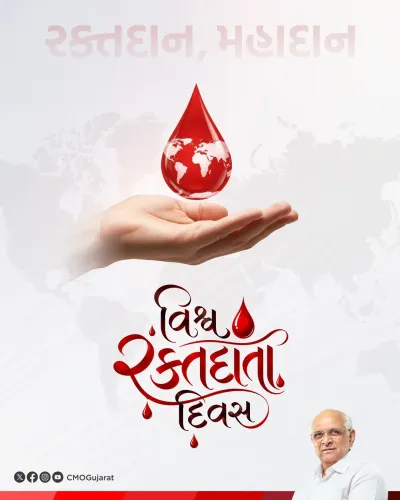
Gujarat Chief Minister Bhupendra Patel on Sunday, 14 June 2026, paid tribute to voluntary blood donors and organisations across the country on the occasion of World Blood Donor Day, calling blood donation one of humanity's most sacred and altruistic acts.
Posting in Gujarati on X, CM Patel wrote: 'માનવતાના સૌથી પવિત્ર અને પરોપકારી કાર્યનો સંદેશ આપતા વિશ્વ રક્તદાતા દિવસ નિમિત્તે...' — 'On the occasion of World Blood Donor Day, which conveys the message of humanity's most sacred and benevolent act, I salute all the service-minded blood donors and organisations who have joined this great endeavour of blood donation.'
He added: 'The blood donation we make is not merely a few drops of blood, but an invaluable life-giving force for someone. To keep a family's happiness intact by donating blood — that is true human service.'
Context
World Blood Donor Day is observed every year on 14 June — the birth anniversary of Karl Landsteiner, the scientist who discovered the ABO blood group system. The observance was established by the World Health Organization (WHO) in 2005 to raise global awareness about the need for safe, voluntary, and unpaid blood donations that sustain transfusion services worldwide.
The day serves as a platform for governments, health agencies, and civil society to encourage citizens to donate blood regularly and recognise those who already do so. In India, the occasion is marked by blood donation camps organised by hospitals, non-governmental organisations, and community groups across states.
Policy Backdrop
India's blood transfusion system is governed by the National Blood Policy, which prioritises voluntary, non-remunerated donation over replacement or paid donation. Gujarat maintains a network of government-run and licensed blood banks that operate under this framework to meet clinical demand across the state.
State governments play a key role in supplementing national policy by facilitating donation camps, public awareness drives, and storage infrastructure. Indian chief ministers routinely use international health observances as opportunities to amplify civic participation in public health programmes through social media outreach.
Stakeholders and Impact
Voluntary blood donors and the patients who depend on transfusions — including those undergoing surgery, cancer treatment, or managing conditions such as thalassaemia and sickle-cell anaemia — are at the centre of this observance. Non-profit organisations and hospital blood banks that coordinate donation camps are also key actors in sustaining supply.
Gujarat has a significant population of patients with haemoglobin disorders, making a reliable voluntary donor base particularly important for the state's health infrastructure. Community organisations that mobilise donors throughout the year form the backbone of this ecosystem.
What's Next
State health department data on voluntary donation volumes and the expansion of blood storage facilities or mobile collection camps across Gujarat districts will indicate whether public messaging translates into measurable increases in donor turnout. WHO's annual theme for World Blood Donor Day 2026 is expected to guide the direction of awareness campaigns through the remainder of the year.
As India works toward achieving fully voluntary donation across all states, messages from senior political leaders on occasions such as this carry the potential to normalise and destigmatise blood donation among wider sections of the population.
Point of View
It signals the Gujarat government's alignment with the WHO-backed push for voluntary, non-remunerated donation — a goal that remains work-in-progress nationally. For a state with a notable burden of haemoglobin disorders, sustained political visibility around blood donation carries practical public health value beyond symbolism. The message also reflects the BJP's wider communications strategy of projecting welfare and service themes through its senior leadership.
NationPress
13 Sept 2026
Frequently Asked Questions
When is World Blood Donor Day observed and why?
World Blood Donor Day is observed every year on 14 June — the birth anniversary of Karl Landsteiner, who discovered the ABO blood group system. WHO established it in 2005 to promote voluntary, safe, and unpaid blood donation worldwide.
What did Gujarat CM Bhupendra Patel say on World Blood Donor Day 2026?
CM Bhupendra Patel saluted voluntary blood donors and organisations, saying blood donation is not merely a few drops of blood but an invaluable life-giving force, and that keeping a family's happiness intact through donation is true human service.
What is India's National Blood Policy?
India's National Blood Policy prioritises voluntary, non-remunerated blood donation over replacement or paid donation, with state governments and licensed blood banks responsible for meeting clinical transfusion demand.
Why is voluntary blood donation important in Gujarat?
Gujarat has a significant population of patients with haemoglobin disorders such as thalassaemia and sickle-cell anaemia, making a reliable voluntary donor base critical for the state's health infrastructure.
Who is Bhupendra Patel?
Bhupendra Patel is the Chief Minister of Gujarat and a senior BJP leader who assumed office in 2021. He regularly issues public messages on social media on health, welfare, and civic themes.