Goa CM Sawant Marks World Blood Donor Day, Urges Voluntary Donation
Synopsis
Goa Chief Minister Pramod Sawant marked World Blood Donor Day on 14 June 2026 by thanking voluntary donors and urging citizens to embrace regular blood donation, aligning with India's long-standing push for a fully voluntary, safe blood supply system under the National Blood Policy.
Key Takeaways
Goa CM Pramod Sawant posted a World Blood Donor Day message on 14 June 2026 , thanking voluntary blood donors.
He called on citizens to raise awareness and encourage more people to become regular blood donors .
World Blood Donor Day has been observed annually on 14 June since 2004 , when it was established by the WHO .
India's National Blood Policy (2002) aims to phase out paid and replacement donation in favour of fully voluntary donation.
State blood banks, including those in Goa , rely on voluntary donors to meet demand from emergency, surgical, and critical care patients.
Political messaging on global health days has historically supported state-level blood donation camps and awareness drives across India.
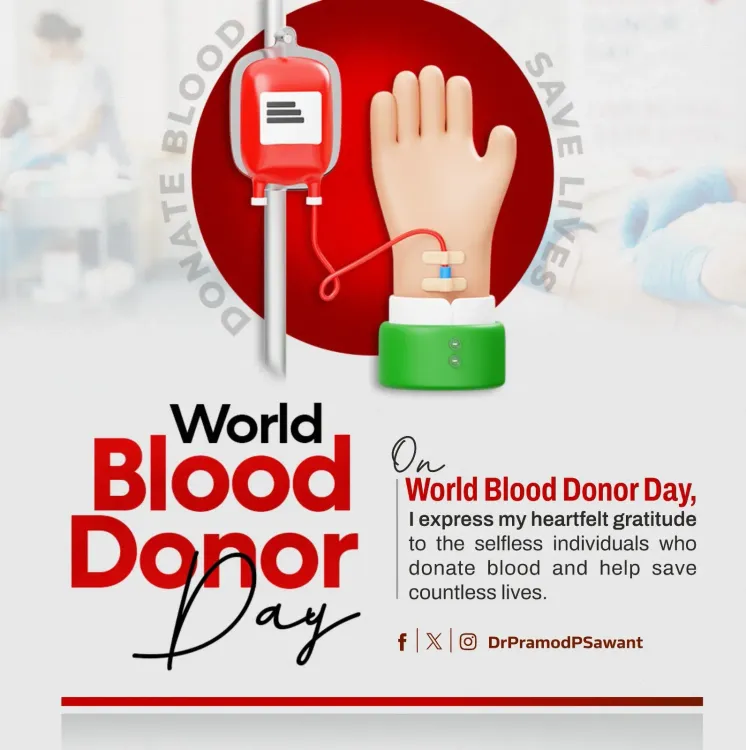
Goa Chief Minister Pramod Sawant on Sunday, 14 June 2026 marked World Blood Donor Day by expressing gratitude to voluntary blood donors and calling on more citizens to take up regular donation, posting his message on X to amplify the global health observance.
Context
World Blood Donor Day is observed every year on 14 June — a date chosen to coincide with the birthday of Karl Landsteiner, the scientist who discovered the ABO blood group system. The day was established by the World Health Organization (WHO) in 2004 to thank voluntary, unpaid donors and to highlight the global need for safe, adequate blood supplies.
In his post, CM Sawant wrote: 'A single donation can make a life-changing difference for patients in need of emergency care, surgeries and critical treatments.' He urged citizens to 'raise awareness about the importance of voluntary blood donation and encourage more people to become regular donors.'
Policy Backdrop
India's National Blood Policy, adopted in 2002, set the framework for transitioning the country's blood supply system away from replacement and paid donation towards fully voluntary, non-remunerated donation. The policy is implemented through the National Blood Transfusion Council (NBTC) and coordinated at the state level through State Blood Transfusion Councils.
The National AIDS Control Organisation (NACO) has worked alongside the NBTC to increase the share of voluntary donations in India's total blood collection. State governments across India routinely use global health observances such as World Blood Donor Day to organise blood donation camps and awareness drives that feed into national targets for achieving 100% voluntary blood donation.
Stakeholders and Impact
The primary beneficiaries of a robust voluntary donation ecosystem are patients requiring emergency transfusions, surgical procedures, and critical care treatments — including those undergoing cancer therapy, organ transplants, and management of blood disorders such as thalassaemia. Voluntary donors, by contrast, are the backbone of a safe supply chain, as non-remunerated donation is associated with lower rates of transfusion-transmitted infections.
State blood banks in Goa, which serve both the resident population and the state's significant tourist inflow, depend on a steady pipeline of voluntary donors to maintain adequate reserves, particularly during peak tourist seasons and around major surgical procedures at government hospitals. Public messaging from senior political figures on days like 14 June has historically translated into increased footfall at donation camps in the days immediately following.
What's Next
The Goa health department's periodic reports on voluntary donation volumes and any new blood bank infrastructure investments will indicate whether the state is closing the gap between demand and supply. Observers will also watch for follow-through in the form of state-organised blood donation drives in the days and weeks following the Chief Minister's public call to action.
At the national level, sustained political messaging from state leaders reinforces the broader push to make India's blood supply system fully self-sufficient through voluntary donation — a goal that remains a work in progress across several states.
Point of View
India's two-decade-old ambition of achieving 100% voluntary blood donation. The real test of such messaging lies in whether it is backed by on-ground action: organised camps, infrastructure investment, and donor retention programmes. Without visible follow-through, such posts risk being perceived as performative rather than policy-driving.
NationPress
14 Sept 2026
Frequently Asked Questions
Why is World Blood Donor Day celebrated on 14 June?
World Blood Donor Day is observed on 14 June each year because it marks the birthday of Karl Landsteiner , the scientist who discovered the ABO blood group system. The WHO established the observance in 2004 to thank voluntary donors and promote safe blood donation globally.
What did Goa CM Pramod Sawant say on World Blood Donor Day 2026?
Goa Chief Minister Pramod Sawant expressed gratitude to voluntary blood donors and urged citizens to raise awareness about the importance of donation, stating that 'a single donation can make a life-changing difference for patients in need of emergency care, surgeries and critical treatments.'
What is India's National Blood Policy?
India's National Blood Policy , adopted in 2002 , provides the framework for building a safe, adequate blood supply through fully voluntary, non-remunerated donation. It is implemented by the National Blood Transfusion Council (NBTC) in coordination with state governments.
Why is voluntary blood donation important in India?
Voluntary, unpaid donation is associated with lower rates of transfusion-transmitted infections, making the blood supply safer. India's national goal is to achieve 100% voluntary blood donation to meet the needs of patients requiring emergency transfusions, surgeries, cancer therapy, and treatment for blood disorders such as thalassaemia.
How can I donate blood in Goa?
Residents can donate blood at government hospitals and registered blood banks across Goa . State health departments and the State Blood Transfusion Council periodically organise donation camps, particularly around observances such as World Blood Donor Day on 14 June .