CM Manik Saha Attends World Blood Donor Day Event in Agartala
Synopsis
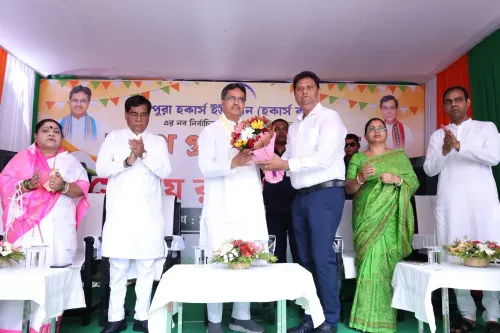
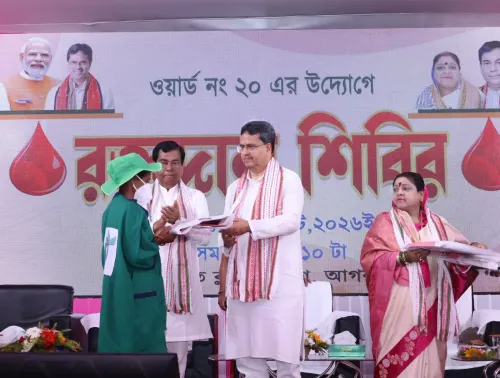
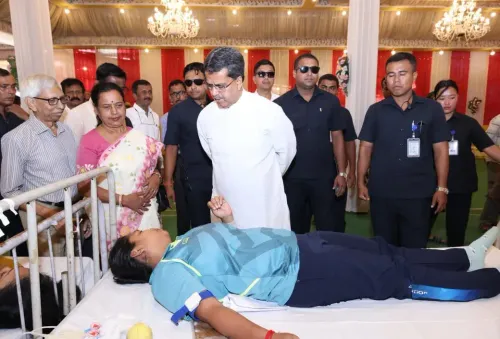
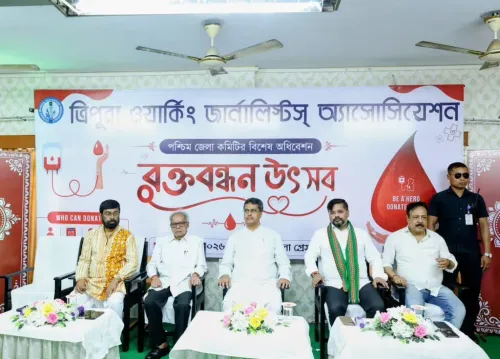
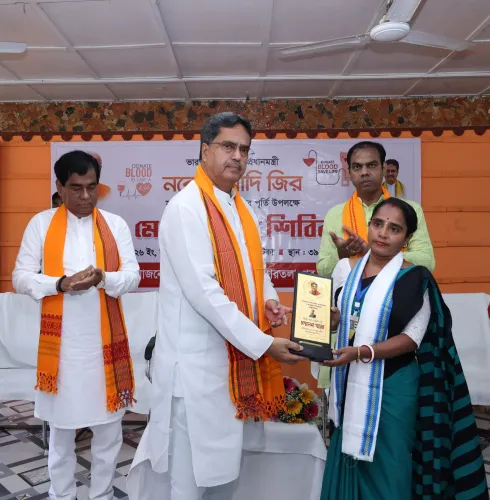
Tripura Chief Minister Dr. Manik Saha attended the World Blood Donor Day celebration at Prajna Bhawan in Agartala on 14 June 2026, saluting voluntary donors and calling blood donation the true spirit of humanity and compassion.
Key Takeaways
Manik Saha , Chief Minister of Tripura, attended the World Blood Donor Day programme at Prajna Bhawan, Agartala on 14 June 2026 .
World Blood Donor Day is a WHO -initiated global observance held annually on 14 June since 2004 to promote voluntary, unpaid blood donation.
India's National Blood Policy (2002) provides the framework for promoting voluntary donation and ensuring safe blood supplies nationwide.
Tripura's participation in such campaigns supports the National Health Mission's goal of strengthening blood bank infrastructure in the Northeast .
Saha , a trained medical professional, has made public health awareness a consistent feature of his tenure as Chief Minister since 2022 .
State health authorities are expected to announce blood donation camp schedules and targets for the rest of 2026 following the observance.
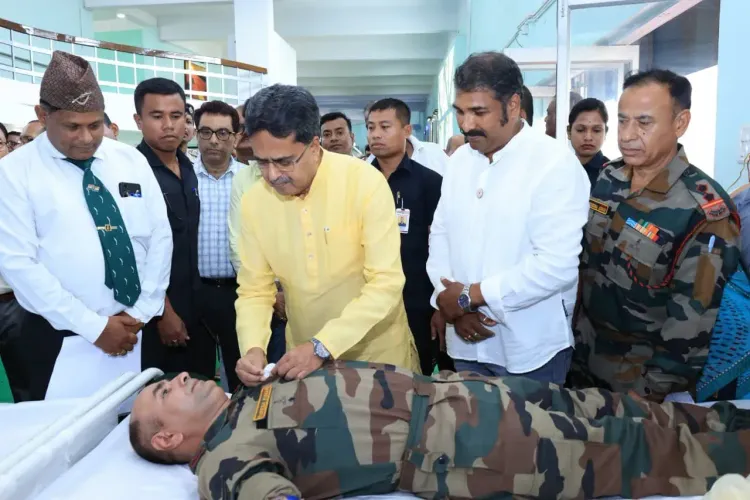
Tripura Chief Minister Dr. Manik Saha attended the World Blood Donor Day celebration programme at Prajna Bhawan in Agartala on Sunday, 14 June 2026, saluting voluntary blood donors for their selfless contribution to saving lives.
Context
World Blood Donor Day is observed every year on 14 June — the birth anniversary of Karl Landsteiner, the scientist who discovered the ABO blood group system. The World Health Organization (WHO) established this global observance in 2004 to promote voluntary, unpaid blood donation and raise public awareness about the critical need for safe blood supplies.
At the Prajna Bhawan event, Dr. Saha expressed gratitude to donors, stating: 'I salute all the blood donors who have come forward to support this noble cause. Their selfless act of donating blood reflects the true spirit of humanity and compassion.'
Policy Backdrop
India adopted its National Blood Policy in 2002, establishing a framework to promote voluntary blood donation and ensure the availability of safe, adequate blood across the country. The policy prioritises replacing paid or replacement donation with voluntary unpaid donation — a goal that state-level campaigns directly support.
Programmes such as those organised on World Blood Donor Day feed into broader national health infrastructure under the National Health Mission (NHM), which works to strengthen blood bank networks and transfusion services, particularly in smaller states and the Northeast. Tripura, as a smaller northeastern state, has historically depended on such awareness drives to maintain adequate blood bank stocks.
Dr. Saha, a trained medical professional before entering politics, has consistently lent personal credibility to public health campaigns since assuming office as Chief Minister in 2022. His participation in health observances carries symbolic weight given his clinical background.
Stakeholders and Impact
Voluntary blood donors are the primary stakeholders in these campaigns, alongside patients requiring transfusions — including those undergoing surgery, cancer treatment, or managing conditions such as thalassaemia and sickle cell anaemia. A robust voluntary donation base reduces dependency on family or paid donors, improving blood safety standards.
State health departments, blood banks, and hospitals across Tripura stand to benefit directly from increased donor registrations and donation camps held around the observance. WHO recommends that a country collect a minimum of 1 per cent of its population as blood donations annually to meet basic medical needs — a benchmark that drives the urgency behind such state-level events.
What's Next
State health authorities are expected to announce blood donation camp schedules and targets for the remainder of 2026 in the weeks following the observance. Any updates on Tripura's blood bank modernisation under central health schemes will be closely watched as an indicator of the state's progress toward self-sufficiency in blood supply.
Chief ministers across India routinely participate in World Blood Donor Day events, and Dr. Saha's attendance at Prajna Bhawan reinforces the political visibility that public health awareness campaigns have come to command at the state executive level. Sustained follow-through — in the form of infrastructure investment and year-round donation drives — will determine the lasting impact beyond the annual observance.
Point of View
A smaller northeastern state where blood bank capacity has historically been limited, such high-profile participation can translate into measurable upticks in voluntary donor registrations. Saha's medical background adds an unusual layer of authenticity to his health advocacy, distinguishing it from purely ceremonial participation. The broader test, however, lies in whether the state converts the momentum of a single-day observance into sustained year-round donation infrastructure.
NationPress
14 Sept 2026
Frequently Asked Questions
When is World Blood Donor Day celebrated?
World Blood Donor Day is celebrated every year on 14 June , a date chosen to mark the birth anniversary of Karl Landsteiner, who discovered the ABO blood group system. The WHO established it as a global observance in 2004.
Why did Tripura CM Manik Saha attend the World Blood Donor Day event?
Dr. Manik Saha attended the World Blood Donor Day celebration at Prajna Bhawan in Agartala on 14 June 2026 to honour voluntary blood donors and encourage public participation in blood donation drives across Tripura.
What is Prajna Bhawan in Agartala?
Prajna Bhawan is a government venue in Agartala, Tripura , regularly used for official programmes, public awareness events, and state administration functions.
What is India's National Blood Policy?
India adopted the National Blood Policy in 2002 to promote voluntary, unpaid blood donation and ensure the availability of safe and adequate blood supplies across the country, replacing paid or replacement donation as the primary source.
How does World Blood Donor Day help Tripura?
The observance encourages voluntary blood donation in Tripura , helping the state bolster blood bank stocks and work toward the WHO benchmark of collecting at least 1 per cent of the population as blood donations annually — a critical target for a smaller northeastern state.