Pralhad Joshi Honours Blood Donors on World Blood Donor Day
Synopsis
Union Consumer Affairs Minister Pralhad Joshi marked World Blood Donor Day on 14 June 2026 with a bilingual appeal in English and Kannada, urging voluntary blood donation to save lives and build a more compassionate society. India's National Blood Policy and the WHO-designated observance form the backdrop.
Key Takeaways
World Blood Donor Day is observed on 14 June every year, designated by the WHO in 2005 .
Union Minister Pralhad Joshi posted a bilingual tribute in English and Kannada honouring voluntary donors.
India's National Blood Policy (2002) targets 100 per cent voluntary, non-remunerated blood donation.
The National Blood Transfusion Council and state councils oversee blood safety and supply across India.
Key beneficiaries include surgery patients, thalassaemia and sickle-cell patients, trauma victims, and pregnant women.
State-level blood-donation drives are expected across India in the days around 14 June 2026 .
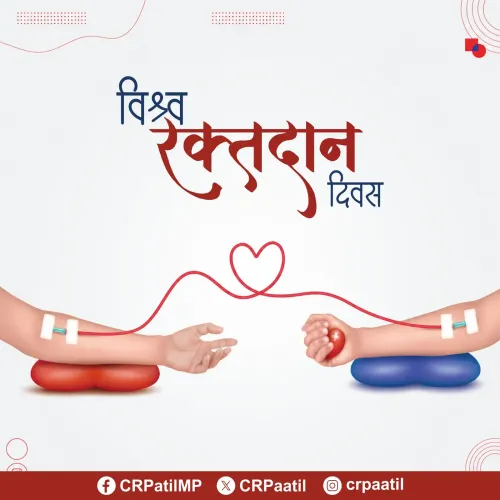
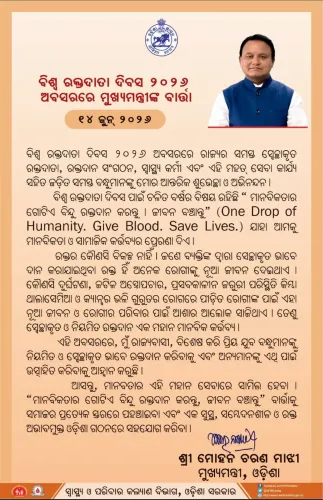
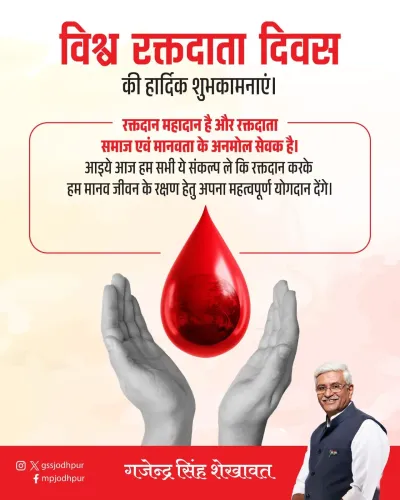
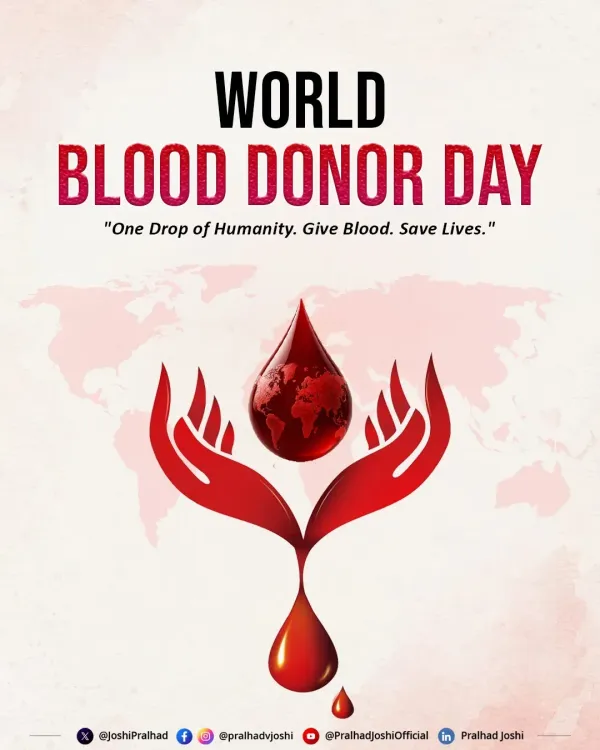
Union Consumer Affairs Minister Pralhad Joshi on Sunday, 14 June 2026 marked World Blood Donor Day by extending appreciation to voluntary blood donors across the country, calling their contribution a lifesaving act of service that brings hope to families in their most vulnerable moments.
Posting in both English and Kannada, Joshi wrote: 'Heartfelt appreciation to all voluntary blood donors whose selfless contribution helps save countless lives and brings hope to families in times of need.' In Kannada, he added — 'ರಕ್ತದಾನವು ಜೀವ ಉಳಿಸುವ ಮಹಾದಾನ' (blood donation is the greatest gift that saves lives) — urging citizens to strengthen humanity and the spirit of service through voluntary donation.
Context
World Blood Donor Day is observed every year on 14 June, a date designated by the World Health Organization (WHO) in 2005 to thank voluntary, unpaid donors and draw attention to the global need for safe and adequate blood supplies. The day also coincides with the birthday of Karl Landsteiner, the Nobel laureate who discovered the ABO blood group system.
Central ministers and public figures in India routinely use the occasion to amplify awareness on social media, reflecting a broader government push to normalise voluntary donation and reduce dependence on replacement or paid donors.
Policy Backdrop
India's framework for voluntary blood donation rests on the National Blood Policy (2002), which set the goal of achieving 100 per cent voluntary non-remunerated donation. The policy is implemented through the National Blood Transfusion Council (NBTC) and a network of State Blood Transfusion Councils that coordinate collection, testing, processing, and distribution.
Despite decades of effort, India continues to face periodic shortfalls, particularly in rural areas and during emergencies. Public awareness campaigns tied to international health days are a key tool in bridging that gap and encouraging first-time donors to come forward.
Stakeholders and Impact
The immediate beneficiaries of a robust voluntary donor base include patients undergoing surgery, cancer treatment, and dialysis, as well as those with conditions such as thalassaemia and sickle-cell anaemia who require regular transfusions. Pregnant women facing complications and trauma victims are among the most time-critical recipients.
Joshi's message also carried regional resonance: the Kannada-language portion of his post was directed at his home state of Karnataka, where state-level blood-donation camps are typically organised by health departments, the Indian Red Cross Society, and voluntary organisations around this date each year.
What's Next
State health departments and civil-society organisations are expected to hold blood-donation drives across India in the days surrounding 14 June, as is customary. Any revision to National Blood Transfusion Council guidelines — including updated eligibility criteria or digital blood-bank integration — would be the next significant policy development to watch in this space. The minister's public appeal adds institutional weight to those grassroots efforts and may prompt greater citizen participation in organised donation camps.
Point of View
It signals continued government emphasis on voluntary donation as the backbone of blood safety, a priority that has gained urgency given India's periodic supply shortfalls. The Kannada-language component also underscores how federal health communication increasingly adapts to regional audiences rather than relying solely on Hindi or English outreach.
NationPress
20 Sept 2026
Frequently Asked Questions
When is World Blood Donor Day celebrated?
World Blood Donor Day is celebrated every year on 14 June , a date the WHO designated in 2005 to honour voluntary blood donors and promote safe blood supplies.
Why did Pralhad Joshi post about World Blood Donor Day?
As a senior Union Minister and public figure, Pralhad Joshi posted on 14 June 2026 to appreciate voluntary donors and encourage more citizens to donate blood, in line with the government's broader public-health awareness efforts.
What is India's National Blood Policy?
India's National Blood Policy (2002) aims to achieve 100 per cent voluntary, non-remunerated blood donation and is implemented through the National Blood Transfusion Council and state-level blood transfusion councils.
Who benefits most from voluntary blood donation in India?
Key beneficiaries include patients undergoing surgery, cancer treatment, and dialysis; those with thalassaemia or sickle-cell anaemia requiring regular transfusions; trauma victims; and pregnant women facing complications.
What did Pralhad Joshi say in Kannada on World Blood Donor Day?
Joshi wrote 'ರಕ್ತದಾನವು ಜೀವ ಉಳಿಸುವ ಮಹಾದಾನ' — meaning 'blood donation is the greatest gift that saves lives' — urging people to strengthen humanity and the spirit of service through voluntary donation.