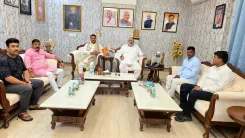
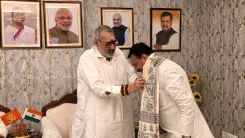
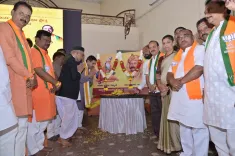
CM Bhajan Lal Listens to Mann Ki Baat 139 at Khatu Shyam Ji
Synopsis
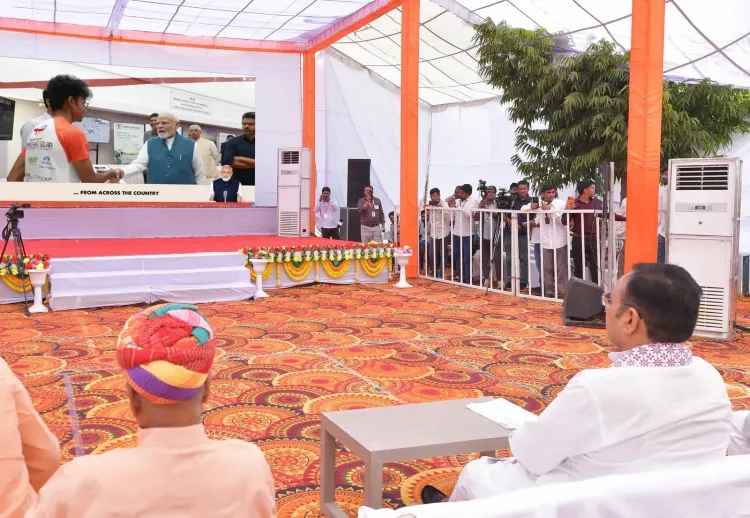
Rajasthan Chief Minister Bhajan Lal Sharma joined party workers at Khatu Shyam Ji temple on 25 October to hear the 139th Mann Ki Baat, where PM Modi stressed Vocal for Local, better domestic product packaging, e-Sanjeevani expansion, and citizen-led nation-building.
Key Takeaways
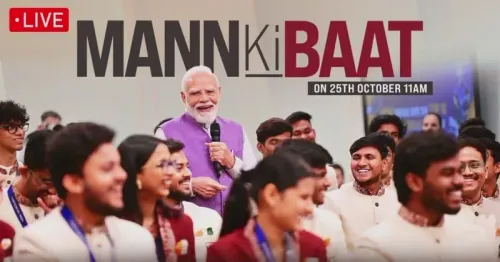
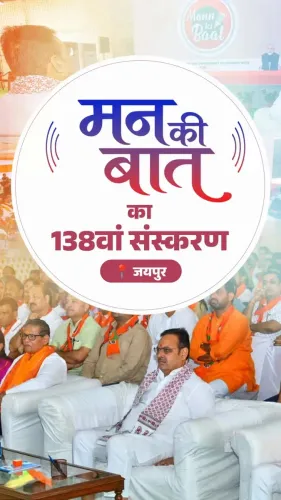
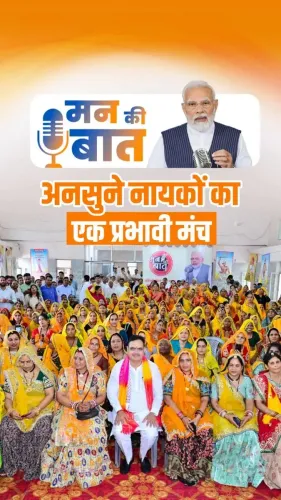
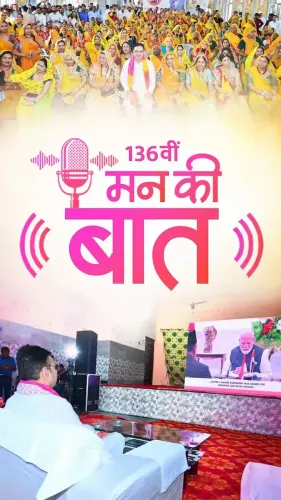
Rajasthan CM Bhajan Lal Sharma organised a collective listening session for the 139th Mann Ki Baat episode at Khatu Shyam Ji temple, Sikar on 25 October 2026 .
PM Narendra Modi stressed converting Vocal for Local into a full jan andolan (people's movement), with a specific focus on improving domestic product packaging.
The PM highlighted expansion of the e-Sanjeevani telemedicine platform, launched in 2019 , which is critical for healthcare access in Rajasthan's remote regions.
Mann Ki Baat has run since October 2014 as PM Modi's direct citizen-outreach programme; state BJP units routinely organise group listening events to reinforce the messaging.
Both Vocal for Local and e-Sanjeevani form pillars of the broader Atmanirbhar Bharat and Digital India frameworks.
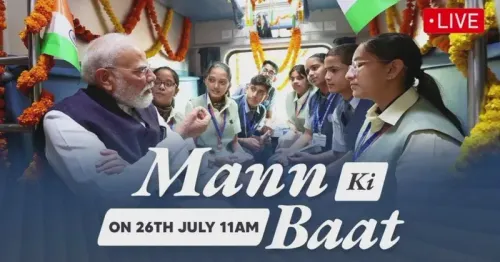
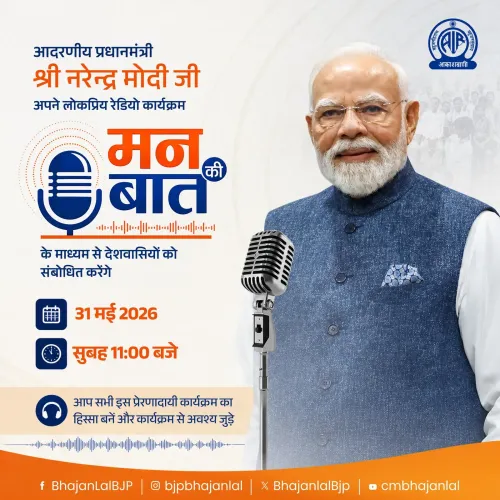
At the sacred premises of Khatu Shyam Ji temple in Sikar district, Rajasthan, Rajasthan Chief Minister Bhajan Lal Sharma gathered with party workers on Sunday, 25 October 2026, to listen collectively to the 139th episode of Prime Minister Narendra Modi's monthly radio address, Mann Ki Baat — turning a devotional site into a civic listening post.
Sharma shared that the Prime Minister used the address to spotlight themes of domestic manufacturing, product packaging quality, the 'Vocal for Local' movement, the expansion of the e-Sanjeevani telemedicine platform, and the role citizens play in national progress through active participation. In the Chief Minister's words, the guidance 'inspires every Indian to contribute actively to nation-building with a spirit of self-reliance, pride in indigenous products, and collective participation.'
What Modi said: Vocal for Local as a people's movement
The Prime Minister's call to elevate Vocal for Local from a slogan into a jan andolan (people's movement) sits squarely within the Atmanirbhar Bharat framework announced in May 2020. The emphasis on better packaging for domestic products signals a push beyond mere purchase preference — nudging producers toward presentation quality that can compete on a national and global shelf.
Since its launch, Vocal for Local has been woven into government procurement rules, festival campaigns, and public messaging drives. The latest episode's focus suggests the Centre is re-energising that agenda, asking state leaders to translate radio messaging into ground-level economic behaviour.
e-Sanjeevani's expanding reach into Rajasthan
The Prime Minister's mention of e-Sanjeevani — the government's telemedicine platform, operational since 2019 under the Ministry of Health and Family Welfare — is particularly relevant for a state as geographically spread as Rajasthan, where large desert and semi-arid tracts leave many communities far from primary health centres.
e-Sanjeevani allows patients to consult doctors remotely via video or audio, and it saw a dramatic uptake expansion during the COVID-19 period. Any further state-level scale-up in Rajasthan would extend that reach to rural and tribal pockets where telemedicine may be the only accessible first point of medical contact.
Mann Ki Baat at 12 years: the architecture of direct outreach
Mann Ki Baat was launched in October 2014 as an unconventional governance tool — a Prime Minister speaking directly to citizens on All India Radio, bypassing traditional press intermediaries. Twelve years on, its organised collective listening sessions have become a standard feature of BJP state units, designed to align local cadre with national messaging priorities and to signal state-Centre coordination on flagship schemes.
Sharma's choice of venue — Khatu Shyam Ji, one of Rajasthan's most visited pilgrimage sites — adds a layer of cultural resonance to what is otherwise a political-administrative exercise, blending popular religious geography with party outreach.
Point of View
Reinforcing Centre-state coordination on flagship schemes. Sharma's choice of Khatu Shyam Ji is not incidental — it fuses PM Modi's governance messaging with a high-footfall devotional geography, expanding the address's symbolic reach beyond a party office. The renewed emphasis on Vocal for Local packaging quality also signals a shift from awareness-raising to competitive-readiness, suggesting the economic nationalism campaign is entering a more exacting second phase. For Rajasthan specifically, any state-level follow-through on e-Sanjeevani expansion would have tangible healthcare consequences for millions in its vast rural hinterland.
NationPress
25 Oct 2026
Frequently Asked Questions
What is Mann Ki Baat and how many episodes have aired?
Mann Ki Baat is a monthly radio programme launched by Prime Minister Narendra Modi in October 2014 to communicate directly with citizens on governance and social themes. The episode listened to on 25 October 2026 was the 139th edition.
Where did CM Bhajan Lal Sharma listen to Mann Ki Baat 139?
Chief Minister Bhajan Lal Sharma listened to the 139th Mann Ki Baat episode at the Khatu Shyam Ji temple in Sikar district, Rajasthan, alongside party workers.
What is the Vocal for Local initiative?
Vocal for Local is a central government initiative promoted since 2020 as part of the Atmanirbhar Bharat package, encouraging citizens to buy and produce domestic goods to boost self-reliance and support Indian manufacturers.
What is e-Sanjeevani and why is it important for Rajasthan?
e-Sanjeevani is the government's telemedicine platform, launched in 2019 by the Ministry of Health and Family Welfare, allowing patients to consult doctors remotely. For Rajasthan, with large rural and desert areas far from health centres, its expansion is particularly significant for primary healthcare access.
Why do BJP state leaders organise group listening sessions for Mann Ki Baat?
BJP state units routinely organise collective listening sessions to align local party workers with national messaging priorities, demonstrate Centre-state coordination, and give flagship central schemes visibility at the grassroots level.