Giriraj Singh meets WB Minister on textile growth
Synopsis
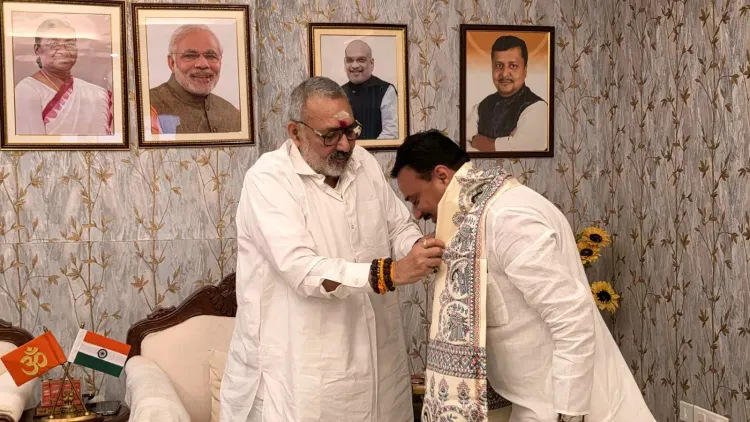
Union Textiles Minister Giriraj Singh met West Bengal MoS Umesh Rai at his New Delhi residence on October 25, 2026, discussing contemporary development issues and the expansion of Bengal's traditional textile sector, weaver livelihoods, and new artisan opportunities.
Key Takeaways
Union Textiles Minister Giriraj Singh hosted West Bengal Minister of State Umesh Rai at his New Delhi residence on Sunday, October 25, 2026 .
Discussions covered contemporary development issues in West Bengal as well as the growth of the state's textile sector.
Key agenda points included promoting traditional weaving industries and creating new opportunities for weavers and artisans .
The PM-MITRA scheme , launched in 2021 , is the Ministry of Textiles' flagship initiative for integrated textile parks and manufacturing employment.
West Bengal hosts major handloom clusters including tant cotton sarees and Baluchari silk, making central-state coordination vital for artisan livelihoods.
The meeting reflects a broader BJP pattern of central ministers engaging state colleagues even in opposition-governed states to advance scheme implementation.
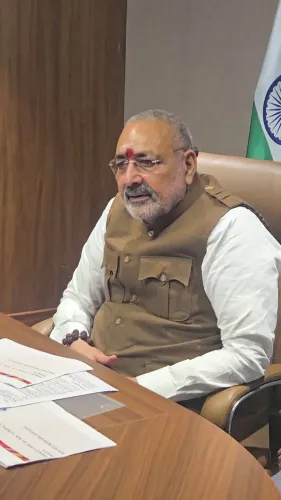
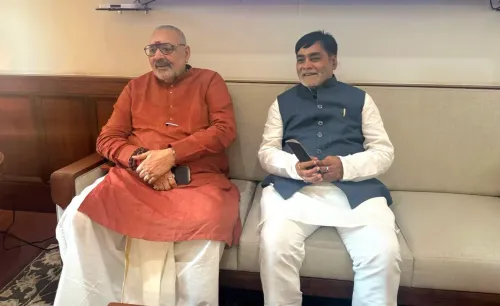
A quiet Sunday morning meeting at a Delhi residence carried the weight of Bengal's looms. Union Textiles Minister Giriraj Singh held a courtesy call at his New Delhi home on Sunday, October 25, 2026, receiving West Bengal Minister of State Umesh Rai for a wide-ranging discussion on the state's textile and artisan economy.
Posting about the meeting in Hindi, Singh wrote: 'आज दिल्ली स्थित अपने आवास पर पश्चिम बंगाल सरकार में माननीय राज्यमंत्री श्री उमेश राय जी से शिष्टाचार भेंट की' — 'Today I received West Bengal's honourable Minister of State Shri Umesh Rai at my Delhi residence for a courtesy meeting.' The two leaders exchanged views on 'development-related contemporary issues' concerning the state, with a sharp focus on expanding the textile sector, promoting traditional weaving industries, and generating new opportunities for weavers and artisans.
Bengal's looms: what was on the table
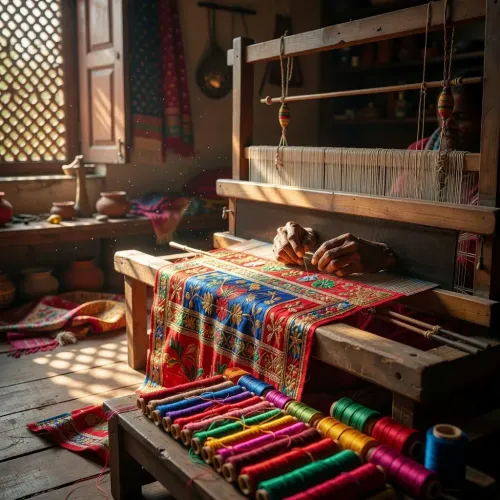
West Bengal is one of India's most storied handloom states. Its tant cotton sarees, Baluchari silk, and Bishnupur silk weaving clusters represent centuries of craft heritage — and hundreds of thousands of livelihoods. The state's traditional textile sector remains heavily dependent on how well central schemes reach the ground, making central-state coordination critical even when governments belong to different political formations.
The Ministry of Textiles has been pushing its flagship PM-MITRA (PM Mega Integrated Textile Region and Apparel) scheme, introduced in 2021, which envisages integrated textile parks to anchor manufacturing clusters, attract investment, and scale employment. Extending the reach of such schemes into traditional handloom and artisan belts — rather than confining them to large mill sectors — is precisely the kind of agenda that meetings like Sunday's are designed to advance.
BJP's central-state outreach across opposition-ruled states
The meeting reflects a deliberate pattern in how BJP navigates federalism. Central ministers routinely engage with BJP state colleagues — even in opposition-governed states — to keep development pipelines open and party coordination active. West Bengal, governed by the Trinamool Congress, has at times seen friction over central scheme implementation; direct conversations between a Union minister and a state-level BJP minister serve as a parallel channel to push weaver welfare and cluster development forward.
For Giriraj Singh, the Lok Sabha MP from Begusarai, Bihar and a senior BJP voice on industrial development, such engagements are a signature approach — building textile momentum state by state. The weavers and artisans of Bengal are waiting to see whether Sunday's dialogue translates into tangible cluster investments or expanded scheme coverage on the ground.
Point of View
Not just large industrial parks. The meeting also signals that BJP's state-level presence in Bengal is being leveraged as a policy conduit, not merely an electoral one. Whether this dialogue accelerates scheme penetration or remains symbolic will depend on what follow-through emerges from both New Delhi and Kolkata.
NationPress
25 Oct 2026
Frequently Asked Questions
Why did Giriraj Singh meet West Bengal's Umesh Rai?
Union Textiles Minister Giriraj Singh met West Bengal Minister of State Umesh Rai on October 25, 2026, at his New Delhi home to discuss contemporary development issues in West Bengal, with a focus on growing the textile sector, promoting traditional weaving, and creating new opportunities for weavers and artisans.
What is the PM-MITRA scheme and how does it affect West Bengal?
The PM-MITRA (PM Mega Integrated Textile Region and Apparel) scheme, launched by the Ministry of Textiles in 2021, aims to set up integrated textile parks to boost manufacturing and employment. It is relevant to West Bengal because the state has significant traditional handloom and silk weaving clusters that could benefit from infrastructure and investment under the scheme.
What traditional textile industries does West Bengal have?
West Bengal is known for its tant cotton sarees, Baluchari silk, and Bishnupur silk weaving clusters, representing centuries of craft heritage and a major source of livelihood for weavers and artisans across the state.
Who is Umesh Rai in the West Bengal government?
Umesh Rai is a BJP leader serving as a Minister of State in the West Bengal government. He met Union Textiles Minister Giriraj Singh in New Delhi on October 25, 2026, to discuss textile development and weaver welfare in the state.
Why do BJP central ministers meet state-level party colleagues in opposition-ruled states?
BJP central ministers frequently hold courtesy meetings with BJP colleagues in opposition-governed states to coordinate on central scheme implementation, discuss sector development, and maintain a policy channel independent of the state government, particularly for areas like handlooms where central funding is critical.