CM Himanta marks 8 years of Ayushman Bharat's health shield

Synopsis
Assam Chief Minister Himanta Biswa Sarma marked 8 years of Ayushman Bharat PM-JAY on 26 September 2026, highlighting the scheme's reach of 60 crore beneficiaries and Rs 2 lakh crore in treatment since its launch by PM Modi in September 2018.
Key Takeaways
Ayushman Bharat PM-JAY turned 8 years old on 23 September 2026 , launched by PM Narendra Modi in 2018.
CM Himanta Biswa Sarma cited 60 crore beneficiaries as a cumulative reach milestone for the scheme.
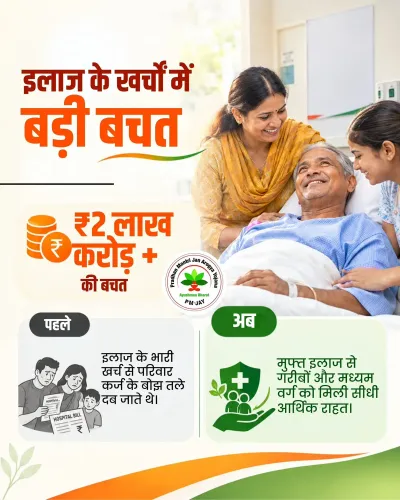
Total treatment value delivered under the scheme has been cited at Rs 2 lakh crore .
The scheme provides up to Rs 5 lakh per family per year for secondary and tertiary hospitalisation at empanelled hospitals.
Assam is among states that integrated their own health protection programmes into the PM-JAY framework.
Key policy debates ahead include raising the coverage ceiling and expanding rural hospital empanelment.
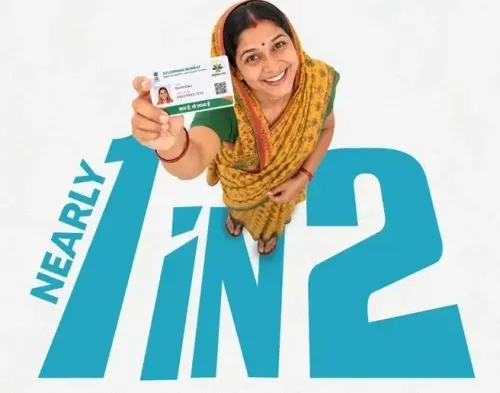
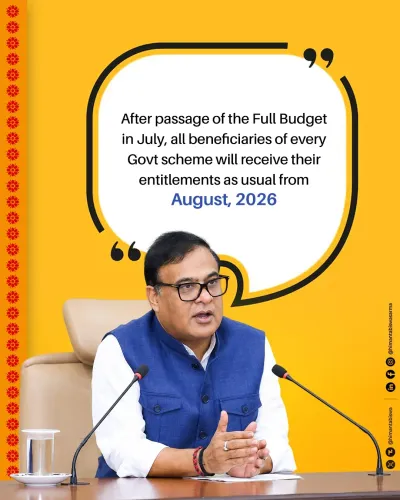
Eight years ago, a single government scheme set out to do something no Indian health programme had attempted at scale: absorb the catastrophic cost of hospitalisation for hundreds of millions of the country's poorest citizens. On Saturday, 26 September 2026, Assam Chief Minister Himanta Biswa Sarma marked the anniversary of Ayushman Bharat Pradhan Mantri Jan Arogya Yojana (PM-JAY), pointing to figures that frame the scheme's cumulative reach — 60 crore beneficiaries and Rs 2 lakh crore in treatment delivered.
From 10 crore families to a 60-crore reach
When Prime Minister Narendra Modi launched Ayushman Bharat on 23 September 2018, the stated ambition was to cover over 10 crore poor and vulnerable families — roughly the bottom 40 per cent of the population by economic status. The scheme's design was straightforward but powerful: each eligible family could claim up to Rs 5 lakh per year for secondary and tertiary hospitalisation at any empanelled government or private hospital, cashless and paperless.
The milestone flagged by CM Sarma — 60 crore beneficiaries — signals that the scheme's footprint has grown well beyond its original target base, a reflection of both expanding enrolment drives and the integration of state-level health programmes into the PM-JAY framework. Assam has been among the states that folded its own health protection scheme into the central umbrella, extending coverage to residents who might otherwise have fallen through the cracks of earlier, more fragmented models.
Rs 2 lakh crore and the logic of catastrophic-cost relief
The Rs 2 lakh crore treatment figure is the scheme's most tangible proof of concept. Before PM-JAY, out-of-pocket expenditure on health was one of the leading drivers of household debt and poverty in India — a single hospitalisation could wipe out years of savings for a low-income family. By routing that expenditure through insurance-backed empanelled hospitals, the scheme shifted financial risk away from the patient.
Successive Union Budgets have steadily widened the network of empanelled hospitals and pushed for greater portability of benefits across state borders, so a beneficiary from Assam could access treatment in, say, a hospital in Delhi or Chennai without losing coverage. That interoperability has been central to the scheme's scaling logic.
Where the scheme goes from here
The anniversary lands at a moment when policymakers are debating the next frontier: whether to raise the per-family coverage ceiling beyond Rs 5 lakh, how to bring more super-speciality procedures under the rate schedule, and how to close gaps in rural empanelment where the nearest network hospital can still be hours away. Health economists have long argued that the scheme's true test is not headline beneficiary numbers but utilisation rates and the actual reduction in catastrophic expenditure at household level.
For a leader like CM Sarma — who governs a state with significant tribal and rural populations and who operates as convenor of the North-East Democratic Alliance — the Ayushman Bharat anniversary is also a political moment, one that ties the BJP's governance record directly to a welfare outcome that resonates deeply with the party's core voter base.
Eight years in, the numbers are large enough to be called a structural shift. Whether they are large enough to close India's universal health coverage gap is the question the next chapter must answer.
Point of View
Amplifying the milestone reinforces his alignment with the central government's flagship social programmes, particularly relevant in a North-East context where healthcare access remains a persistent infrastructure challenge. The 60-crore figure, however it is precisely counted, signals a scale of state-to-citizen contact that rivals the largest public health programmes anywhere in the world. The harder political test will come when the debate shifts from enrolment numbers to measurable health outcomes and out-of-pocket expenditure reductions at the household level.
NationPress
26 Sept 2026
Frequently Asked Questions
What is Ayushman Bharat PM-JAY and who can benefit from it?
Ayushman Bharat Pradhan Mantri Jan Arogya Yojana (PM-JAY) is India's national health insurance scheme that provides up to Rs 5 lakh per family per year for secondary and tertiary hospitalisation. It targets economically vulnerable households, originally covering over 10 crore poor and vulnerable families across India.
When was Ayushman Bharat launched and by whom?
Ayushman Bharat was launched on 23 September 2018 by Prime Minister Narendra Modi as a flagship welfare initiative aimed at reducing catastrophic out-of-pocket health expenditure among India's poorest citizens.
What milestone did Ayushman Bharat reach in 2026?
As of its 8th anniversary in September 2026, Ayushman Bharat is reported to have reached 60 crore beneficiaries with Rs 2 lakh crore worth of treatment provided, according to figures cited by Assam Chief Minister Himanta Biswa Sarma.
How does Assam fit into the Ayushman Bharat scheme?
Assam is among the states that integrated its own state-level health protection scheme into the PM-JAY framework, extending Ayushman Bharat coverage to eligible residents and allowing them to access treatment at empanelled hospitals across India.
What is the future expansion plan for Ayushman Bharat?
Policy discussions around Ayushman Bharat's next phase focus on potentially raising the coverage ceiling beyond Rs 5 lakh per family, bringing more super-speciality procedures under the scheme's rate schedule, and expanding the network of empanelled hospitals in rural and remote areas.