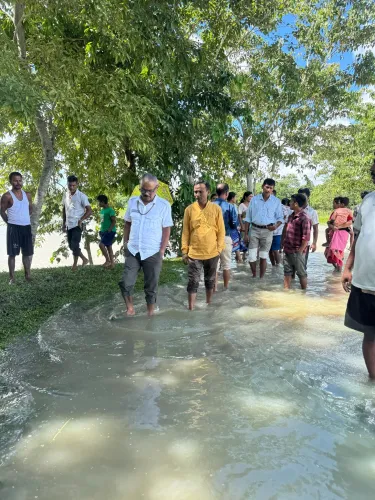
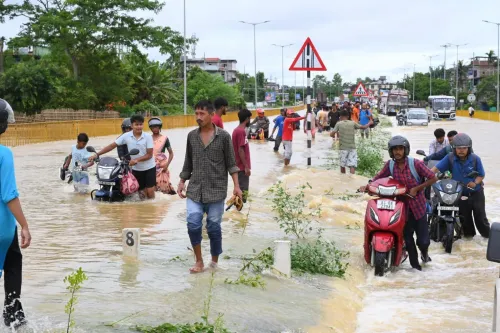
CM Himanta Orders Food Grain Supply to Flood-Hit Assam
Synopsis
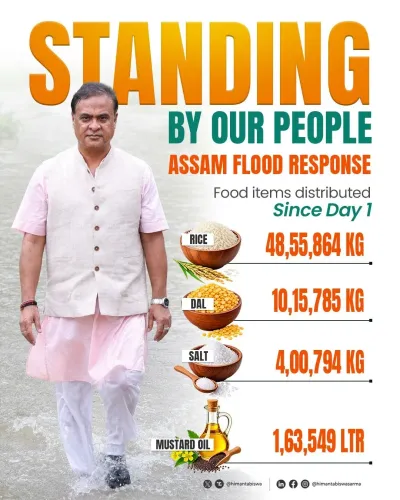
Assam Chief Minister Himanta Biswa Sarma on 20 July 2026 directed officials to ensure adequate food grain supplies to all flood-affected areas and placed every department on high alert, as the annual Brahmaputra floods intensified across the state.
Key Takeaways
CM Himanta Biswa Sarma issued a directive on 20 July 2026 ordering adequate food grain supplies to all flood-affected areas in Assam .
Every state government department has been placed on high alert and is working in full coordination to minimise flood impact.
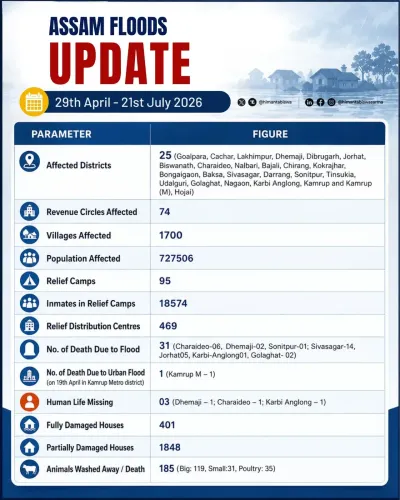
The Brahmaputra river and its tributaries are the primary drivers of Assam's recurring annual flood crisis, which displaces lakhs of residents.
The Assam State Disaster Management Authority (ASDMA) is the nodal body coordinating inter-departmental disaster response.
Farmers and rural households in low-lying districts are the most vulnerable stakeholders, facing both displacement and crop damage.
District-wise relief distribution updates and a possible request for central assistance under the National Disaster Response Fund are anticipated next.
Assam Chief Minister Himanta Biswa Sarma on Monday, 20 July 2026, directed state officials to ensure adequate food grain supplies reach all flood-affected areas of the state, placing every government department on high alert as the annual monsoon flood situation intensified across Assam.
Context
In his post, CM Sarma stated: 'I have directed officials to ensure adequate food grain supplies across all flood-affected areas. Every department has been placed on high alert and is working in full coordination to minimize the impact of the floods.' The directive signals an active executive response as the Brahmaputra and its tributaries swell during the monsoon season, a recurring crisis that displaces lakhs of residents and damages standing crops across the state each year.
Assam's geography makes it one of India's most flood-vulnerable states. The Brahmaputra river, fed by Himalayan snowmelt and heavy monsoon rainfall, regularly breaches its banks, inundating low-lying districts and cutting off rural communities from essential supplies.
Policy Backdrop
The Assam State Disaster Management Authority (ASDMA) serves as the nodal body for coordinating inter-departmental relief and disaster preparedness. State governments have followed an established protocol during monsoon emergencies for more than two decades — activating the State Disaster Response Force (SDRF), placing departments on alert, and ensuring food and essential commodity pipelines remain functional to affected districts.
CM Sarma, who has led the state since May 2021, has consistently invoked this framework during successive flood seasons. The emphasis on 'full coordination' across departments reflects the multi-agency nature of flood relief, which involves the revenue, food and civil supplies, health, and public works departments working in tandem under the disaster management umbrella.
Stakeholders and Impact
The most immediate beneficiaries of the directive are flood-affected residents — particularly rural households and farming communities in low-lying districts — who depend on state-managed relief for food security when roads and supply chains are disrupted by floodwaters. Farmers face the additional threat of crop damage, which can compound food insecurity beyond the immediate relief phase.
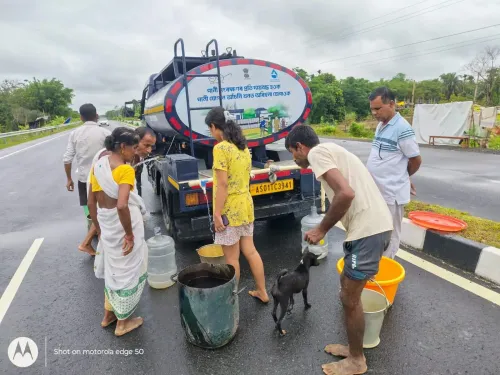
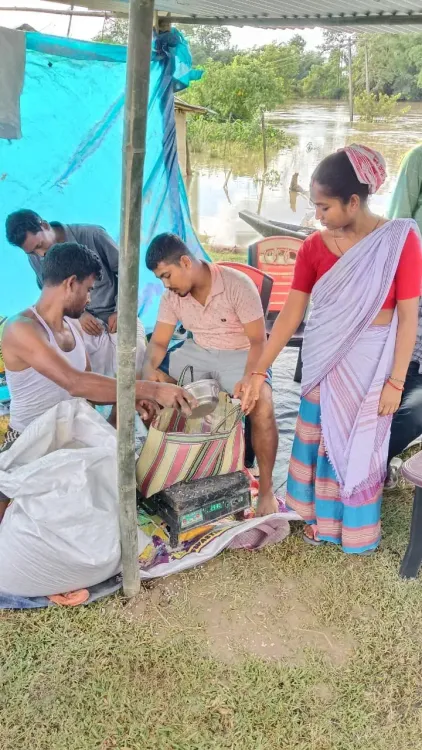
The food grain supply directive is especially critical in areas where local markets and transport links are severed. State-run distribution networks and relief camps become the primary source of sustenance for displaced families during such periods.
What's Next
Attention will now shift to district-level relief distribution reports and whether the state formally requests central assistance from the Ministry of Home Affairs under the National Disaster Response Fund framework. The pace at which food grain stocks reach the most isolated flood-affected pockets will be a key measure of the directive's on-ground effectiveness. Official updates from the ASDMA on district-wise relief coverage are expected in the coming days as the flood situation evolves.
Point of View
High-alert framing on social media also serves a political signalling function, demonstrating visible leadership during a crisis that reliably tests state governance every monsoon. The emphasis on inter-departmental coordination reflects a lesson learned from past flood seasons, where siloed responses slowed relief delivery to the most isolated communities. Crucially, the directive's real test will come in implementation: whether food grain stocks actually reach severed districts before the next wave of flooding. The post also sets the stage for a potential central assistance request, a perennial negotiation between Guwahati and New Delhi that carries both fiscal and political weight.
NationPress
20 Oct 2026
Frequently Asked Questions
What action did Assam CM Himanta Biswa Sarma take during the 2026 floods?
CM Himanta Biswa Sarma directed officials on 20 July 2026 to ensure adequate food grain supplies to all flood-affected areas and placed every state government department on high alert to coordinate relief efforts.
Which river causes the most flooding in Assam every year?
The Brahmaputra river, fed by Himalayan snowmelt and heavy monsoon rainfall, is the primary cause of annual flooding in Assam, regularly displacing lakhs of residents and damaging crops.
What is the Assam State Disaster Management Authority?
The Assam State Disaster Management Authority (ASDMA) is the state-level body responsible for coordinating disaster preparedness, relief operations, and inter-departmental response during floods and other emergencies in Assam.
How does the Assam government distribute food during floods?
During floods, the Assam government uses state-run distribution networks and relief camps as the primary channels for food grain supply, coordinated across the revenue, food and civil supplies, and other departments under the disaster management framework.
Can Assam request central government help for flood relief?
Yes, Assam can formally request central assistance from the Ministry of Home Affairs under the National Disaster Response Fund framework, a mechanism the state has used during severe flood seasons.