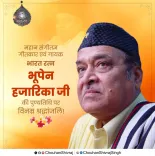
CM Himanta pays tribute to Bhupen Hazarika on punyatithi
Synopsis
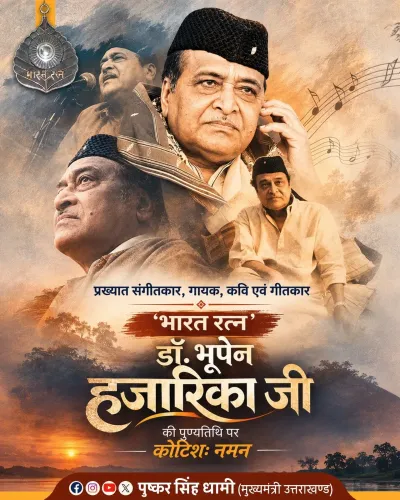
On Dr Bhupen Hazarika's death anniversary, Assam CM Himanta Biswa Sarma paid tribute to the Bharat Ratna-winning singer known as Sudhakantha, calling his contribution to Assam's cultural landscape unparalleled and cherishing the privilege of witnessing him perform live.
Key Takeaways
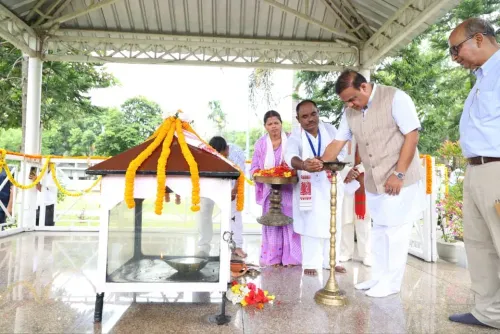
Assam CM Himanta Biswa Sarma paid tribute to Dr Bhupen Hazarika on his punyatithi on 5 November .
Hazarika is revered across Assam as the Sudhakantha (Golden Voice), a singer, lyricist, and filmmaker of national stature.
He was posthumously awarded the Bharat Ratna in 2019 , India's highest civilian honour.
CM Sarma described Hazarika's contribution to Assam's cultural landscape as 'unparalleled' and recalled witnessing his live performances.
Annual commemorations of Hazarika's death anniversary are a fixture in Assam's political and cultural calendar across administrations.
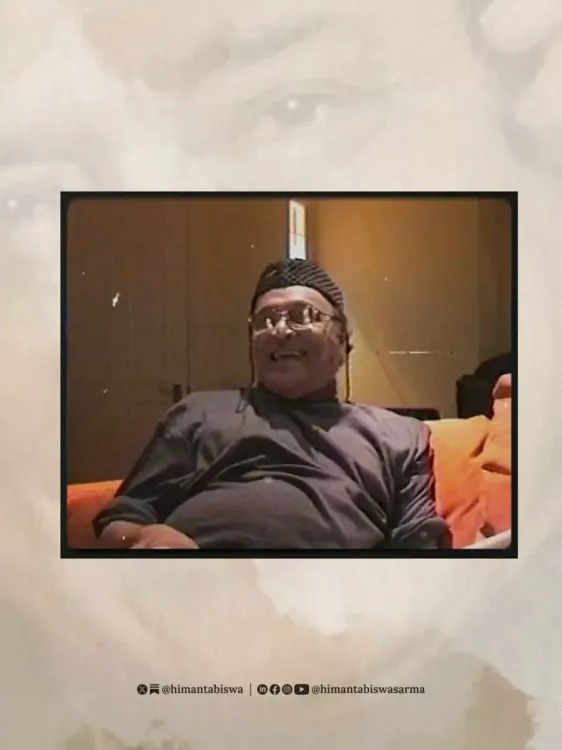
A voice that once turned rivers into poetry and paddy fields into song — Dr Bhupen Hazarika left behind a cultural inheritance so vast that even now, years after his passing, Assam pauses on 5 November to remember him. Assam Chief Minister Himanta Biswa Sarma marked the legendary singer's death anniversary on Thursday with a heartfelt tribute, recalling the privilege of witnessing the Sudhakantha — the 'Golden Voice' — perform live.
'The Bharat Ratna's contribution to Assam's cultural landscape is unparalleled,' wrote CM Sarma, 'and we are fortunate to have witnessed his performances live. On his punyatithi today, I pay my tributes to the Sudhakantha, whose legacy we will always cherish.'
Who was the Sudhakantha?
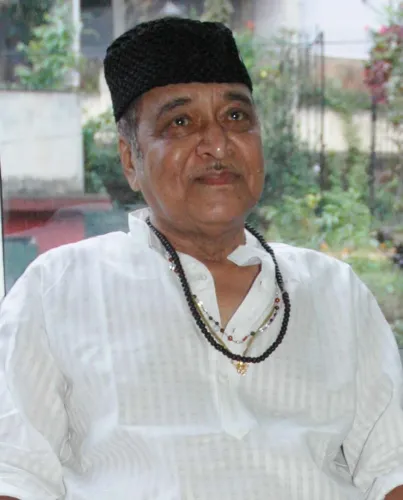
Dr Bhupen Hazarika — singer, lyricist, filmmaker, and poet — was born in Assam and went on to become one of the most recognisable voices in Indian music. His compositions bridged Assamese folk traditions with cinematic grandeur, reaching listeners far beyond the Northeast. The honorific Sudhakantha, meaning 'nectar-voiced', was not merely affection — it was earned.
He was posthumously conferred the Bharat Ratna in 2019, India's highest civilian honour, cementing a legacy that generations of Assamese had already held sacred. His music remains a living presence in the state — sung at festivals, played at dawn, and woven into the texture of everyday life.
A tradition of remembrance in Assam's political culture
The annual commemoration of Hazarika's death anniversary has become a fixture in Assam's public calendar. State governments across administrations have made it a point to invoke his memory — not merely as ritual, but as a declaration of cultural continuity. The BJP-led administration under CM Sarma has sustained this practice, regularly marking anniversaries of prominent Assamese cultural figures.
It is a quiet but deliberate act of statecraft: by honouring the Sudhakantha, political leaders signal their rootedness in a regional identity that runs deeper than any electoral cycle.
Hazarika's legacy belongs to no single party. What it does is remind every government in Dispur that in Assam, culture is not soft power — it is the bedrock. The voice may have stilled, but the river keeps singing.
Point of View
Where invoking Bhupen Hazarika serves as a marker of regional identity rather than mere ceremonial obligation. For the BJP-led government, honouring the Sudhakantha reinforces its cultural credentials in a state where Assamese identity politics run deep. The personal note — recalling live performances — adds a layer of authenticity that standard political condolences rarely carry. It also underscores how Hazarika's legacy functions as common ground, a rare piece of Assam's cultural inheritance that transcends partisan lines.
NationPress
5 Nov 2026
Frequently Asked Questions
When did Bhupen Hazarika pass away?
Dr Bhupen Hazarika passed away on 5 November 2011 , and his death anniversary is observed as his punyatithi each year.
What is the meaning of Sudhakantha?
'Sudhakantha' is an honorific in Assamese meaning 'nectar-voiced' or 'Golden Voice,' a title given to Dr Bhupen Hazarika in recognition of his extraordinary singing talent.
Did Bhupen Hazarika receive the Bharat Ratna?
Yes. Dr Bhupen Hazarika was posthumously conferred the Bharat Ratna , India's highest civilian honour, in 2019 .
Why does Himanta Biswa Sarma pay tribute to Bhupen Hazarika?
Assam CM Himanta Biswa Sarma pays annual tribute to Bhupen Hazarika on his death anniversary, honouring a cultural icon whose music is central to Assamese identity and who holds the status of a Bharat Ratna recipient.
What is Bhupen Hazarika known for?
Dr Bhupen Hazarika was a legendary Assamese singer, lyricist, and filmmaker whose compositions bridged Assamese folk traditions with mainstream Indian cinema, making him one of the most beloved voices in the country's cultural history.