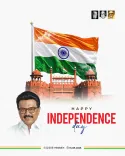
CM Himanta pays tribute to Sri Aurobindo on Jayanti
Synopsis
On Independence Day, Assam CM Himanta Biswa Sarma paid tribute to Sri Aurobindo on his Jayanti, honouring the philosopher-yogi's vision of national awakening, spiritual consciousness and human unity — a tradition that links India's political freedom with its civilisational legacy.
Key Takeaways
Assam CM Himanta Biswa Sarma posted a tribute to Sri Aurobindo on 15 August 2026 , his birth anniversary and India's Independence Day.
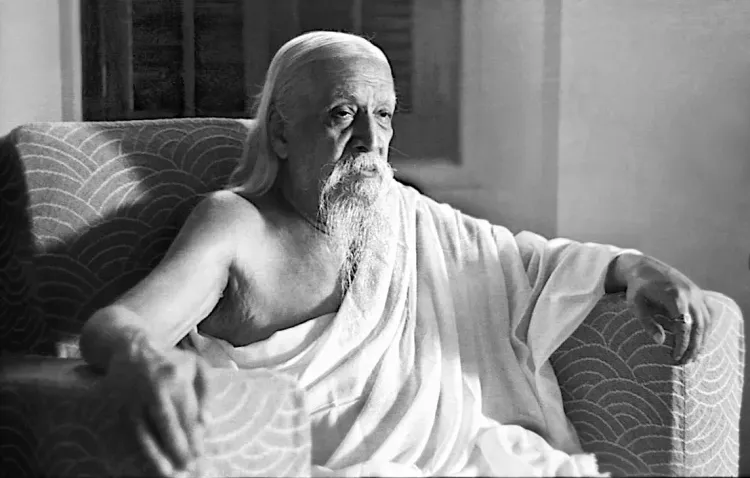
Sri Aurobindo (1872–1950) was a nationalist revolutionary, philosopher, poet and yogi who founded Integral Yoga at his ashram in Pondicherry .
15 August carries a double significance: it is both India's Independence Day and Sri Aurobindo's birthday; he addressed the nation by radio on that evening in 1947 .
Sarma's tribute highlighted Aurobindo's 'vision of national awakening, spiritual consciousness and human unity.' Paying tribute to Sri Aurobindo on his Jayanti is a near-universal practice among Indian political leaders across parties on Independence Day.
On Independence Day, 15 August, Assam Chief Minister Himanta Biswa Sarma paid tribute to Sri Aurobindo, honouring the philosopher-yogi on his birth anniversary — a day that fuses India's political liberation with the spiritual revolution Aurobindo spent his life articulating.
Sarma's post saluted Aurobindo as a 'great philosopher, nationalist thinker and spiritual luminary,' invoking his 'profound vision of national awakening, spiritual consciousness and human unity' as a living inheritance for successive generations.
A revolutionary who became a rishi
Sri Aurobindo Ghose (1872–1950) began his public life as one of India's most firebrand anti-colonial voices — arrested by British authorities, tried for sedition, and eventually a fugitive who slipped into French-administered Pondicherry in 1910. There he underwent a transformation that would define his legacy: from political agitator to the architect of Integral Yoga, a philosophy that held spiritual evolution and worldly action as inseparable.
His ashram at Pondicherry became a centre of global spiritual inquiry, and his major works — The Life Divine, Savitri, The Synthesis of Yoga — remain foundational texts for students of Indian philosophy. The ideal of 'human unity' Sarma references was Aurobindo's late-life conviction that humanity's political and spiritual evolution pointed toward a single, conscious civilisation.
Why 15 August carries a double weight
The date is not incidental. 15 August 1947 — the day India became free — was also Sri Aurobindo's 75th birthday. He addressed the nation by radio that evening, describing Independence as a partial realisation of a larger spiritual destiny he had foreseen decades earlier. That convergence has made tributes on this date a near-universal ritual for Indian political leaders across party lines, weaving the early revolutionary phase of the freedom movement into the country's annual Independence Day observances.
For CM Sarma, invoking Aurobindo on this morning carries the familiar double resonance: honouring a son of Bengal and a titan of the nationalist canon, while framing India's independence not merely as a political event but as the opening act of a civilisational awakening.
Aurobindo's vision — that a free India would serve as a 'guru of nations' — remains a touchstone in cultural-nationalist discourse, and his Jayanti continues to draw tributes from state capitals and the national government alike.
Point of View
But their frequency across ideological lines signals how thoroughly Aurobindo has been absorbed into the mainstream nationalist canon. For BJP leaders in particular, invoking his themes of spiritual nationalism and civilisational awakening aligns with a broader cultural framing of India's independence as more than a constitutional event. CM Sarma's post is routine in form but consistent with a pattern of using August 15 to reinforce a culture-forward reading of nation-building. The convergence of Aurobindo's birthday with Independence Day ensures this tradition will persist as a durable fixture of the annual political calendar.
NationPress
15 Aug 2026
Frequently Asked Questions
When is Sri Aurobindo Jayanti celebrated?
Sri Aurobindo Jayanti falls on 15 August every year, the same date as India's Independence Day. Aurobindo was born on 15 August 1872 .
Why did Himanta Biswa Sarma pay tribute to Sri Aurobindo?
Assam CM Himanta Biswa Sarma paid tribute to Sri Aurobindo on his Jayanti (birth anniversary) on 15 August 2026 , honouring his legacy as a philosopher, nationalist thinker and spiritual luminary.
What is Sri Aurobindo known for?
Sri Aurobindo (1872–1950) was an Indian nationalist revolutionary, philosopher, poet and yogi. He is known for founding Integral Yoga and for major works such as The Life Divine and Savitri , as well as his vision of human unity and spiritual evolution.
What is the connection between Sri Aurobindo and Indian Independence Day?
15 August 1947 — India's Independence Day — was also Sri Aurobindo's 75th birthday . He addressed the nation by radio that evening, describing independence as a partial fulfilment of India's spiritual destiny.
Where was Sri Aurobindo's ashram?
Sri Aurobindo's ashram was established in Pondicherry (now Puducherry), where he moved in 1910 and spent the rest of his life developing Integral Yoga and his philosophical writings.