CM Himanta Praises BJP National President Nitin Nabin's Grassroots Leadership
Synopsis
Assam Chief Minister Himanta Biswa Sarma publicly praised BJP National President Nitin Nabin on 6 July 2026, lauding his grounded personality and simple life. Using the 'sheesh mahal' metaphor, Sarma drew a sharp contrast with elite political culture, reinforcing the BJP's karyakarta-first organisational identity.
Key Takeaways
CM Himanta Biswa Sarma posted a tribute to BJP National President Nitin Nabin on 6 July 2026 .
Sarma used the phrase 'sheesh mahal' to contrast Nabin's grounded life with leaders perceived as out of touch with ordinary workers.
He described Nabin's simple life and strong leadership as a source of pride for the party.
The post aligns with the BJP's long-standing organisational messaging that valorises grassroots, non-elite leadership since 2014 .
As NEDA convenor , Sarma's endorsement carries significance across the Northeast political landscape.
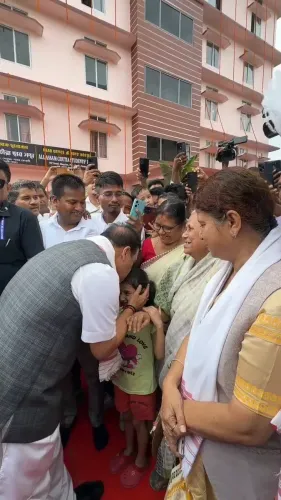
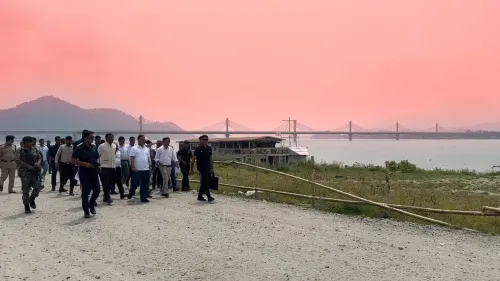
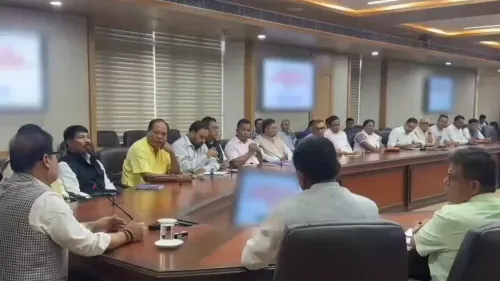
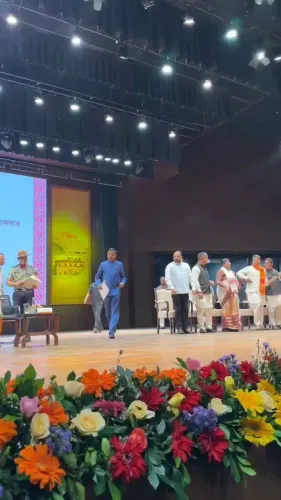
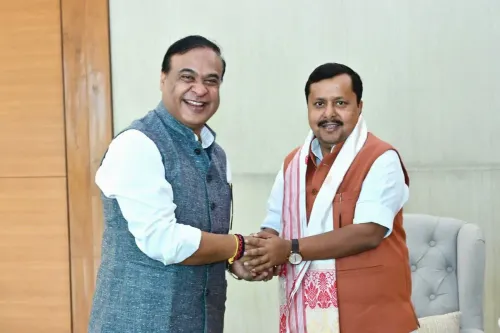
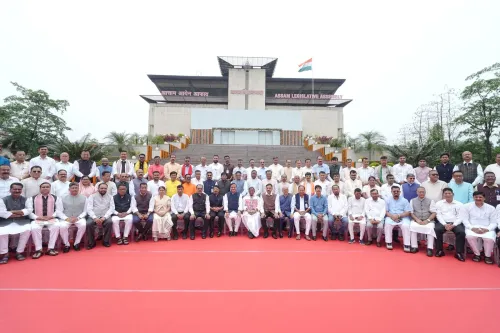
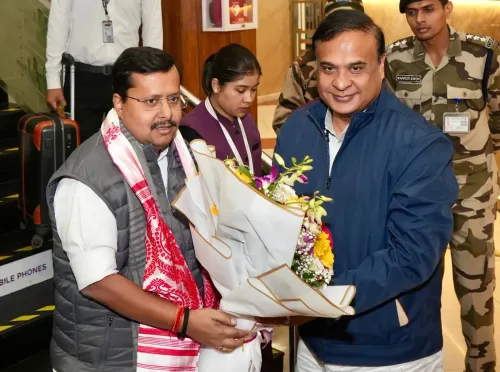
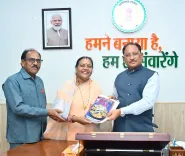
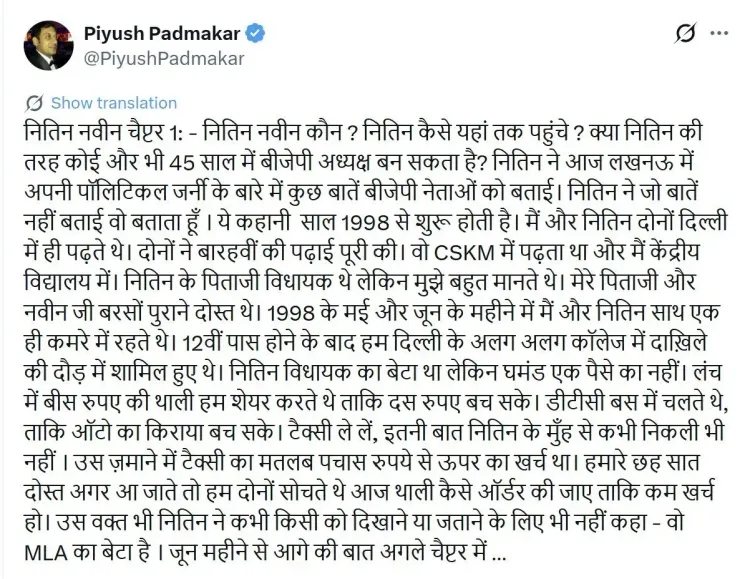
The tribute was accompanied by two images on X, indicating a visual dimension to the public affirmation.
Assam Chief Minister Himanta Biswa Sarma on Monday, 6 July 2026, publicly praised BJP National President Nitin Nabin, describing him as a leader deeply rooted in grassroots reality and holding his simple lifestyle and strong leadership as a matter of pride for the party. The post, shared on X, also carried an implicit contrast with those who live in what Sarma called a 'sheesh mahal' — a palace of mirrors — and who, he said, can never understand the hard work and talent of an ordinary party worker.
Context
In the Hindi-language post, CM Sarma wrote: 'शीश महल में रहने वाले लोग कभी एक आम कार्यकर्ता के परिश्रम और प्रतिभा को समझने की क्षमता नहीं रखते' ['Those who live in a sheesh mahal can never have the capacity to understand the hard work and talent of an ordinary worker']. He then saluted Nitin Nabin, addressing him as 'Respected National President', and said his personality and life have remained connected to the ground. The phrase 'sheesh mahal' has become a recurring rhetorical device in BJP political discourse, most prominently used to contrast the party's self-image with that of leaders perceived as elite or dynasty-driven.
The post included two images, suggesting a visual tribute or a shared public appearance. The tribute is consistent with the pattern of senior BJP leaders publicly affirming the credentials of the party's organisational leadership, particularly when a new or reaffirmed national president is at the helm.
Policy Backdrop
Since 2014, the Bharatiya Janata Party has consistently projected leaders with non-elite, grassroots origins as emblematic of its organisational culture — a deliberate contrast with what the party characterises as dynastic or urban-elite political formations. The valorisation of the full-time party worker, or karyakarta, is central to the BJP's internal identity and mobilisation strategy. Praising a national president for a 'simple life' and 'powerful leadership' fits squarely within this long-established messaging framework.
CM Sarma, as convenor of the North-East Democratic Alliance (NEDA), occupies a pivotal organisational role beyond Assam. His public endorsements of central party figures carry weight across the Northeast, where the BJP has steadily expanded its footprint since 2016. Statements of this nature from Sarma are often read as signals of alignment and solidarity within the party's national hierarchy.
Stakeholders and Impact
BJP ground-level workers — the karyakartas — are the primary intended audience for messaging of this kind. By framing Nitin Nabin's leadership as one that genuinely understands their labour and talent, CM Sarma reinforces the idea that the party's top leadership remains accessible and empathetic to those at the base of the organisational pyramid. This has practical implications for morale and mobilisation, especially ahead of any upcoming organisational exercises or electoral cycles.
State unit leaders across the Northeast are also stakeholders, given Sarma's role as NEDA convenor. His visible solidarity with the national president signals stability in the relationship between the region's dominant political figure and the central party apparatus.
What's Next
Attention will now turn to upcoming BJP national executive or organisational meetings, where the tenor of state-level and national leadership interactions is likely to be on display. Whether Nitin Nabin's leadership style translates into specific policy or organisational directions for the Northeast bloc will be worth watching. CM Sarma's public endorsement adds to the political capital of the national president and may encourage similar affirmations from other regional leaders within the alliance.
Point of View
Using the 'sheesh mahal' metaphor — now a well-worn BJP rhetorical weapon — to simultaneously elevate the national president and draw a pointed contrast with opposition leaders associated with elite lifestyles. For Sarma, who has built his political identity around assertive, grassroots-connected governance in the Northeast, publicly aligning with the national president reinforces his own standing within the BJP hierarchy. The post also signals that the BJP's Northeast bloc, anchored by NEDA, is firmly in step with the central party leadership. Broader organisational messaging of this kind typically precedes or accompanies significant party events, making it a marker worth tracking in the weeks ahead.
NationPress
7 Jul 2026
Frequently Asked Questions
Who is Nitin Nabin and what is his role in BJP?
Nitin Nabin is described as the BJP National President, praised by Assam CM Himanta Biswa Sarma for his grounded personality and simple lifestyle. His exact prior organisational positions are not independently verified in available public records at the time of this report.
What did Himanta Biswa Sarma say about Nitin Nabin?
CM Sarma said that those living in a 'sheesh mahal' can never understand an ordinary worker's hard work and talent, and praised Nabin's simple life and strong leadership as a matter of pride for the party.
What does 'sheesh mahal' mean in BJP political language?
'Sheesh mahal' literally means 'palace of mirrors' and has become a recurring BJP rhetorical phrase used to describe leaders perceived as living in elite, out-of-touch circumstances, contrasting them with grassroots-connected politicians.
What is NEDA and what is Himanta Biswa Sarma's role in it?
NEDA stands for the North-East Democratic Alliance, a BJP-led coalition of parties in the Northeast. Himanta Biswa Sarma serves as its convenor, giving him a significant organisational role beyond Assam.
Why does BJP emphasise simple living in its leaders?
Since 2014, the BJP has consistently projected leaders with non-elite, grassroots origins as part of its organisational identity, distinguishing itself from parties associated with dynastic or urban-elite political culture.